
Building strong relationships personally and professionally is grounded by good communication with the people we interact with. Whether you are working with your colleagues, speaking to a loved one, or sending text messages to certain people, the way you communicate affects the message you want to express.
In this article, we will discuss what are communication styles, why they are important, and how being aware of your communication style can transform your day to day interactions.
Every person has a unique communication style used when they interact with others. It is shown by how an individual shares information, expresses thoughts and feelings, and reacts to certain circumstances. Your tone of voice, body language, and choice of words reveals what you truly feel and what you want to convey. Whether it is verbal or non-verbal, you can see these communication styles through everyday conversations, in writing, and even in the digital space.
Understanding how people deliver certain reactions and messages will help you interact better, promote effective communication, and eventually improve your relationships. While there may be different communication styles to consider, most styles fall into a few main categories that will help us understand others and ourselves better.
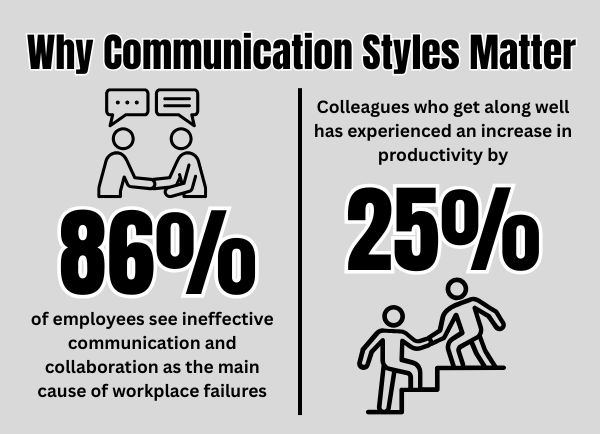
Misunderstandings at home and in your workplace are mostly because of communication lapses, not necessarily from disagreement. Recent statistics show that 86% of employees see ineffective communication and collaboration as the main cause of workplace failures, while colleagues who get along well has experienced an increase in productivity by 25%. We may not notice it but communication styles can affect everything in our lives, from relationships, decisions, and even work efficiency.
When we understand the communication styles of team members in an organization, it would be easier to build bridges between differences and adjust to every situation. Handling difficult conversations such as resolving conflicts and giving constructive criticism requires full awareness of the involved person's communication style and personality. Knowing your own style and learning to recognize others', can foster teamwork and create positive work environments.

Even with the diversity of people around the world, researchers and experts have agreed that there are four major types of communication styles in general. In this section, we will differentiate every style to give you an idea. Read more to know what are communication styles and how does it affect the people we interact with.
Passive communicators usually avoid conflicts and stay silent when issues arise in order to be in peace. The majority may see them as quiet and have the fear of speaking up which often leads to conflicts and miscommunication. In order to be aware of what they truly feel, check their non-verbal cues such as poor eye contact, frequent fidgeting, and arms crossed. To deal with this kind of communication style, it is helpful to initiate one-on-one conversations and ask them for their opinions. Encourage them to speak up by avoiding the basic yes or no questions. Provide positive feedback whenever an issue has been resolved successfully.
If you are a passive communicator, work on enhancing your communication skills and involve yourself in positive events that will encourage you to speak up. Try communicating in your most convenient and preferred way. For example, if you prefer writing rather than speaking, try to communicate via emails and text or online messaging.
An aggressive communication style usually dominates every conversation and has the tendency to speak forcefully, affecting relationships and creating tension. These type of communicators are bold enough to express themselves, often driven by anger and frustration. Watch out for behaviors such as the typical aggressive gestures, interrupting others while speaking, and invading personal spaces. Working with an aggressive communication style requires calmness and knowing when to exit if things get worse. If you suspect you are an aggressive communicator, take time to learn more about positive communication and engage in activities that can help reduce your stress levels such as yoga and other physical activities.
Passive-aggressive communicators appear passive on the outside but actually express their frustrations in subtle ways. Their words don't match with their actions, making them more manipulative. At first, they may agree but later on show aggressive behaviors that may cause confusion. Watch out for gestures such as frowning, being sarcastic, muttering, and showing silent treatment due to disagreement. When dealing with this kind of behavior, establish clear communication to avoid misinterpretation. It is also helpful to confront the passive-aggressive communicator to let them be aware of their actions. Clarity and honesty helps both parties address a certain situation effectively and to come up with a solution.
Assertive communication style shows the most respect and confidence among other types of communicators. They clearly state their opinions while respecting the space of other people. These individuals know how to protect their rights without being too aggressive. Being with them feels safer and comfortable because they encourage honest and healthy discussions. An assertive style is manifested through friendly eye contact, direct communication, good posture, and calm facial expressions. Usually, the assertive type becomes team leaders for they know how to facilitate and deal with the other types of communicators.
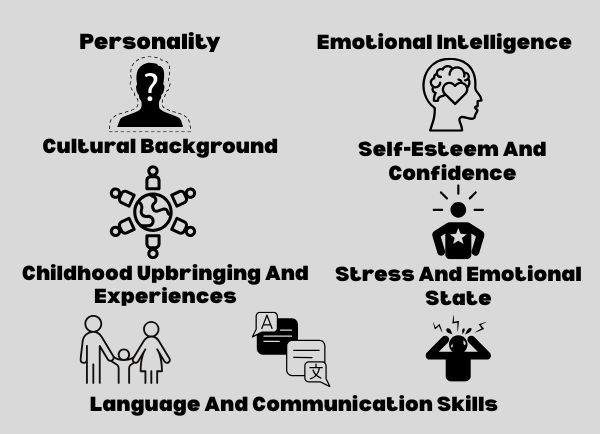
An individual's communication style may vary upon different circumstances and may not remain constant throughout their lifespan. There are certain factors that influence the way we think, express ourselves, and interact with others. To have a better understanding of the different communication styles, consider these crucial details:
Introverts and extroverts have different ways of communicating what they think and feel. A reserved individual has the tendency to be more passive, while an outgoing one may be more assertive or aggressive depending on the situation.
Communication is greatly influenced by culture. Some may prefer being straightforward and direct, while other cultural communities promote peace and harmony most of the time.
Children are natural learners. They can easily absorb and retain certain information during their formative years such as the way their parents communicate with each other and whether they are encouraged to speak up or keep quiet in different circumstances. How we are raised can greatly influence our tone of voice and reasoning skill.
The ability to understand and process emotions impacts how we react, listen, and express ourselves - which are key factors affecting our emotional intelligence. The higher the emotional intelligence, the more assertive a person can be.
Our self-esteem dictates whether we are more of an assertive or a passive type. Low self-esteem often leads to people-pleasing behavior while confidence can result in healthy and engaging conversations. Confident and bold individuals who know how to respect boundaries and keep calm even in stressful scenarios are most likely assertive communicators.
Stress and pressure usually leads to aggressive behaviors and defensive communication. Exposure to stressors that can cause fear, anxiety, and anger may trigger unhealthy discussions and even tension. To keep things positive, make sure to manage your emotions to avoid being too overwhelmed and stressed which affects how you communicate.
Individuals who are more articulate and expressive with their thoughts and feelings are good communicators. Having good communication skills may give you the confidence and guts to speak up rather than staying silent about certain issues. Debaters and public speakers most likely practice assertive communication in their day to day activities.

If you are not yet sure about your communication style, it is better to be aware to assess your strengths and weaknesses in terms of expressing yourself and work on being an effective team player.
These questions can guide some honest reflection and help you recognize patterns in your communication habits.
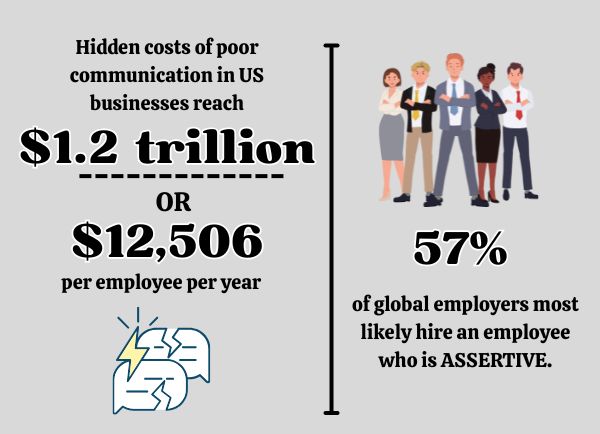
A huge part of good communication habits is learning to adjust in different circumstances. In an environment full of different personalities and principles, disagreements and frustrations are inevitable. To become productive team players and to promote healthy interactions within your workplace, it is better to learn how to adapt with every communication style. Studies are showing that the hidden costs of poor communication in US businesses reach $1.2 trillion or or $12,506 per employee per year. This shows how effective communication can make or break a business. Here are some tips on how to effectively handle communication styles for more friendly and professional discussions:
Offer support for passive communicators: These individuals are reserved and socially anxious in the workplace setup, so it is important to be aware of the non-verbal communication. They are usually the ones experiencing high stress levels. Provide a venue for them to express themselves through one-on-one discussions where they can be comfortable enough to speak up and practice healthy work-life balance by conducting free and simple stress management activities.
Provide clear roles for aggressive communication styles: Aggression is usually their way of getting what they want. In order to avoid confusion, provide detailed information about their roles and responsibilities in a project or in the workplace setup. Clarity and transparency will help them cope up and communicate well.
Encourage passive-aggressive communicators to be confident: Most of the individuals with this communication style may feel like their contributions won't matter. It is helpful to include team building activities in a monthly basis to boost their self-esteem even more.
Active listening for the assertive communication style: They are natural leaders who knows the balance between speaking up and listening. Statistics show that 57% of global employers most likely hire an employee who is assertive. These individuals are highly productive, making them step into leadership roles compared to the other communication styles.
Being flexible and emotionally intelligent allows you to match your communication with the other styles, making your message delivered while understanding what your colleagues want to portray. To maintain healthy communication habits and build long-term rapport, it is important to manage your emotions and ask for feedback.

Once you have finally assessed and understood your communication style, take time to work on strengthening it. Assertiveness training, active listening, and empathy exercises are great tools to become a better team player and an effective communicator. Improving your communication habits will not only boost your career, but it will also help you build positive relationships at home and in your workplace.
Being aware of how communication styles differ from each other will help you respond better as it creates balance and fairness in your environment. For example, you must stay calm and composed around aggressive individuals and encourage feedback from passive ones. Being flexible and adaptable to differences will result in productivity and harmonious interactions.
As digital advancements started to rise in 2020, it has also created a significant impact in communication styles and methods. According to recent studies, 55% of employees communicate via email. 11% of businesses in the US utilize online chat tools while another 11% use project management tools. The presence of AI has also helped 73% of businesses save time by using chatbots for instant communication. These developments have led many companies to streamline their operations and increase productivity within their workforce.
Communication is one of those skills that we can continuously develop and refine as we grow and progress. Whether you are giving a product presentation, catching up with a friend, or resolving disagreements, your communication style sets the tone. By being more aware of how we express our thoughts and feelings and how others respond, you can foster more meaningful and stronger connections with others. Therefore, learning what are communication styles, how to identify them, and why they matter will help us build better communication habits.

Ronald Osborne is an Australian entrepreneur and experienced business coach. With over ten years of business and mentoring experience, an MBA specializing in Finance, along with launching/partnering with over 10 of his own companies around the globe, he has been able to achieve his version of success. Ronald has been able to help large telecommunication companies, law firms, trade businesses, and everyday business owners improve their business and take it to the next level.


