
Is the sea calling you? Starting a fishing business is perfect for those who love the sea and turn their passion into something profitable. Just like any other business, the process of starting a fishing company is challenging yet rewarding when done right. It requires a lot of planning, investing in the right gear, and handling all the necessary permits and licenses. With approximately 73,200 fishing businesses in the US, this also calls for a need to create a good strategy for your business to stand out.
If you are really passionate about entering this industry, this insightful article will give you an overview on how to start a fishing business the right way.
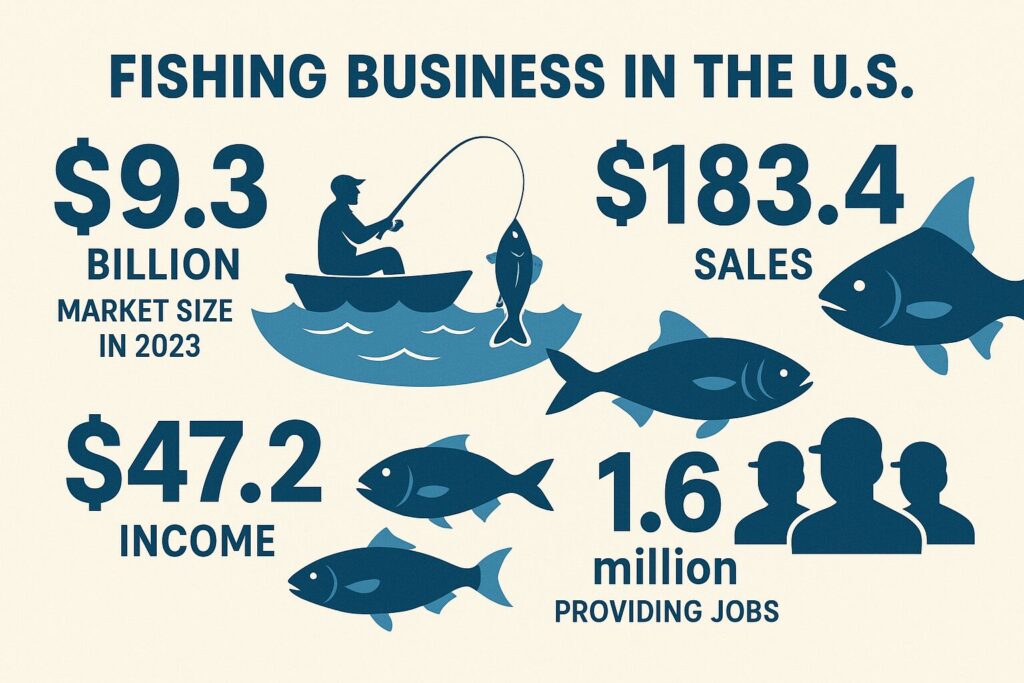
The US fishing industry has experienced challenges in the year 2023 with a slightly decreased market size of $9.3 billion, while the number of fishing businesses have increased. Commercial fisheries and the seafood industry has reached $183.4 in sales and $47.2 billion in income, providing 1.6 million jobs. Before adding up to these numbers, there are many factors that you need to consider such as the business models to choose from, time needed to reach profitability, and the success rate of this kind of business.
Before you proceed, determine your niche first so that you will have a clear idea of the licensing and other requirements needed. Here are the options you can choose from:
These common business models come with different challenges. Knowing your niche will help you assess your experience, find a good location, and work around your budget.
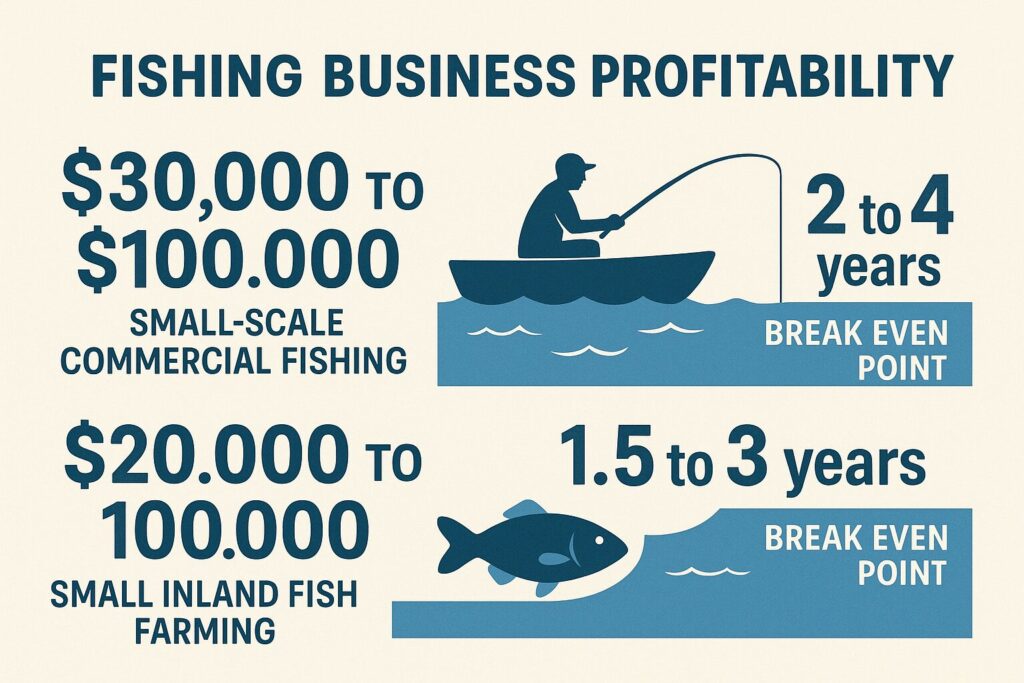
Knowing a business' profitability is the key to determine if it is worth pursuing or not. Start with researching estimated startup costs so that you will have an idea for your budget and funding options. Small-scale commercial fishing typically costs $30,000 to $100,000 while small inland fish farming ranges from $20,000 to $100,000. These costs vary upon the equipment acquired, location chosen, and other assets you may have.
With these initial costs to launch your business, the time frame to reach profitability also differs. Commercial fishing often takes 2 to 4 years to break even while fish farming takes 1.5 to 3 years. Having an idea about the break even point will help you manage your expectations and find better strategies to maximize your operations.

Compared to other industries in the US, fishing has a more favorable success rate. The US Bureau of Labor Statistics has reported 50.5% of businesses in the agriculture, forestry, and fishing sectors are still existing and operating after 10years. These sectors have the highest survival rates because they give solutions to the basic needs of the majority. Given a 3-year period, 70.6% of fishing businesses are possibly still operational during this time. This shows that a fishing venture is a worthy investment despite the competition.
To ensure success, start small and scale up upon demand. Build partnerships with local markets, restaurants, and distributors to make sure that your stocks will sell out after harvest. Lastly, work on your online presence to reach a wider audience.
After thorough market research, use the information you gathered to create a comprehensive business plan. This includes your business goals and objectives, local market analysis, services you will offer, pricing, marketing strategies and your budget. Having a clear understanding about these things will help you with your goal-setting and decision-making. You will need these important information as you go along with your business operations, creating a clearer path and letting you stand out in the competitive market.
Depending on the type of operation and location of your fishing operations, there are specific fishing permits and licenses that you need to comply. Dealing with your business' legal requirements will help build trust and credibility, so before starting your operations, do not neglect this crucial aspect. First and foremost, you'll need to register your business name. Make sure it is unique, relevant, and catchy. Here are other common requirements that you need:
Contact your local fisheries department to know what other documents and licenses you need to comply with. Always check recent news and view updates from the involved government agency as requirements may change annually. Consider also joining relevant local associations for they can guide you go through the whole process.

The tools and equipment you need depend on the type of operations you will be involved in. Invest in quality gears to ensure safety and efficiency, specially for commercial fishermen. For startups on a budget, you don't need to buy all equipment at once. You can even acquire used tools and boats that are still in good condition. You can easily scale up and buy brand new once you have started to enjoy profit. This ensures you will not go over your budget and maximize any amount you have earned along the way.
On you planning and canvassing phase, you can look for relevant garage or auction sales in your community and maybe score some affordable tools that may be useful for your operations. Always prioritize safety and productivity for your business. It will not only protect your catch but your life as well.
Just like any other venture, location plays a crucial role in attracting more sales and potential customers. In the US, Alaska is top one for commercial fishing and covers 60% of all US seafood harvests. The state has an abundant marine life and pristine waters, making it a good location to catch a variety of fish. If positioning in North America is not possible for you, at least choose a good dock spot that has a good access to both the waters and to your target market. Consider also the competition in your chosen area. If possible, look for low competition yet high demand areas to ensure high profit. This is an essential part as you learn how to start a fishing business.
Your location also impacts the peak season of your operations. During March to late April, warmer temperatures may trigger feeding patterns. This season is best for inland and freshwater fishing. The best months to increase your operations is during the summer (June-August). During this season, the demand is high due to longer days, calm waters, and a lot of tourists coming in. Slower days are expected during winter which happens between December to February.
The traditional way to market a business has somehow evolved. The rise of technological advancements and the internet changed the way products and services are being promoted and sold. In this competitive industry, it is essential to create marketing strategies that will help your business boost its online visibility and reach a wider audience, leading to higher sales and profit. We have identified some useful techniques that you can use.
Having one user-friendly website can solve all your marketing worries. Almost everyone uses search engines to look for products or services that they need. Optimizing your website using these SEO techniques will help your business compete with the headliners of the industry:
Work on claiming your Google Business Profile to enhance your online visibility. Incorporating your complete business name, address, website, service hours, areas served, and social media profiles will provide easy navigation for your potential customers. Confirming your pin on Google maps will easily guide your customers if they are looking for your business. If there are local markets, restaurants, and hotels in your area, collaborate with them as a supplier of seafood products they need and get referrals. Attend food festivals and local exhibits to promote brand awareness. The traditional way of selling can never go old even in this modern and technologically advanced world.
Social media has played a very important role in every business' growth and success. Share some photos or reels of your recent catches, satisfied customers, and your vessel floating on scenic waters. This will create an impression of productivity and efficiency to your audience. Run ads and promotional offers on any social media platform that you have. Doing so will hit two birds in one stone - encouraging potential customers to engage while advertising what you can offer. Focus on Instagram and Facebook if you want visual and local engagement, while you can also utilize YouTube or TikTok for informative guides and storytelling.
Joining the fishing industry is a lot more than you think, but it will be easy once you have learned the right process on how to start a fishing business. First step is to conduct a market analysis and create a business plan based on the information you gathered. Other businesses may require simpler or fewer legal requirement, but running fishing operations are different. There are a lot of licenses and permits you need to secure depending on your chosen niche and state regulations. After handling the legal side, make sure to acquire quality tools and equipment that you initially need. Finding the best location can either make or break your business. Look for a convenient location near both the waters and local markets. This will ensure your catch reaches the market fresh. Lastly, plan out the best marketing strategies to make your business stand out in the competitive market and enhance online visibility. Follow these steps and surely, you'll achieve long-term success and growth.

Ronald Osborne is an Australian entrepreneur and experienced business coach. With over ten years of business and mentoring experience, an MBA specializing in Finance, along with launching/partnering with over 10 of his own companies around the globe, he has been able to achieve his version of success. Ronald has been able to help large telecommunication companies, law firms, trade businesses, and everyday business owners improve their business and take it to the next level.


