What Is An Executive Coach

If you are a leader striving to become better or a company aiming to develop exceptional future leaders, it might be the right time to partner with an executive coach. Many may have misunderstood what they can do but in fact, executive coaching has a lot to offer to every company, business, and aspiring leader out there. To take a step further in your leadership journey, let us understand what is an executive coach, how they can help, and what to expect in a coaching session.

Understanding The Role Of An Executive Coach

Understanding The Role Of An Executive Coach

An executive coach is a professional who works with C-level executives, startup business owners, and other professionals transitioning to leadership roles. These high-potential individuals often seek experts to help them sharpen their skills and confidence to lead a group. The main focus is to improve their leadership styles to maximize productivity and effectiveness through proper mind-setting and encouraging progress over time. Coaches aren't there to provide all the answers, but they ask the right questions and guide leaders toward self-awareness resulting in better decision-making and stronger communication.

Due to the changing trends and high expectations in the business world, executive coaches have become key role players in the industry. Approximately, 39% of CEOs in the US have partnered with an executive coach which includes one-third of high level managers from the Fortune 500 companies. As of 2024, there are approximately 80,490 coaching businesses in the US, employing around 115,488 people in the industry. This expansion has greatly contributed to $14.1 billion annual revenue and a high CAGR of 17%. These figures show the remarkable impact of coaching to several businesses and companies in the US.

Who Can Benefit From Executive Coaching

Who Can Benefit From Executive Coaching

Executive coaching is not just for CEO's and senior VP's. Professionals and companies who wish to level up their career and leadership game are typically the ones needing these coaching services. Aside from these individuals and organizations, let us point out who are most likely to benefit from executive coaching.

One-third of the Fortune 500, the largest companies in the US based on revenue, has reported to be gaining benefits from executive coaching. One leading company has 77% of its respondents seeing the positive impact of coaching within their organization. These facts show the undeniable advantages an executive coach can offer to anyone needing it.

Common Goals Of Executive Coaching

Alongside the benefits executive coaches can offer, they also have unique objectives for every client they work with. To have a clearer grasp of their roles and responsibilities, it is crucial to understand what they want to accomplish for the progress and development of their clients.

Improving Leadership

Leadership development is one of the main goals of executive coaching. It helps leaders project confidence and authenticity to develop strong communication skills and learn how to effectively command a team. After all, true leadership is not just about charisma, but it is all about sharing the same vision and goals with the people around you.

Developing Emotional Intelligence

Understanding your own emotions while trying to empathize with others is what you call emotional intelligence (EQ). This is one of the most crucial leadership traits that every individual must possess. Handling a group of people with different personalities requires high EQ to be able to identify emotional triggers, manage conflicts effectively, and build more meaningful relationships.

Focusing More On Communication Skills

One of the most common reasons why leadership is not as effective as it should be is the lack of proper communication. Coaching can contribute a lot to how a person speaks, listens, and delivers feedback. This is essential for a whole organization to collaborate better towards their common goal. Stronger communication leads to greater outcomes.

Strengthening Decision-Making And Strategic Thinking

Every person is faced with decisions to make everyday. Executive coaching can help clients evaluate their choices, step back when needed, and make decisions aligned with their goals. This involves promoting a strategic mindset and focusing on the bigger picture to come up with efficient strategies.

Building A High-Performance Team

An effective coach does not only give emphasis on individual performance. Rather, it focuses on leadership that uplifts others. The core of coaching sessions are deeply rooted on developing, motivating, and retaining potential individuals by improving team dynamics, fostering trust, and creating a positive work culture. This will all lead to the development of a highly competitive organization.

All of these factors when combined together often yield great results including clearer communication, improved collaboration, clarity in conveying ideas, and stronger alignment with business goals. To make it simple, executive coaching supports individuals not just in going through their struggles but becoming better versions of themselves.

How Executive Coaches Differ From Business Coaches

How Executive Coaches Differ From Business Coaches

You may have heard both executive coaching and business coaching. They may be interchanged sometimes but it is important to take note of their difference when it comes to focus, typical clients, and coaching scope.

An executive coach concentrates more on personal and professional development of high potential individuals in an organization such as corporate executives, senior managers, and Fortune 500 managers. They usually cover leadership development, strategic thinking, and emotional intelligence. Focusing on improving mindset and behaviors, it is simply aiming to make an organization more efficient. Understanding what is an executive coach is important to know which professional should you work with.

On the other hand, business coaching emphasizes more on guiding entrepreneurs and business owners to improve their overall performance and strategy by focusing on profitability, growth, operational efficiency, and marketing. A business coach provides insights on business planning, growth strategies, operations and systems, and time management. In this set up, a coach stands more like consultants and mentors who give tactical advice and guidance.

Both executive and business coaches create an impact depending on your chosen career or business venture. Many professionals even seek the expertise of both to come up with a strategy and improve one's mindset. Now that you already know the difference, you can now choose or decide which coach is best suited for your needs.

What Clients Should Expect In A Coaching Session

What Clients Should Expect In A Coaching Session

Every coaching session is personalized depending on the clients' needs and specific concerns but it usually follows a structure to facilitate a meaningful and orderly engagement. In this section, we will discuss the executive coaching process in detail so you could manage your expectations.

1. Initial Consultation

Before anything else, the coach initiates an initial consultation to talk about your objectives, challenges, and expectations. This is also where you, as a client, can assess whether the coach's style and personality matches yours. The purpose of this step is to determine whether there is compatibility and clarify everything you want to know before you start.

2. Goal Setting And Agreement

Once you have decided to start, the next thing to do is to set goals and agree at a certain point in terms of timelines, and metrics for success. This is done to clear out coaching objectives and set boundaries for confidentiality.

3. Assessment And Feedback Gathering

A coach may use assessments like 360-degree feedback from peers and colleagues, personality assessments, and behavioral observations. This step helps identify your strengths, weaknesses, and areas for growth. The main goal is to see where you are positioned as a leader and discover more about how you interact with others.

4. Development Planning

With the data gathered from the assessment, the coach creates a development plan that aligns with your goals and identifies the key areas of focus for every coaching session. This plan may include the possible milestones you'll go through, behaviors to practice, and ways to solve conflict effectively.

5. Ongoing Sessions

As the plan or coaching outline has been created, the actual sessions take over and would typically last 60 to 90 minutes at a bi-weekly or monthly schedule.These interactions are considered confidential where you can open up about current challenges, reflect on your own behavior, and try to implement the new strategies. The coach listens, understands, and guides but doesn't provide exact answers. Instead, they let you discover it on your own.

6. Progress Check-Ins And Sustaining Growth

Follow-up feedback and check-ins are essential to track progress. This is to see whether the coaching sessions have created a remarkable impact on your performance and checks to see how you will continue to achieve your goals without coaching. Assessments are conducted to check your progress, current mindset, and the ability to maintain momentum.

The coaching process is straightforward, considering human limitations and flexible enough to improve your skills. It's not about fixing problems, but unlocking potentials you never thought you'd have.

Partner With The Best Executive Coach This 2025

Partner With The Best Executive Coach This 2025

Every executive coach you'll meet out there is unique and skilled in their own way. Aside from looking for a coach with formal training, relevant experience, and strong credentials, there are other factors that you need to consider. We will look into these aspects before you finally start your coaching journey with the right coach.

  1. Clarify you goals: Looking into your concerns and what you want to achieve will help you land on the right coach. Assess your skills, blind points, and other preferences. Working with a coach that specializes in your area of concern will most likely be more effective guiding you on your journey.
  2. Check experience over credentials: There are a lot of executive coaches with promising credentials yet lack actual experience. Take time to ask them about the background in handling concerns of leaders same as yours. The most effective coach combines both their formal training and real-world experiences to create efficient and productive leaders.
  3. Assess their coaching approach. Coaching is also considered a personal journey involving trust and openness that's why most coaches offer a free session to determine compatibility before proceeding. Work with a coach who listens well and challenges you constructively. Avoid those who lack empathy.

Choosing the right executive coach isn't about going with who is famous in the industry; it is more of finding someone who can bring out the best in you as a leader and as a person. After all, this isn't about the coach. It's about your individuality and professional development.

Short Summary

Executive coaching has made waves this 2025 for aspiring leaders and business owners who want to level up their career. Aside from getting the great benefits from leadership coaching or building a highly effective team, an executive coach has more to offer. These include improving your emotional intelligence and solidifying your decision-making skills to build professional relationships within your organization. Now that you already know what is an executive coach, choose someone who listens well, has relevant experiences, and matches with what you want to achieve. This is all about having a meaningful coaching engagement and retaining the habits you have learned.


What Is Linear Thinking

Have you ever tried solving a problem with a step by step process in mind to come up with a solution? Doing so means you have already experienced linear thinking. It is a straightforward forward thinking that many of us use everyday to process information and make decisions - but there's a lot to discover about this common thought process. In this article, we will uncover what is linear thinking; what it really means, when it works best, and how it differs from other ways of thinking.

What Is Linear Thinking

Linear thinking is a way of reasoning that involves logical progression following a starting and end point, just like a straight line. Linear thinkers are considered to be left-brained with most of them being analytical, organized, and goal-oriented. These individuals follow a sequence when dealing with everyday tasks and dilemmas, starting with the specific concern and eventually ending with an answer based on logic and existing data. What makes this beneficial is that their brains base on past experiences to come up with solutions. Usually, they thrive on creating rules and patterns to drive conclusions and make decisions.

Common Traits Of A Linear Thinker

Common Traits Of A Linear Thinker

A linear thinker often handles any situation with structure and precision. They are typically good at math, science and technical subjects, having a good chance to become engineers, accountants, information technology specialists and other research-based professions. Let us discuss more about the unique qualities these people share.

They Like Complete Information, Instructions And Deadlines

Linear thinkers works best when there's a clear overview and goal given. They are more productive when they know how much time they have and what is the expected outcome since they are good at following processes, meeting deadlines, and complying to protocols. Giving them clarity can help them plan out solutions ahead of time. Checklists, guidelines, and timelines contribute much to linear thinking.

They Break Down Big Problems Into Smaller, Manageable Parts

When facing problems, the linear thinking approach splits it into smaller parts which allows the analytical mindset to take over. Typically, it is done by accomplishing one category at a time to avoid being overwhelmed and following a process to resolve the bigger issue. Let's take organizing events as an example. Splitting it into smaller sub-units such as budgeting, venue booking, completing the guest list, and food catering can be very effective for linear thinking styles.

They Tend To Follow Established Rules, Systems, And Knowledge

Linear thinking thrives on proven and tested methods. Work becomes easier and convenient when rules and systems are being followed, leading to productivity and positive results. This approach can be very dependable and consistent, but doesn't give room for flexibility when creativity is needed. In a work set up, this thinking style always follows rules and guidelines and expects colleagues to do the same.

They Focus On One Task At A Time

Individuals who often practice linear thinking are not good at multi-tasking. They perform best when they focus on one task at a time before moving on to the next. This approach can lead to high accuracy, especially when it comes to detail-oriented work, but is difficult to thrive in fast-paced environments. Typically, people with this thinking tend to block out time in their calendar to hyper focus on a specific task rather than moving between reports, emails, and meetings.

Real-Life Example Of A Linear Thought Process

Real-Life Example Of A Linear Thought Process

Linear thinking involves only two answers - right or wrong. As logical as it should be, this type of thinking is simply fast and organized, making it constitute 90% of our daily thought process. To fully understand this concept, here are real-life examples of linear thinking on a day to day activity basis.

These examples show that linear thinking is common and experienced in our everyday life. It is easier to accomplish these tasks when a structured approach is followed.

When Is Linear Thinking Most Effective

Being aware of what is linear thinking and when it works best can help you adjust your ideas and thoughts to perform well with your profession or even with simple daily tasks. This thinking approach is essentially powerful in environments requiring cause-and-effect logic, following sequenced procedures, and expecting quantifiable results. Let us cite some situations where this way of thinking is effective and useful:

To simplify, linear mindset is beneficial in organized environments where a structured approach and accuracy matters.

How It Differs From Non-Linear Thinking

How It Differs From Non-Linear Thinking

Every person is unique and so is their way of thinking. Non-linear thinking, also called lateral thinking, often involves creativity, thinking out of the box, and looking at multiple perspectives to solve a problem. Unlike a linear mindset, they do not conform to fixed procedures and structured approaches. Individuals in a marketing field suit this type of thinking. Creating a marketing campaign for a product that is not performing well must go through a free-flowing brainstorming session where team members can contribute different ideas before finally reaching a resolution.

So, what really makes this thinking unique? Lateral thinking has no path to follow when trying to solve problems. The whole process is simply intuitive and spontaneous where proposals and suggestions jump from one thought to another. This type of thinking is generally beneficial in fields related to design, advertising, entrepreneurship, and any other industries requiring creativity.

Improving Or Shifting Your Thinking Style

While you may think that every person only follows one thinking style, you're wrong. Others may gravitate towards a certain thinking style but it is not impossible to improve the other. A linear thinker may experiment with brainstorming techniques to allow room for flexibility, while a lateral thinker can work with goal-setting and following structured procedures. The truth is, our minds are indeed flexible. There are times we follow a specific process to do things while we can also be creative when needed. It's just a matter of balancing our thinking styles depending on the situation while still aiming for the best solution.

Final Thoughts

So what is linear thinking and in what situation does it work best? Linear thinking is the most common thought processing used when solving problems and accomplishing everyday tasks. It involves a step by step and orderly process to achieve a specific result. Individuals with these thinking patterns fit in engineering, science, math, and research-based professions due to the need of following systems, rules, and protocols in order to be productive. Even with the linear mindset, a person can still develop and shift to lateral thinking which involves more creativity and spontaneity. Understanding your natural thinking pattern can help you go through problems effectively, work with others better, and grow holistically.

What Makes A Business Scalable

In this modern and evolving business world, the importance of scalability has taken over. A scalable business doesn't always mean thriving in the competitive market; it's more of having the ability to grow without being shaken by market demands and pressure. For entrepreneurs who wish to launch or expand their existing business, it is important to understand what makes a business scalable to ensure long-term success.

In this article, you will learn more about the essential traits and strategies you need to achieve scalable growth for your business.

What Is Scalability

Scalability refers to a business' capability to handle increased demands without affecting quality and performance. It simply means going through expansion in terms of customers, production, and even more service areas without the need for additional resources such as costs and labor.

To achieve a scalable business, you must work on having the structure, systems, and resources to make growth possible. Some companies come up with a strategy that allows expansion to take place by facilitating new processes to enhance operations. For example, if your business is aiming for 1,000 new clients or buyers, can the whole team handle the increased workload? Is your current software able to handle the demand? How does it affect your profit?

Assess your resources and team capabilities by considering these questions and take time to reflect if you are heading towards sustainable growth. After all, it's all about growing smart, and not about speed.

The Benefits Of Scalability

The Benefits Of Scalability

Treat scalability as not just an add-on to your business but a tool to achieve long-term success. Over the last five years, many small businesses in the US have successfully scaled their operations. According to the US Chamber of Commerce, about 70% of small businesses expect higher revenue after scaling up while 20% are targeting expansion by adding more people to their workforce. When it comes to market reach, small exporters have shown the fastest growth. 98% of small to medium firms have grown and expanded faster than others, specially those startups with global connections. With these figures showing the positive impact of scaling up, let us discuss more about the benefits of scalability.

What Makes A Company Scalable

What Makes A Company Scalable

As you explore more on taking your company to another level, considering these traits that dictates what makes a business scalable as you move to scale up will definitely have a remarkable impact. 

A Replicable Business Model

The core of every scalable business is a replicable model. Everything from your product, service, and work culture can be easily carried across different markets, clients, or locations without a complete overhaul. Take a look at companies such as Starbucks and Airbnb. Their success is not reliant on what's conventional but it is based on processes that work and can be repeated efficiently at scale. If your business cannot be leveraged, it's time to step up and standardize your process.

Strong Systems And Automation

Businesses having organized processes such as customer on-boarding automation, streamlined inventory tracking, systematic payments, and standardized deliveries will most probably achieve growth with quality still served. It is crucial to invest in tools and software that reduces workforce labor so they can focus on strategic work and reduce potential errors.

A Clear Value Proposition

Providing solutions is a scalable business' main goal. Be sure to create a message that points out your target audience, states the problems your product or service can solve, and reasons why it is better than your competitors. If your potential customers understand your business' purpose and valuation, then you are on the right track. The clearer your message is, the easier it is to market at scale especially if you are targeting new customers.

Financially Sound Foundations

Handling your finances well is the key to sustainable scaling. Whether we like it or not, growth needs enough capital. For your business to thrive, you need to be aware of your profit margins, cash flow, and customer acquisition costs. Blind scaling can lead to negative impacts such as burnout and bankruptcy. Having a scalable business means keeping overhead low, monitoring KPIs closely, and seeking for growth while considering your financial aspects.

Adaptable Leadership And Team Structure

When you plan to grow your business, that also means expanding your leadership responsibilities. A scalable business involves empowering team members, leveraging roles, and promoting relevant work culture. It doesn't solely rely on the founder; it needs teamwork. Hiring the right people and applying exceptional leadership can save your business from micromanaging and unnecessary delays.

Market Demand And Timing

A scalable business model won't be effective if it doesn't align with the current demand and preferences of your target market. To maximize your efforts, learn how to adjust with the increasing demand and shifting customer behavior at the right time. Research about current trends and validate your ideas. Business scalability depends on being in the right place, time, and solution.

Effective Scaling Techniques

Effective Scaling Techniques

Aiming for scalability does not happen in an instant. It requires careful planning, discipline, and willingness to let go of the old ways. Here are effective techniques on how to scale up your business:

Scaling your business the right way means having the right people, tools, and automated processes. When done the right way, building a scalable business is actually efficient and sustainable.

Example Of Scalability In Businesses

Example Of Scalability In Businesses

To help you understand this concept, let's take Airbnb for an example. It started as a chaotic small business in a San Francisco apartment and has then adapted a scalable business model that led to its unstoppable global growth. We will assess this business using the scalability factors we have discussed.

Digital Platform: Airbnb doesn't own a single property yet it has given real estate a new facade. It simply connects travelers and property owners all over the world through their platforms. This made expansion to cities and countries without the need to spend billions to buy properties.

Automation: Booking, payments, host messaging, and guest reviews are all automated. They can handle many customers at a time without hiring thousands of employees.

Scalable Revenue Model: Airbnb is a platform that facilitates easy bookings and earns a percentage with every transaction. No matter how many bookings they process, their profit grows without increasing costs and adding more people to their workforce.

Final Thoughts

Scalability can offer endless possibilities for your business. By focusing on technology, effective marketing strategy, and global systems, you can create a business model that promotes sustainable growth without losing quality or customer trust. These factors contribute greatly to what makes a business scalable. After all, it's not just about getting bigger, but it's about working smarter. Plan ahead and build a business that doesn't only solve the problems of today, but is ready for what's coming for the next few years.

What Is A Micro Business

Many people get intimidated when talking about starting a business. The truth is, it doesn't always mean launching a company with numerous employees, a corporate office, and a huge investment. Sometimes it all begins with a dream and the determination to make it work. That's what a micro business is all about.

Needing only skill, hard work, and the tools you need to get customers, this type of venture is more than what you think. Let's discuss more about what is a micro business, how it is unique, and what you need to start.

Understanding Micro-Businesses

A micro business, or some may call it as microenterprise, is defined by the US Small Business Administration (SBA) as an independently owned company with only less than 10 employees. Usually, it started as a side hustle, a passion project, or a hobby generating an additional source of income. If you look around you, they come as freelancers, a home-based store, or a mobile food cart. They are often operated by just one person - the owner who runs everything from production to advertising, and the actual selling. These businesses operate on a low budget, use only a minimal space, and serve a specific niche in the market. Due to these factors, they are vulnerable to a lot of challenges related to financing, marketing, and business scaling along the way.

Market Insights In The US

Market Insights In The US

Over 80% of small businesses in the US are non-employer firms which shows clear evidence that micro businesses cover a significant part of the economy. Despite the small size, the industry has contributed significantly to the US employment and has provided different services to various sectors. This is a testament of the strong entrepreneurship skills of American citizens.

How A Micro-Business Differ From A Small Business

There's a clear difference between a small business and a micro-business even though they are both part of the small business ecosystem. Oftentimes these terms are interchanged and confusing to some but a small business can have up to 500 employees according to the SBA. On the other hand, a micro business only has 9 employees or less; some may even only have one or two. They are typically smaller and focus on a specific niche rather than providing a broad range of products and services.

The scale, complexity, and funding needs are generally smaller. In most cases, they only rely on small loans and personal savings since the size of a business can affect eligibility for financing options. On the contrary, small businesses might look for bigger funding and more investors.

Types Of Micro Businesses

Types Of Micro Businesses

Micro businesses are all around us but we are not aware or we just don't realize that we encounter them everyday. To give you an idea, these are considered the most common micro business types:

You may not find them in big offices or spaces and costly promotions but they offer products and personalized services that are fruits of their genuine passion. Look around you and start supporting startup businesses today!

Common Challenges Met By A Micro Business

Just like other ventures, micro business owners will have their taste of ups and downs and are not guaranteed success. Most of the time, these entrepreneurs handle everything from marketing, customer service, and production all on their own. With a lot on their plate, it is expected to meet some challenges along the way. Being aware of these challenges is necessary in understanding what is a micro business.

Limited Time And Resources

Starting on their own or with limited manpower can lead to time constraints and fewer resources to utilize. As some startup entrepreneurs start a side hustle while having a full time job and other responsibilities, they find it difficult to balance their time. Many of them approach family and close friends for additional resources and possible investments.

Inconsistent Income

This type of business doesn't guarantee a stable flow of income. Clients may come and go and trends change over time. Also, marketing your business to attract more customers may require an additional investment.

Scaling Up Operations For Additional Products And Services

Due to limited time, resources, and unstable income flow, it may be difficult to scale up operations to innovate or add more products and solutions to meet the demand. But if your business has shown remarkable growth and steady cash flow, it may be the perfect time to scale up.

Benefits Of Starting A Microenterprise

Benefits Of Starting A Microenterprise

Despite the possible challenges that you may encounter when starting a micro business, there are also many benefits and advantages that you can enjoy. These are the main reasons why many entrepreneurs are encouraged to take a risk in growing their startup businesses.

Low Startup Costs

Many individuals with a limited budget are thrilled to start their own small business due to the low startup cost it may require. No need for a big office space or heavy marketing - just you and your determination to make it happen. With this concept, it is possible to grow and start a business at the comfort of your home with your family and acquaintances as your first clients.

Flexibility And Control

In this type of business, you are the boss, you can set flexible hours, and you can choose to work from anywhere. This flexibility and control can give you the freedom to work at your own pace, providing more room for productivity to grow your business.

Niche Focus

Serving a specific market can lead to attracting and retaining loyal customers without costly marketing efforts. The key is to improve and innovate what you offer in a sustainable way so that people will keep on patronizing your business. Word of mouth referrals can significantly impact and broaden your client base.

How To Start A Micro Business

If you are really passionate about launching your micro business, the process is a bit straightforward especially when you want to keep things simple and within your means.

  1. Create a Business Plan: With your ideas in mind, create a structured and detailed business plan to have a clear overview of what your business looks like. Include your service offerings, target market, financing options, simple marketing strategy, and your projected cash flow.
  2. Business Structure: Decide whether you are going to launch as a sole proprietorship, limited liability company (LLC), or partnership. Your choice will determine the taxes and licenses that you will have to comply with.
  3. Register Your Business: Choose a name that resonates with what you offer and visit the Secretary of State for the exact process and fees.
  4. Apply for an EIN: You will need an Employer Identification Number (EIN) from the IRS if you plan to hire workers. This is also a requirement if you will open a separate bank account and for filing taxes.
  5. Obtain Necessary Permits and Licenses: Based on your state's regulations, there are specific licenses that you have to get before you can officially start. You may also need zoning permits specially if you are working from home.
  6. Open a Separate Bank Account: To easily track your finances, opening a separate bank account is helpful to many. This will protect you and your enterprises legally specially if you are an LLC.
  7. Set Up Basic Online Presence: Using Facebook, Instagram, and TikTok to establish a strong online presence can help you find leads and build a solid client base. Be consistent with posting relevant reels, photos, and contents to drive more engagement.
  8. Manage Your Cash Flow: You can use Quickbooks or even Excel and Google Sheets to track your income and expenses. Being organized with your finances can help you calculate profit and will save you from stress during tax season.

Final Thoughts

If you are passionate about something or you just want to establish a new stream of income, starting a business might be the answer. There may be a lot of challenges you need to face along the process but the rewards you'll get from the whole experience is worth it. After all, it's not about becoming successful overnight - it's about building something meaningful on your own terms.

Before diving in, make sure to plan ahead, do a thorough research, and understand what is a micro business. A successful entrepreneur begins with just their passion and simple ideas. With the right approach and hard work, it all ends with a fulfilled dream.

What Are Communication Styles

Building strong relationships personally and professionally is grounded by good communication with the people we interact with. Whether you are working with your colleagues, speaking to a loved one, or sending text messages to certain people, the way you communicate affects the message you want to express.

In this article, we will discuss what are communication styles, why they are important, and how being aware of your communication style can transform your day to day interactions.

What Is A Communication Style

Every person has a unique communication style used when they interact with others. It is shown by how an individual shares information, expresses thoughts and feelings, and reacts to certain circumstances. Your tone of voice, body language, and choice of words reveals what you truly feel and what you want to convey. Whether it is verbal or non-verbal, you can see these communication styles through everyday conversations, in writing, and even in the digital space.

Understanding how people deliver certain reactions and messages will help you interact better, promote effective communication, and eventually improve your relationships. While there may be different communication styles to consider, most styles fall into a few main categories that will help us understand others and ourselves better.

Why Communication Styles Matter

Why Communication Styles Matter

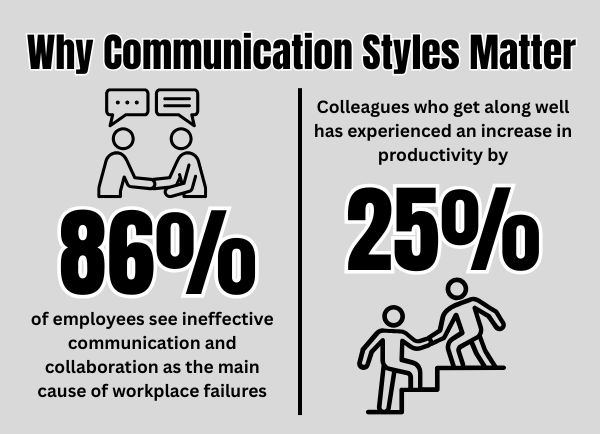
Misunderstandings at home and in your workplace are mostly because of communication lapses, not necessarily from disagreement. Recent statistics show that 86% of employees see ineffective communication and collaboration as the main cause of workplace failures, while colleagues who get along well has experienced an increase in productivity by 25%. We may not notice it but communication styles can affect everything in our lives, from relationships, decisions, and even work efficiency.

When we understand the communication styles of team members in an organization, it would be easier to build bridges between differences and adjust to every situation. Handling difficult conversations such as resolving conflicts and giving constructive criticism requires full awareness of the involved person's communication style and personality. Knowing your own style and learning to recognize others', can foster teamwork and create positive work environments.

The 4 Main Types Of Communication Styles

The 4 Main Types Of Communication Styles

Even with the diversity of people around the world, researchers and experts have agreed that there are four major types of communication styles in general. In this section, we will differentiate every style to give you an idea. Read more to know what are communication styles and how does it affect the people we interact with.

Passive Communication

Passive communicators usually avoid conflicts and stay silent when issues arise in order to be in peace. The majority may see them as quiet and have the fear of speaking up which often leads to conflicts and miscommunication. In order to be aware of what they truly feel, check their non-verbal cues such as poor eye contact, frequent fidgeting, and arms crossed. To deal with this kind of communication style, it is helpful to initiate one-on-one conversations and ask them for their opinions. Encourage them to speak up by avoiding the basic yes or no questions. Provide positive feedback whenever an issue has been resolved successfully.

If you are a passive communicator, work on enhancing your communication skills and involve yourself in positive events that will encourage you to speak up. Try communicating in your most convenient and preferred way. For example, if you prefer writing rather than speaking, try to communicate via emails and text or online messaging.

Aggressive Communication

An aggressive communication style usually dominates every conversation and has the tendency to speak forcefully, affecting relationships and creating tension. These type of communicators are bold enough to express themselves, often driven by anger and frustration. Watch out for behaviors such as the typical aggressive gestures, interrupting others while speaking, and invading personal spaces. Working with an aggressive communication style requires calmness and knowing when to exit if things get worse. If you suspect you are an aggressive communicator, take time to learn more about positive communication and engage in activities that can help reduce your stress levels such as yoga and other physical activities.

Passive-Aggressive Communication

Passive-aggressive communicators appear passive on the outside but actually express their frustrations in subtle ways. Their words don't match with their actions, making them more manipulative. At first, they may agree but later on show aggressive behaviors that may cause confusion. Watch out for gestures such as frowning, being sarcastic, muttering, and showing silent treatment due to disagreement. When dealing with this kind of behavior, establish clear communication to avoid misinterpretation. It is also helpful to confront the passive-aggressive communicator to let them be aware of their actions. Clarity and honesty helps both parties address a certain situation effectively and to come up with a solution.

Assertive Communication

Assertive communication style shows the most respect and confidence among other types of communicators. They clearly state their opinions while respecting the space of other people. These individuals know how to protect their rights without being too aggressive. Being with them feels safer and comfortable because they encourage honest and healthy discussions. An assertive style is manifested through friendly eye contact, direct communication, good posture, and calm facial expressions. Usually, the assertive type becomes team leaders for they know how to facilitate and deal with the other types of communicators.

Key Factors That Affect Your Communication Style

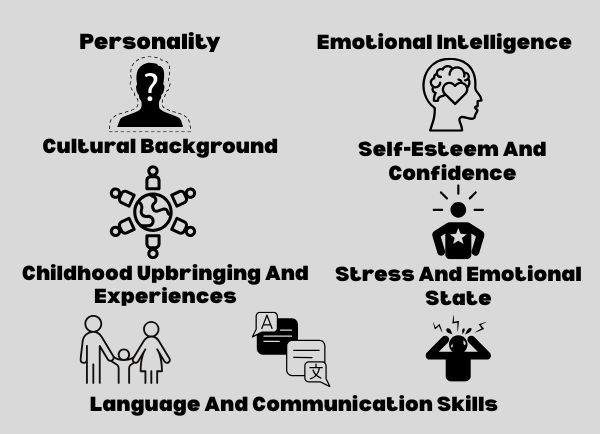
Language And Communication Skills

An individual's communication style may vary upon different circumstances and may not remain constant throughout their lifespan. There are certain factors that influence the way we think, express ourselves, and interact with others. To have a better understanding of the different communication styles, consider these crucial details:

Personality

Introverts and extroverts have different ways of communicating what they think and feel. A reserved individual has the tendency to be more passive, while an outgoing one may be more assertive or aggressive depending on the situation.

Cultural Background

Communication is greatly influenced by culture. Some may prefer being straightforward and direct, while other cultural communities promote peace and harmony most of the time.

Childhood Upbringing And Experiences

Children are natural learners. They can easily absorb and retain certain information during their formative years such as the way their parents communicate with each other and whether they are encouraged to speak up or keep quiet in different circumstances. How we are raised can greatly influence our tone of voice and reasoning skill.

Emotional Intelligence

The ability to understand and process emotions impacts how we react, listen, and express ourselves - which are key factors affecting our emotional intelligence. The higher the emotional intelligence, the more assertive a person can be.

Self-Esteem And Confidence

Our self-esteem dictates whether we are more of an assertive or a passive type. Low self-esteem often leads to people-pleasing behavior while confidence can result in healthy and engaging conversations. Confident and bold individuals who know how to respect boundaries and keep calm even in stressful scenarios are most likely assertive communicators.

Stress And Emotional State

Stress and pressure usually leads to aggressive behaviors and defensive communication. Exposure to stressors that can cause fear, anxiety, and anger may trigger unhealthy discussions and even tension. To keep things positive, make sure to manage your emotions to avoid being too overwhelmed and stressed which affects how you communicate.

Language And Communication Skills

Individuals who are more articulate and expressive with their thoughts and feelings are good communicators. Having good communication skills may give you the confidence and guts to speak up rather than staying silent about certain issues. Debaters and public speakers most likely practice assertive communication in their day to day activities.

Identifying Your Communication Style

Identifying Your Communication Style

If you are not yet sure about your communication style, it is better to be aware to assess your strengths and weaknesses in terms of expressing yourself and work on being an effective team player.

Assess Yourself With These Questions

  1. How do I express disagreement or frustration? (Do I speak up, stay quiet, or try to facilitate a smoother discussion?)
  2. When I'm with a group, do I lead the conversation or listen more? (This can assess whether you are passive, assertive, or somewhere in between.)
  3. How comfortable am I with saying "no" or setting healthy boundaries? (Assertive communicators most likely do this, while passive ones try to avoid it.)
  4. Do my colleagues or family members often misunderstand what I try to say? (This shows how effectively your style conveys your message.)
  5. How do I react when someone disagrees with me? (Do I argue, avoid, compromise, or try to find a balanced solution?)

These questions can guide some honest reflection and help you recognize patterns in your communication habits.

Adapting With Different Communication Styles In The Workplace

Adapting With Different Communication Styles In The Workplace

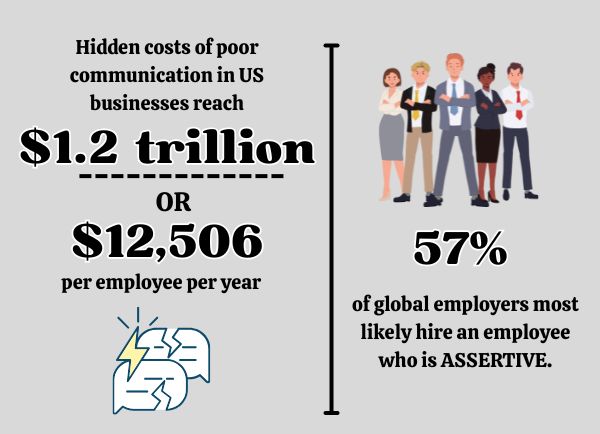
A huge part of good communication habits is learning to adjust in different circumstances. In an environment full of different personalities and principles, disagreements and frustrations are inevitable. To become productive team players and to promote healthy interactions within your workplace, it is better to learn how to adapt with every communication style. Studies are showing that the hidden costs of poor communication in US businesses reach $1.2 trillion or or $12,506 per employee per year. This shows how effective communication can make or break a business. Here are some tips on how to effectively handle communication styles for more friendly and professional discussions:

Offer support for passive communicators: These individuals are reserved and socially anxious in the workplace setup, so it is important to be aware of the non-verbal communication. They are usually the ones experiencing high stress levels. Provide a venue for them to express themselves through one-on-one discussions where they can be comfortable enough to speak up and practice healthy work-life balance by conducting free and simple stress management activities.

Provide clear roles for aggressive communication styles: Aggression is usually their way of getting what they want. In order to avoid confusion, provide detailed information about their roles and responsibilities in a project or in the workplace setup. Clarity and transparency will help them cope up and communicate well.

Encourage passive-aggressive communicators to be confident: Most of the individuals with this communication style may feel like their contributions won't matter. It is helpful to include team building activities in a monthly basis to boost their self-esteem even more.

Active listening for the assertive communication style: They are natural leaders who knows the balance between speaking up and listening. Statistics show that 57% of global employers most likely hire an employee who is assertive. These individuals are highly productive, making them step into leadership roles compared to the other communication styles.

Being flexible and emotionally intelligent allows you to match your communication with the other styles, making your message delivered while understanding what your colleagues want to portray. To maintain healthy communication habits and build long-term rapport, it is important to manage your emotions and ask for feedback.

Improving Communication Through Style Awareness

Improving Communication Through Style Awareness

Once you have finally assessed and understood your communication style, take time to work on strengthening it. Assertiveness training, active listening, and empathy exercises are great tools to become a better team player and an effective communicator. Improving your communication habits will not only boost your career, but it will also help you build positive relationships at home and in your workplace.

Being aware of how communication styles differ from each other will help you respond better as it creates balance and fairness in your environment. For example, you must stay calm and composed around aggressive individuals and encourage feedback from passive ones. Being flexible and adaptable to differences will result in productivity and harmonious interactions.

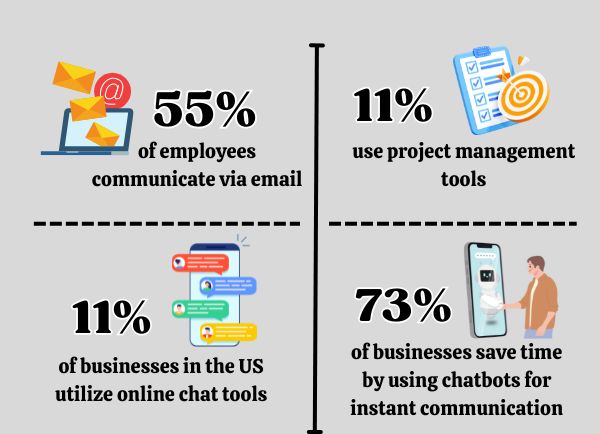
As digital advancements started to rise in 2020, it has also created a significant impact in communication styles and methods. According to recent studies, 55% of employees communicate via email. 11% of businesses in the US utilize online chat tools while another 11% use project management tools. The presence of AI has also helped 73% of businesses save time by using chatbots for instant communication. These developments have led many companies to streamline their operations and increase productivity within their workforce.

Short Summary

Communication is one of those skills that we can continuously develop and refine as we grow and progress. Whether you are giving a product presentation, catching up with a friend, or resolving disagreements, your communication style sets the tone. By being more aware of how we express our thoughts and feelings and how others respond, you can foster more meaningful and stronger connections with others. Therefore, learning what are communication styles, how to identify them, and why they matter will help us build better communication habits.

What Is A Marketing Strategy

Whether you are a newbie or an expert in the world of business, you have probably heard of the term marketing strategy. It may sound intimidating specially for new business owners, but to make it simple, it is a game plan carefully developed to reach your target audience and convert them into loyal customers. This modern and fast-paced world has changed the way products and services are advertised. Having an effective and feasible strategy is an essential to stand out in the competitive market.

In this informative article, we will discuss what is a marketing strategy, why it is important, and how to create one that actually drives results.

What Is A Marketing Strategy

A marketing strategy is an overview of a business' unique approach on how to attract, engage, and retain customers. It's all about identifying your target market, analyzing your competitors, and aligning your business goals based on these factors. Understanding consumer personas such as their usual preferences and what concepts resonate with them is essential in planning how your brand will meet their needs and how you can come up with a good value proposition. Think of it as a roadmap or a route that guides your business to take the right path and how to get there.

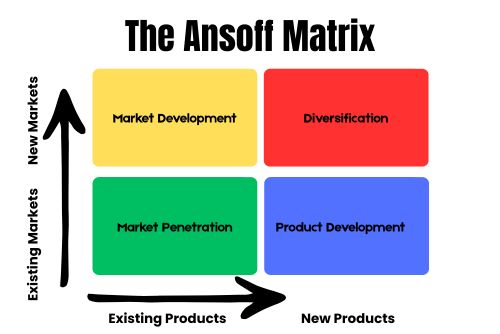
You can choose from a lot of marketing approaches depending on your product or service and where your audience usually spends time. It can be search engine optimization, social media marketing, or email marketing. Aside from these techniques, it is also helpful to consider the Ansoff's matrix which focuses on the 4P's or what they call the marketing mix. This pertains to the product, place, price, and promotion. This matrix is more of a strategic planning that helps businesses and companies decide how to grow. It highlights these four key strategies:

Market Penetration

Market Penetration

Based mostly on existing products and existing markets, this strategy focuses on increasing the sales of products you already have in your existing market. It's a less risky method that only involves boosting marketing efforts, adjusting pricing, improving customer service, and encouraging more engagements from repeat customers. One perfect example is a coffee shop offering loyalty cards to attract more customers.

Product Development

In this approach, a business or a company makes new product innovations to sell to its current market. Even though it's a risky strategy, it encourages a deeper buyer-business relationship. For example, a smartphone company releases a new smartwatch to match with their existing in demand phones.

Market Development

Market development involves venturing into new markets with already existing products by targeting new locations, new customer base, and new distribution channels. A good example is a local fashion brand who decides to sell on the national level for the first time. Sounds a bit risky due to more investments and efforts, but with thorough planning and the right approach, it will eventually benefit the business.

Diversification

Probably the riskiest strategy which requires development of new products to be sold to a new target audience. Despite the high risk, it offers high potential for growth when done right. This strategy can be classified as related diversification which means building an expansion related to the existing business or an unrelated diversification which involves moving into entirely something different. For example, a car manufacturer releases an electric scooter business in urban markets.

Why Having A Marketing Strategy Is Crucial

Why Having A Marketing Strategy Is Crucial

Think of a car without enough fuel. Surely it will encounter problems along the road and it won't be able to reach far places. The same analogy can be applied to a business and an effective marketing strategy. With a well-structured strategy, a business owner can stay focused on their clear goals while using their resources more effectively. It can also encourage good communication with your customers which will help you measure your success and make adjustments if needed. Here are the different types of notable marketing strategies that work with the recent trends in the market today:

  1. Content Marketing - Creating quality content such as blogs, videos, reels, and infographics to encourage engagement with a specific audience. This can build trust and authority over time. Using a content scheduler like CoSchedule can foster consistency.
  2. Social Media Marketing - Utilizing social media platforms such as Facebook, Instagram, LinkedIn, or TikTok to reach a broader market, build brand awareness, and advertise your products and services.
  3. Search Engine Optimization (SEO) - Optimize your professional website with SEO techniques to boost rankings on search engine results. Pay attention to your home page, content title, headings, and URLs to create an effective approach.
  4. Email Marketing - Sending emails and newsletters to prospects to get more leads and promote exclusive offers.
  5. Influencer Marketing - Collaborating with famous influencers and content creators to reach a specific market and gain more followers.
  6. Affiliate Marketing - Encouraging third parties to earn a commission for their marketing efforts and sales.
  7. Paid Advertising (PPC) - Running paid ads and campaigns on Google Ads, Facebook Ads, and YouTube to drive more traffic and enhance visibility. 
  8. Brand Marketing - Involves high focus on building a unique brand identity that connects easily with your audience. It's about selling a product to promote brand loyalty among your customers.
  9. Event Marketing - Joining business-related seminars, conferences, trade shows, and product launches.
  10. Referral Marketing - Encouraging customers to refer new ones in exchange of incentives and exclusive offers. 

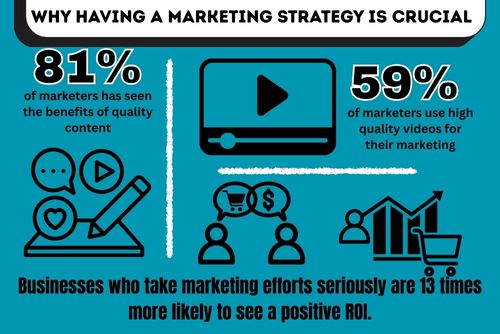
According to statistics from the New York Times, 81% of marketers has seen numerous advantages from creating interactive content. Not only is it low cost, but it is a marketing strategy that offers a long-term impact. It is also found that videos are the most used content format with 59% of marketers using high quality videos for their content marketing. Businesses who take marketing efforts seriously are 13 times more likely to see a positive ROI. The bottom line is that implementing your strategy is more than just running ads or posting on social media; it's the bigger picture that bonds all your marketing activities together. So be sure to formulate strategies that match your business and services.

Key Components Of An Effective Marketing Strategy

Key Components Of An Effective Marketing Strategy

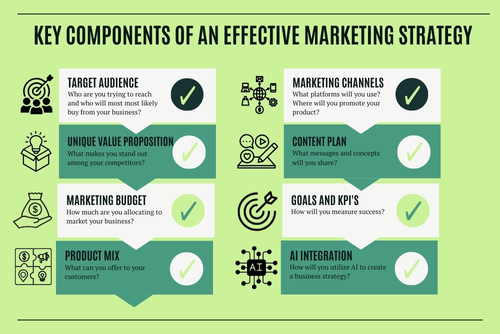
Every winning marketing strategy is a mixture of all essential components tied together to yield best results. It doesn't have to be complicated and it only needs to have these important details:

Completing your marketing strategy with all this information will indeed boost your company's reputation, sales, and visibility. Using these strategies efficiently helps you work smarter, not harder.

How To Create An Effective Marketing Strategy

How To Create An Effective Marketing Strategy

Learning how to create a feasible yet effective marketing strategy is crucial to prepare for your company's success. To create one, let us break down the important steps to further understand what is a marketing strategy.

Setting Realistic Marketing Goals

Having a clear grasp of your main business goals and marketing objectives will help you move towards growth and expansion. It may be very tempting to have goals like "gain more followers" or "increase sales." But for your marketing strategies to work, you must set a SMART goal (Specific, Measurable, Attainable, Realistic, Time-Bound). For example, "grow our email list by 20% in six months" is a goal that is easy to plan out and track.

Research About Your Target Market And Competitors

Strategic marketing requires thorough research and understanding of your target market and competitors. Start by creating customer personas or a detailed profile of your ideal customers. Consider their age, location, interests, needs, and buying habits. Additionally, analyze your competitors strengths, weaknesses, and value proposition to give you an idea of the tools and strategies you'll need for the next step. Alongside these factors, it is beneficial to also look out for the market size, market gaps where you can provide value, and potential economic realities that has a long-term impact.

Identify The Value Proposition Of Your Product Or Service

After researching about the market, it is now time to focus on developing a better product or service to satisfy the needs of your customers. Doing business is not just about coming up with a product and selling them to anyone, but it is more of offering solutions that are beneficial to your target audience. Most of the time, people do not point their attention to product features. Rather, they will look at its benefits and how it will help them with their day to day activities.

Craft A Message

As you position your product to meet the demands of your ideal buyers, promote a brand messaging that will surely resonate with them. Communicate to your potential buyers by providing accessible solutions to their problems and improving their way of life. Compare what you can offer to that of your competitors to see where you are positioned and show them that yours is better. Also, don't forget to use the right platform to channel your message and follow industry trends that will surely make you stand out.

Choosing The Right Marketing Channels

Choosing The Right Marketing Channels

Communication works best when the right platform is used. As you proceed to spread your message and advocacy to the right people, research about where they usually spend time and where they are active. Are they scrolling on Pinterest for artistic inspiration? Do they use Google to find solutions? Or are they into reading blogs and watching relevant reels?

Choosing the right marketing channel and platform to use will help you determine the resources you need to make it possible. There's no need to waste your time and effort on TikTok when your target customer base is primarily on LinkedIn. Some may utilize other platforms so it is important to find the suitable space for you to market your product or service.

Measuring The Success Of Your Strategy

Measuring The Success Of Your Strategy

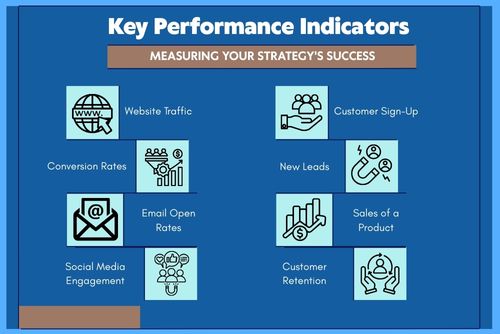
Tracking your progress is definitely part of the process. To know whether your marketing strategy is working or not, consider analytics as your best friend. Take enough time to review your campaign's performance to assess strengths and weaknesses, and adjust strategies if necessary. Here are examples of metrics to look out for:

A marketing strategy is definitely not a one-size-fits-all. To tailor your approach, you need to carefully look at the numbers and metrics that will determine the areas where you need to improve to keep your business running.

Marketing Plan Vs. Strategy: Explore The Difference

You probably heard about a marketing plan as you start your small business and wonder how is it related to a marketing strategy. Do not confuse yourself because they are two different things. To make things less confusing, a marketing plan answers the how and when of a business such as the platform to be used, campaign and content calendar, budget, and metrics. It is simply a detailed view of specific actions you need to execute your strategy. On the other hand, a marketing strategy is simply a high-level program that sets the direction and long-term goals. It answers the questions "what are we trying to achieve?" and "who is our target audience?"

Final Thoughts

To summarize, a marketing strategy is the foundation that guides every decision and action for your business. It helps you grow your brand, reach the target audience, and achieve business goals in the most effective way. As you learn more about what is a marketing strategy, you realize why it is essential for business growth, what are the key components you need to incorporate, and how to track your progress. There are also a number of strategies to choose from and your choice should depend on your branding, product, and message. Weaving all these factors together will boost your business' visibility and increase your sales in the long run.

How To Create An Action Plan

Reaching your goals is easy when you understand the path towards your desired results. Whether you just want to start the year right, launch a business, or handle a big project, a strategic action plan will help you stay organized and focused as you work towards achieving what you want. Having a clear roadmap of the steps you need to take will make it easier for you to track your progress and measure success. So before you set out to achieve your goals, make sure to go through every step on how to create an action plan carefully in this insightful article.

Understanding The Purpose Of An Action Plan

For sure everyone has already achieved some of their personal goals - may it be achieving weight loss, accomplishing a report, or even doing household chores. Even with these simple everyday tasks, we have mapped out steps on how to achieve them unknowingly creating an action plan.

A well-prepared action plan consists of specific steps and smaller tasks needed to complete a certain goal. Not only that, it also has important details such as your main objectives, resources needed, projected timeline, and task assignments. This is very helpful in guiding people and any organization in achieving their goals, making sure that everything is on track and organized. Creating an action plan beforehand helps in determining any potential problem along the way and preparing possible solutions. This strategic approach increases the likelihood of your team to succeed in completing a certain project.

The effectiveness of an action plan depends on the individual's commitment and a team's collaboration and communication. Regularly updating the plan promotes productivity by assessing current circumstances, allowing for possible adjustments and changes. Therefore, an action plan is not just an ordinary document. It's an essential tool that helps individuals, teams, organizations, and business owners achieve their goals in a safe and very systematic way.

Set SMART Goals

Set SMART Goals

If you want to make your work more structured and manageable, set SMART goals. Creating an action plan is not just about managing tasks and reaching the desired end point. It all starts with a goal that is Specific, Measurable, Attainable, Realistic, and Time-Bound. This ensures effective planning and decision making that will positively impact results.

Have A Specific Goal

Just like the basics, create a goal that answers to who, what, when, where, and why questions. Being specific promotes a well-defined and clear direction for you and your team to follow. For example, you want to lose weight and manage your health. So your specific goal might be to lose 10 kilos in 5 months. For this case, you can break down how many calories you need to take a day with a corresponding work out routine. After identifying these details, create an action plan that aligns with this specific goal.

Make It Measurable

Evaluating your progress is important to see how far you've come based on your goal. Find a way to measure them such as setting a deadline or a number or figure that tracks your progress. Doing so will make sure that you are on time and helps you decide on a back up plan if needed. You definitely need regular updates and monitoring in order to succeed.

Set An Achievable Goal

A certain goal can be very overwhelming but can be achieved after all the plans have been effectively carried out. Make sure that your goals can be accomplished based on your current situation, resources, and actions. For example, you want to finish a book within a week. Given these circumstances, assess your daily free time and set a number of minutes or hours to be spent on reading. Practicing consistency will make every goal more attainable and possible.

Be Realistic

Aside from having an achievable goal, make sure that it is realistic and aligns perfectly with your current situation and timeline. Let's take the reading goal as an example again. For working adults, spending 2 hours a day reading a book is not realistic. It may be possible but it could alter and disrupt daily routines and activities.

Time-Bound

A goal without a deadline can waste your time and productivity. Setting a specific date or time to accomplish tasks gives a sense of urgency and motivates you to stick to the plan, giving you more chances of achieving the results you want. Be sure about how much time you'll need considering the potential challenges to avoid things being rushed and team members getting discouraged if results did not come out as expected.

Create Step By Step Tasks To Reach Your Goal

Create Step By Step Tasks To Reach Your Goal

Once you have already identified a SMART goal, breaking it down into actionable and smaller steps can help it become more achievable. Sit down with your team and brainstorm about the specific tasks you need to accomplish before finally reaching your goal. Doing this will help you and your team maintain the momentum and make your action plan more manageable. Here's a sample scenario from which you can learn from:

Main Goal: Organize and declutter the entire house.

This goal sounds huge and overwhelming. You might not even know where to start, which can lead to doubts and procrastination. But if you break it down into smaller, actionable steps, it becomes much more manageable.

  1. Focus on One Room at a Time - Instead of trying to tackle the whole house in one day, you decide to start with just one room - like the living room. Once that's done, you move on to the next room, and so on.
  2. Sort Items into Categories - In each room, you make three piles: Keep, Donate, and Throw Away. This simple system helps you make quick decisions and prevents you from getting stuck.
  3. Set a Timer for Each Session - You commit to cleaning for just 30 minutes each day. This prevents burnout and keeps you motivated because the task doesn’t feel endless.

Identify The Resources You'll Need

Identify The Resources You'll Need

Effective action plans aren't complete without determining the resources you'll need to make your project successful. After identifying the necessary steps you need to work on, take time to list down the essentials which includes money, tools, schedule management software, and even the skills of the team members you have. This is an important part on how to create an action plan.

It is very important to prepare a complete resource list before starting a project or task. This will help you secure funding options if necessary, know where to find them, and avoid distractions in the long run. Being prepared makes you save time and focus more on being productive.

Work On Bigger Tasks First And Assign Responsibilities (If You Have A Team)

Once you have already secured all the essential resources you need, prioritize working on bigger and heavier tasks on your action plan. When an individual or a team knows their priorities, it would be easier for them to identify the tasks they need to work on first and practice proper time management. To make your action plan more effective, create a checklist of the tasks categorized according to priority and sequence. This will make things more organized and understandable by the rest of the team, allowing more time to work and focus.

After organizing the tasks, it is now time to empower every team member by assigning responsibilities that greatly fit their skills and expertise. It is important to be held accountable and responsible to all the tasks needed to be accomplished even if you're working solo. Aside from a checklist, utilize a project management software where you can put all necessary information about the SMART goals, tasks, team member assigned, and the deadline. There's something really satisfying and motivating about seeing all your progress organized in one page.

Review, Adjust, And Celebrate Success

As you start implementing your action plan, always track your progress and deadlines to keep everything intact. Check if there are tasks that take longer than expected and need to be adjusted. Assess the delays and think of a possible course of action to provide a solution. A good action plan doesn't need to be fixed and unalterable. Be flexible enough to make room for changes and adjustments as needed.

When tasks are slowly achieved step by step, celebrate these small wins along the way. Reward team members for milestones reached to motivate them more and create a healthy work environment eventually.

Example Of A Feasible Action Plan

Example Of A Feasible Action Plan

For whatever purpose you create an action plan for, may it be for school tasks, community projects, and tracking business sales, it is important to look for or follow a template that is easy to understand and holds complete information. A minimal design is acceptable and ensure that all these components are included:

  1. Goals and Objectives: Your goals should answer the question "What are you trying to achieve?" The more specific and well-defined the objectives are, the more likely it is attainable.
  2. Action Steps: These are tasks that lead to the higher goal. Each step should be clear and manageable to avoid being overwhelmed and keep motivation burning.
  3. Action Items: Referring to the specific, smaller tasks following the action steps.
  4. Timeline: The duration of the action plan from planning to completion. Usually, there is an allotted time for every task to promote promptness and productivity.
  5. Resources: These refers to the essentials needed to accomplish a whole task successfully which usually includes workforce, labor, materials, tools, equipment, and others.
  6. Costs: The budgetary needs based on the resources. This will determine whether funding options are needed or not.
  7. Action Plan Matrix: This is where specific tasks are categorized according to priority and sequence. 
  8. Action Plan Report: Evaluation of the actual progress and development, making sure that it aligns with the initial goals.

You can actually view and download a variety of action plan templates available online. Find one that suits your needs and preferences and start the action planning journey today!

Differentiating Action Plan From Project Plan

While both terms may sound similar, an action plan and a project plan has different uses and purposes. As discussed, an action plan helps you move towards a goal through specific and time-bound tasks with a clear overview of the deadlines, resources, budgetary requirements, and possible challenges met throughout the process.

On the other hand, a project plan is broader and more complicated. It contains the entirety of a project including key tasks, budgetary requirements, stakeholders and their roles, risk management, deliverables, communication plan, and overall goals. In short, it is a full-picture view of a whole project's life cycle.

Short Summary

Learning how to create an action plan doesn't have to be complicated. As long as you have a SMART goal, a structured way of accomplishing tasks, enough resources, and ability to easily adapt to change, then you can easily pull off every task you have at hand. An action plan is indeed useful to anyone including students handling group projects, a manager guiding teams through projects, and a business owner starting food production. Just stay consistent, stick to the plan, and believe in the process. Slowly but surely, you'll achieve the success you've been aiming for.

When Should You Quit Your Job To Focus On Your Business

When Should You Quit Your Job To Focus On Your Business

I remember the exact moment I sat at my dining room table, papers strewn about, debating whether I should leap into my business full-time. My side hustle had shown signs of life, but the fear of the unknown loomed like a shadow over my decisions. In this post, I’m sharing the hard-learned lessons on when should you quit your job to focus on your business, ensuring that you don’t make the same pitfalls I did.

TL;DR: Deciding to quit your job for your side hustle is challenging. Assess your risk tolerance, ensure business profitability, and perform a break-even analysis before taking the leap.

Understanding Your Mindset Before Making An Informed Decision

When considering a big change in our lives, like quitting a job to begin a new venture, we must really understand ourselves first. It’s not just about the job or the business; it’s about our mindset. Let's break this down into manageable pieces.

1. Identify Your Fears And Concerns

Why do we hesitate? For many, it's fear. Fear of the unknown, fear of failure, or even just fear of leaving the comfort of a regular paycheck. I remember the nights I laid awake, questioning if I could make my entrepreneurial dreams a reality. What if my business fails? What would people say? This kind of thinking can keep us stuck.

2. Assess Your Job Satisfaction

How satisfied are you with your current job? This is a powerful question. Reflecting on our job satisfaction can shed light on our desire to change. I’ve had positions that felt like soul-sucking voids and others I loved. Your job satisfaction influences your decision to leap into entrepreneurship. If you’re unhappy, the pull to quit becomes stronger.

3. Personal Anecdotes: Successes And Failures

We can learn a lot from others’ journeys. Some have faced challenges, while others succeeded spectacularly. I often share stories of both triumph and struggle with my clients. These anecdotes provide a broad perspective.

In our personal journey, we must embrace the lessons from both sides. Can we prepare ourselves to navigate failure, while still dreaming big?

Taking the leap isn’t just a practical decision. It’s also an emotional journey. We need to assess our fears, satisfaction levels, and glean insights from others. This multi-dimensional approach is essential to understanding our mindset.

Evaluating Your Business Risk Tolerance

Evaluating Your Business Risk Tolerance

When considering to jump from a steady job into the buzzing world of entrepreneurship, one question often nags at us: How much risk am I willing to take? This is where evaluating your business risk tolerance comes into play. Risk tolerance isn’t just a fancy term - it’s your comfort level with uncertainty, and understanding it can help guide your decisions. Sometimes, it is also helpful to consult a business coach before finally taking the leap.

Assessing Personal And Family Financial Situations

Before making any big moves, we need to take a long, hard look at our financial affairs. Or, as I like to say, "Get personal." You may ask yourself:

If you’ve got a stable support system, perhaps you can afford to take bolder steps. However, if you’re the sole breadwinner, your tolerance may need to be more conservative. Understanding your finances is key - it’s the foundation upon which you can confidently assess your risk.

Using Hypothetical Scenarios

Ever thought about visualizing the future? It’s more helpful than you think! Creating hypothetical scenarios can be as simple as dreaming:

"Imagine your business is a roaring success!"

What does this best-case scenario look like for you? More importantly, what would it feel like? This success could mean financial freedom, the chance to pursue passions, or even more time with family. But we can’t just stop there. What about the worst-case scenario? Visualize the business failing, and what that could mean for your life. It could lead to financial issues or emotional struggles.

This dual perspective helps you to gauge where your true comfort levels lie. The consequences of failure might weigh heavily on you if you're responsible for dependents or significant expenses. Hence, measuring these outputs gives a clearer picture of your risk tolerance.

Current Responsibilities And Their Impact

Now, take a step back and assess your current responsibilities. I often reflect on this myself. Responsibilities, such as family, work obligations, or even debts, can really affect how much risk we can stomach. For instance, if you have children or elderly parents to care for, your disposable time and finances become constrained. It's like choosing between a safe harbor or sailing into a storm.

So, consider these questions:

These insights can clarify the weight on your shoulders and how they shape your courage to dive into the unknown.

Ultimately, taking the time to evaluate each of these components - financial situations, hypothetical scenarios, and your responsibilities - will help you build a robust understanding of your risk tolerance. The journey may feel scary, but by being clear on your comfort level, you prepare yourself for the adventure ahead. Let's get ready to embrace the entrepreneurial challenge together!

Questions To Help You Identify Your Risk Tolerance

Questions To Help You Identify Your Risk Tolerance

When it comes to starting and opening a business, one of the biggest challenges is identifying your risk tolerance. This is crucial. It defines how much uncertainty and possible loss you can handle. Before I made the leap from a steady job to entrepreneurship, I asked myself a series of reflective questions. I believe this approach can benefit you too.

Review Early Signs Of Profitability And Customer Feedback

First, how is your business performing? Are you seeing any early signs of profitability? If not, why? Market validation is vital. It’s essential to know your product resonates with your customers. Positive customer feedback can bolster your confidence. It indicates that what you offer has value. On the flip side, critical feedback signals areas you need to improve. Thus, understanding these early signals is about leveraging insights for both growth and risk assessment. I often weigh this during my decision-making process.

Analyze Your Sales And Monthly Earnings

Next, let’s get more practical. Analyze your sales and current monthly earnings. Are they enough to cover your living expenses? Imagine a scenario where your business suddenly takes a downturn. Could you sustain yourself? If your income from the business isn’t covering essential expenses, you might want to reconsider. I always recommend doing a thorough break-even analysis. Calculate your operating expenses to determine the minimum income you need to maintain your lifestyle while running your business.

Remember, being cautious is not a weakness. It’s a strategy - especially when you have family or financial commitments. While it’s essential to dream big, reality checks are critical.

Consider The Scalability Of Your Business Model

Lastly, think about scalability. Can your business grow without a significant increase in costs? Or is it a model that requires heavy investments as you scale? If it’s the latter, you might be looking at a riskier proposition. Ask yourself, how easily can you adapt to market changes? Is your business model designed to grow?

In my experience, the ability to pivot is vital. This flexibility can significantly affect your overall risk tolerance. Being able to adjust your strategy can help buffer against potential losses.

Making decisions about your risk tolerance can be daunting. But I emphasize the necessity of reflecting on these questions before making any big moves. The right answer is unique to each individual and their situation, but these questions can guide you toward the best choices for yourself and your business. Anything worth doing involves calculated risks, and knowing where you stand can make all the difference. It is important to know when should you quit your job to focus on your business.

The Importance Of Performing A Break-Even Analysis

The Importance Of Performing A Break-Even Analysis

When I first started my entrepreneurial journey, I realized that understanding my financial landscape was crucial. One of the most effective tools for this is the break-even analysis. So, let’s dive into some of its essential elements together.

1. Defining Your Costs

The first step in conducting a break-even analysis is to define your fixed and variable costs. This distinction is vital for grasping your financial landscape.

Understanding these costs is like gaining a financial map. It shows not just where you are, but also where you might be heading. Have you ever thought about how much your fixed costs might affect your margin? It’s eye-opening.

2. Outlining Revenue Streams

Next, we need to outline our revenue streams. This means identifying how and where your business generates income. Is it from product sales, subscriptions, or advertising revenue?

Setting realistic expectations about these streams is crucial. You might be overly optimistic about sales, thinking, "Oh, I'll sell a thousand units in the first month." But is that feasible? I’ve learned through experience that realism beats optimism any day of the week. We should anticipate both highs and lows with open eyes.

3. Determining Your Break-Even Point

This leads us to the golden nugget of this analysis: determining your break-even point. This is the point at which your total revenues equals your total costs, meaning you're not making a profit but also not losing money.

To find this point, you can use the formula:Break-Even Point (in units) = Fixed Costs / (Selling Price per Unit - Variable Cost per Unit)

Understanding your break-even point is akin to having a safety net. It tells you how many products you need to sell before you start making a profit. When I realized how close I was to that point, it transformed my approach altogether.

Why It Matters

Performing a break-even analysis isn’t just a numbers game. It’s about ensuring the sustainability of your business. What happens if you miscalculate? You’re opening the door to financial ruin. Just one overlooked cost can shift your entire analysis.

“Precision in finances is the key to a sustainable future.”

As we venture deeper into the world of entrepreneurship, the importance of this analysis becomes clearer. I know firsthand that understanding costs, revenue, and break-even points can make a world of difference in steering your business in the right direction.

Trusting Your Gut And Timing Your Exit

Trusting Your Gut And Timing Your Exit

Deciding when to exit your job and fully embrace entrepreneurship is a daunting task. I've been there, and I know how it feels to balance the comforts of a steady paycheck with the allure of business ownership. So, how do we make the right choice? Here’s what I’ve learned along the way.

1. Evaluate Your Emotional Readiness

The first step is to assess your emotional readiness. Ask yourself, “Am I prepared for the challenges ahead?” Transitioning from employee to entrepreneur isn’t just a career change; it’s a complete mindset shift.

Understanding your emotions and circumstances allows you to gauge if now is the right time or if it might be wiser to hold off.

2. Seek Guidance From Mentors

Another important step is to get advice. I can’t stress enough the value of seeking mentorship. Engaging with those who have already walked this path provides a well-rounded perspective. They offer insights on pitfalls you might not yet see.

Don’t be afraid to reach out. Building a network is one of the best assets you can have when preparing for this transition.

3. Prepare An Exit Strategy

Finally, preparation is everything. You must have a solid exit strategy that includes a timeline and success metrics. Think of it as your blueprint for transition.

Having a well-defined plan not only breeds confidence but also ensures you’re prepared for any bumps that may come along the way.

As you sift through these considerations, remember: trusting your gut is essential, but so is being pragmatic. The entrepreneurial path can be rewarding, but preparation is the bridge that leads you from comfort to opportunity. Embrace the lessons, consult those who have insight, and forge ahead when the time feels right.

Conclusion: The Path Ahead Is Yours To Forge

As I reflect on our journey together - from developing a resilient mindset to assessing risks and finally timing your exit - it becomes clear that this path is uniquely tailored to each individual. In my experience, the leap from employee to entrepreneur is one of the most significant decisions you’ll ever face. It ties directly into who you are personally as well as professionally. But how do we make this leap with confidence? You should know the signs when should you quit your job to focus on your business.

Throughout the discussions, we've uncovered essential elements that can guide you. First, let’s revisit the mindset. Shifting from an employee mindset to an entrepreneurial one can be daunting. It requires embracing uncertainty, thinking on your feet, and learning to see challenges as opportunities. It’s not merely a change in job title; it’s a transformation in perspective.

Then there’s the crucial area of risk assessment. This reflects how comfortable you are with uncertainty. I always suggest asking yourself thoughtful questions. What does success look like for you? And really, what happens if it doesn’t work out? These reflections illuminate not just your risk tolerance but your true desires. For some of us, the prospect of success might outweigh the fear of failure. For others, it might be the other way around.

Finally, timing your exit is essential. You don’t want to jump ship at the wrong moment, right? Before you make that leap, ensure that your business shows promise and starts to flourish. This gives you a safety net as you transition. I mean, how much easier would it be to step into the unknown if you’ve already got a customer base and a solid plan to follow?

But let’s remember one key takeaway: your circumstances are unique. Encourage yourself to weigh them carefully before deciding on your next steps. Are you balancing responsibilities like family? Are you financially stable enough to support this transition? These would be vital considerations before taking that plunge.

In all my years mentoring aspiring entrepreneurs, my biggest wish is to inspire confidence in those who dare to follow their entrepreneurial dreams. It’s okay to feel anxious - it’s a natural part of the process. But every step you take is a step closer to actualizing what you want. Think of it like hiking a mountain; you’re not just climbing for the view, but for the journey to the summit.

So, as you ponder your next moves, remember that this decision is yours to shape. Forge your own path, and know that with the right preparation and mindset, you can turn your entrepreneurial aspirations into reality.

"With the right forethought and preparedness, you can navigate the uncertainties of quitting your job to focus on your business successfully." - Ronald Osborne

Is An MBA Worth It

Is An MBA Worth It

When I first considered pursuing an MBA, I was motivated by the escalating costs of living and a desire to secure a more stable future. Little did I know that my journey would teach me more about real-world business applications than any classroom ever could! Here’s my story: an honest take on the pros and cons of an MBA. In this article, we will answer this crucial question: Is an MBA worth it?

TL;DR: An MBA can open doors and boost salaries, but its value largely depends on your career path. For entrepreneurs, the experiential knowledge often trumps formal education. Here's my complete analysis and personal story.

The MBA Mirage: More Than Just A Salary Increase

Exploring The Statistics Of MBA Graduates And Salary Outcomes

When considering an MBA, the numbers can be quite startling. According to various studies, most MBA graduates witness a surge in their salaries. For instance, Wharton highlights that an MBA typically increases your marketability. But, is it all about the money? The sheer number of over 250,000 MBA students globally intensifies the competition. We must ask ourselves - does this vast sea of graduates dilute the value of an MBA?

My Motivations Behind Pursuing An MBA

Personally, my motivation was twofold. Initially, I aimed to bolster my salary prospects. But equally, I sought to expand my professional horizons. Achieving a successful business before my MBA, I wanted to deepen my understanding of critical business concepts. An MBA felt like the perfect stepping stone. I learned valuable strategies to manage my workforce and evaluate financial performance - skills essential for my business growth.

The Competitive Landscape Of Business Education

The competitive nature of business education is striking. Many of us wonder what sets one MBA program apart from another. With countless options, how do we choose? The reality is, you’re not just competing for knowledge; you’re vying for opportunities and networks, too. Each MBA program comes with its own community, connections, and culture. This landscape impacts both current and future job prospects.

Insight On Salary Increase Percentages Across Industries

These figures are remarkable. They highlight a significant variation across industries. For someone in a fast-paced industry, the potential return on an MBA investment might be hard to ignore. But is it worth it in fields with minimal pay increases?

Ultimately, the decision to pursue an MBA remains a highly personal journey. Each of us has unique career paths and aspirations, shaping how we perceive this degree’s value. What you plan to achieve in your career should dictate whether joining the MBA ranks fits your goals.

Why Consider Having An MBA

Why Consider Having An MBA

Thinking about getting an MBA? You’re not alone. Many individuals weigh the pros and cons of this significant step in today’s competitive job market. I’m Ron from ronatosborne.org, and I’ll share why an MBA might be a wise investment and what factors you should consider.

Reasons Why One Should Get An MBA

First off, let’s discuss the benefits. Here are a few reasons why pursuing an MBA might be right for you:

Factors To Consider When Getting An MBA

Before diving in, it’s crucial to assess your reasons and goals. Here are some factors to reflect on:

  1. Financial Commitment: The cost of obtaining an MBA can be daunting, often over $100,000 in the U.S. Will the potential salary hike justify this? Look closely at your finances.
  2. Duration and Structure: Are you prepared for the time commitment? Many programs last two years, and you’ll need to juggle studies with your current job.
  3. Personal Goals: What do you aim to achieve? If entrepreneurship is your focus, consider if an MBA is essential. Many resources for learning business principles are available online and through the guidance of a business coach.

In my own journey, while I valued the insights and connections from my MBA, I did question whether the investment was worth it for my specific path. I advise others to think critically about their ambitions and how an MBA aligns with their future.

The decision to pursue an MBA should be based on thorough consideration of your career direction and financial implications. Are you ready to take this significant step?

The Real World Vs. The Classroom: What Did I Learn

The Real World Vs. The Classroom: What Did I Learn

As I reflect on my MBA journey, I often ponder: what did I really take away that applies to real life? It’s a valid question. Many of us enter these programs with high hopes. But as I learned, not every lesson translates directly into the workplace.

Key Skills Acquired Through An MBA

One of the most surprising realizations was that some key skills acquired through an MBA are not immediately applicable. Why is that?

In the real world, context matters. The strategic frameworks I learned were often too generic. They felt distant from the hustle of running a telecom company. It was like trying to fit a square peg in a round hole.

Bouncing Ideas Around

On a positive note, I cherished the spontaneous discussions with fellow students and professors. Those late-night brainstorming sessions were invaluable. We'd tackle real problems and brainstorm solutions together.

Those collaborative opportunities highlighted the power of collective wisdom in a way textbooks never could. “We’re not just students; we’re future leaders!” I’d remind my peers, and it felt true in those moments.

Ultimately, there is no replacement for real-world experience. Yes, an MBA offers access to important knowledge, but how we apply it is where the real learning occurs.

The Average Cost Of Getting An MBA: Is It A Worthy Investment

The Average Cost Of Getting An MBA: Is It A Worthy Investment

The decision to pursue an MBA often revolves around a substantial financial commitment. So, what factors affect the cost of getting an MBA? Let's break it down.

Factors Influencing MBA Costs

On average, pursuing an MBA in the U.S. costs over $100,000. This includes tuition, books, and living expenses. For those considering a degree from institutions like the Australian Institute of Business, costs can be around $35,000. A stark contrast, right?

Ultimately, investing in an MBA isn’t just about the upfront costs. I learned that developers of personal connections and gained insights are invaluable. Would you trade a few dollars for lifelong connections?

Understanding these costs and factors is essential for making an informed decision about an MBA's worth. It’s a personal journey that many of us face. Be sure to weigh the long-term benefits against the initial financial burden. These estimate costs could answer the question: Is an MBA worth it?

Who Should Consider Getting An MBA

Who Should Consider Getting An MBA

Deciding whether to pursue an MBA involves deep reflection. Not everyone needs this degree, but there are certain individuals who may find it particularly beneficial. Let's explore who those individuals might be.

1. People Who Are Likely To Get An MBA

First up, we have those with an evident ambition for career advancement. Are you working in a field where an MBA can propel you higher? Professionals in industries like finance, consulting, or management consistently opt for an MBA to boost their resumes. Many of them aim for leadership roles, where advanced education is a strong advantage.

2. The People Who Will Benefit More With Getting An MBA

Now, who will truly reap the rewards of an MBA? Understanding your goals is crucial. If you're passionate about expanding your professional network, an MBA can connect you with influential figures and fellow enthusiasts.

In essence, if you're ready to invest time and money towards your future, and you see value in the networks and knowledge gained, an MBA might just be your ticket. But remember, it's essential to weigh the cost and your career path before diving in. What's your ultimate goal? That’s the key question to ask yourself.

The Future That Awaits For MBA Graduates

The Future That Awaits For MBA Graduates

When I think about the future for MBA graduates, I realize it can take on many forms. What happens years after getting an MBA? It’s not just about landing that initial high-paying job. It's more profound. So, let's break it down.

1. Career Advancement

One of the most encouraging outcomes of earning an MBA is career advancement. Studies indicate that professionals with MBAs tend to climb the corporate ladder faster than their peers. After a few years, many find themselves in senior management or executive roles. But is a title all that matters? Not really.

2. Financial Growth

Many graduates see a noticeable bump in their salaries. I’ve learned that this can often lead to a significant increase in quality of life. According to Wharton, MBA holders can earn up to 40% more in their career compared to those without. Pretty enticing, right?

3. Networking Opportunities

The connections made during an MBA program can pay dividends years down the line. You might find your future business partner or mentor among your classmates. Think of it this way: networking is like planting seeds. You never know when they might bloom into fruitful opportunities.

4. Entrepreneurship

Interestingly, many MBA graduates venture into entrepreneurship. Fueled by the knowledge gained, they might start their own businesses. I get it; it's not an easy path, but the skills picked up can provide a solid foundation.

5. Continuous Learning

Years after earning that degree, the learning doesn't stop. The business world evolves rapidly, and staying ahead requires embracing new knowledge. Each experience brings its own lessons. So, are you still evolving professionally?

In conclusion, an MBA can open multiple avenues over the years. However, remember that success isn't a linear path. Your unique journey will shape the outcome of your investment in an MBA. Reflect on your goals and how this degree aligns with your aspirations. Because in the end, it all comes down to you and what you're willing to put into it.

Concluding Thoughts: Deciding On Your Path

As I wrap up this discussion on the merits of an MBA, I want to share some personal insights. The decision to pursue further education, especially an MBA, is indeed a significant one. It raises numerous questions. Is an MBA worth it? Is it right for you? What are your career aspirations? I encourage prospective MBA candidates to carefully evaluate their options before diving in.

Advice For Prospective MBA Candidates

If you're considering an MBA, think deeply about your career goals. Do you want a salary boost? Or are you looking to enhance your job prospects? While an MBA can undoubtedly open doors, it's essential to align it with what you truly want. Pursuing a degree just because it's the norm could lead to unnecessary debt and missed opportunities elsewhere.

Evaluating Your Career Goals And The Need For An MBA

Ask yourself: What do I hope to achieve with this degree? My experience taught me that while MBAs can enhance your marketability - offering potential salary increases of 50% in some sectors - success ultimately hinges on your unique aspirations. If you see yourself in a long-term corporate role, an MBA might be invaluable. However, if you're an entrepreneur, there might be more practical, cost-effective ways to gain knowledge.

Alternatives To Traditional MBAs

There are numerous alternatives to traditional MBA programs. Nowadays, you can find countless resources online - courses on platforms like Coursera or even YouTube videos about running a small business. This flexibility allows you to tailor your learning to your needs without bearing the heavy financial burden of a full degree. I often found those experiences more beneficial than lectures in a classroom setting.

Ultimately, the choice is personal. If I were to choose again, I would carefully weigh the options available to me. Reflecting on my journey, one-on-one mentorship could have offered more value than a formal degree. The key takeaway is simple: clarity about your goals will guide your decision. Whether you opt for an MBA or explore alternative paths, trust your instincts and pursue what feels right for your career journey. With so many options available today, there's no one-size-fits-all approach. Good luck on your journey!

How To Avoid Bad Clients

How To Avoid Bad Clients

So there I was, six months into a project with a client who seemed perfect on paper. But let me tell you, it quickly became a nightmare. As I navigated the murky waters of client relationships, I learned some valuable lessons about identifying the right clients and avoiding the wrong ones. In this post, I'm excited to share how you can steer clear of bad clients and create a thriving business without the stress that comes with people who just don’t fit your style. It’s all about knowing what to look for and setting the right boundaries from the start. Let's learn more about how to avoid bad clients in this article.

TL;DR: Discover essential strategies for avoiding bad clients based on real-life experiences. Learn how to spot red flags, set clear expectations, and ensure protections for yourself and your business.

Why Avoiding Bad Clients Matters

Let me share a lesson I learned the hard way: not all clients are created equal. Some can turn a dream project into a nightmare. In my journey as a business owner, I've come to realize the hidden costs of bad clients beyond financial setbacks. Sure, bad clients can mess with your bottom line. But there’s more to it. That's why it is important to set goals for your business and learn the processes to achieve success.

The Hidden Costs

Is it worth it? When you spend hours dealing with frustrations, you miss out on opportunities that could propel your business forward. This leads to the opportunity costs that keep you from engaging with good clients who respect your time and expertise.

Impact On Reputation

Your reputation can take a severe beating. When a bad client spreads negativity, it can tarnish the image you’ve built. I know it sounds dramatic, but in a world connected by online reviews and social media, one unhappy client can impact how potential clients perceive your business. Think of it as quicksand: the more you struggle to prove yourself, the deeper you sink.

My Personal Story

A while back, I had a client who seemed perfect on paper. But soon, it turned into a race against time. Late payments became a norm. Consistent micromanagement started eating away at my peace of mind.

I avoided confronting issues, hoping they’d resolve themselves. Spoiler: they didn’t. I learned that having a clear communication channel and boundaries is non-negotiable.

The Takeaway

In summary, if you ever find yourself in a situation with a bad client, don’t hesitate. Know your worth. Prioritize your mental well-being and your business’ reputation. Protect them at all costs.

The Vetting Process: Spotting Client Red Flags Early

The Vetting Process Spotting Client Red Flags Early

Importance Of Initial Meetings And Conversations

When I first meet a potential client, it feels like the opening scene of a movie. There’s excitement, tension, and a bit of uncertainty. During these initial discussions, I take mental notes for red flags. Why? Because they matter more than you might think.

Initially, it’s about setting the stage. I like to discuss not just the project, but also the client's expectations, style of communication, and overall vibe. If something feels off in these meetings, trust your gut. A single awkward moment can indicate deeper issues. With the help of business coaching experts, you can easily spot red flags from a potential client.

Key Questions To Ask Potential Clients

To steer clear of trouble, I prepare thoughtful questions. Here are some go-tos:

Asking these questions opens the door for transparency. Plus, they help me gauge if our values align. If a potential client can't articulate their needs, that's a telltale sign.

Example Of A Significant Red Flag

Let me share an example. I once had a client express discomfort with my casual use of “mate” in emails. Now, I’m proud of my Australian roots. But hearing that put me on high alert. This was a clear indicator that our working relationship could foster miscommunication. When you spot such red flags, don't ignore them!

Gauging Compatibility Based On Personal Values

It’s crucial to assess whether our personal values align. I ask questions like:

By discussing these values, we can identify potential conflicts early on. It’s all about ensuring the partnership is a win-win situation. I prefer a relationship where both parties feel comfortable expressing thoughts and concerns. That’s how I know it's the right fit.

Setting Clear Expectations And Communication

Setting Clear Expectations And Communication

I believe that to thrive in any business partnership, especially with clients, we need to set clear expectations from the very start. It seems simple, but this foundational step can save us from a lot of headaches down the line. This is one important factor on learning how to avoid bad clients.

1. Defining Your Services In Writing

Let’s get straightforward - putting everything on paper is crucial. I always make it a priority to define my services and deliverables in writing. This means we discuss not only what I can provide but also what the client can expect. For example, if I say, “We will create a marketing strategy that includes social media posts and email blasts,” it’s clear and to the point.

2. The Role Of Clear Timelines And Milestones

Have you ever been in a project that seemed to drag on forever? I sure have, and it’s not fun. That’s why setting clear timelines and milestones is essential. When both parties know what deadlines to expect, it helps keep everyone accountable. I often use project management tools to track these timelines and celebrate milestones along the way.

3. Importance Of Documenting Client Commitments

Next, let's talk about documenting client commitments. It’s vital to have a record of what both sides agreed upon. Whether it’s a signed contract or an official statement of work, having this documentation ensures that responsibilities and expectations are clear. It also helps if any disputes arise.

4. Framing Expectations When Needed

Lastly, I always stress the importance of framing expectations when needed. Sometimes, you’ll encounter clients who have overly high expectations. It’s our job to guide them gently. I’ve found that saying something like, “While we aim to exceed your expectations, there may be challenges along the way,” works wonders. It sets a realistic tone while showing commitment.

Setting clear expectations is not just a task; it’s a skill. As we navigate our professional relationships, let’s embrace honesty and open dialogue. After all, who wants to work in a fog of uncertainty? By laying this groundwork, we pave the way for smooth and productive collaboration.

Contractual Protections: Your Safety Net

Contractual Protections: Your Safety Net

As a business owner, I can’t stress enough the need for solid contractual protections. They are your safety net in a world where miscommunication and unmet expectations can lead to disputes. So, what are the critical elements of a well-structured contract?

The Critical Elements Of A Well-Structured Contract

How Contracts Protect Both Parties

Contracts are like a mutual insurance policy. They protect both you and the client. If something goes wrong, you have a documented reference point. This can mean the difference between a hassle-free resolution and a legal battle. For example, if a client disputes the work delivered, having a clear contract can help clarify obligations.

Suggestions For Standard Clauses To Include

While every contract is unique, there are some standard clauses I recommend:

A Story On Needing Strong Terms After A Client Miscommunication

Let me share a little story. A few months ago, I worked with a new client and, despite having a contract, there was a miscommunication about the deliverables. I assumed they wanted a website redesign; they thought I would build something new from scratch. The confusion spiraled into frustration on both sides. To resolve it, I turned to our signed contract. It clearly laid out the scope of work, which ultimately saved us both time and resources.

It's vital that we outline our expectations clearly. Nobody likes surprises, especially when it comes to business relationships. Strong terms, such as those in contracts, can help avoid these kinds of miscommunications.

As I reflect on my own experiences, I understand the importance of having precise agreements. These contracts are not just pieces of paper; they are the backbone of a harmonious partnership.

Handling Payment Issues: Communication Is Key

Handling Payment Issues: Communication Is Key

Why You Should Ask About Payment Delays Directly

When it comes to payment delays, I always make it a point to ask my clients directly about the reasons behind them. Why? Well, it shows you value communication. Sometimes, life throws unexpected challenges at our clients. Maybe they faced a cash flow issue or a sudden expense. By asking, you can understand their situation better instead of jumping to conclusions.

Have you ever waited for payment, only to feel frustrated? I know I have. But think about it: a simple conversation could clear the air and prevent assumptions. This direct approach opens a channel of communication that can strengthen your client relationship.

The Importance Of Suspending Services If Needed

Let’s face it: continuing to work without payment often leads to a vicious cycle. This can turn the relationship sour over time. I’ve learned that sometimes suspending services is necessary. It may feel harsh, but it protects my business too.

By doing this, I communicate the seriousness of the situation while also giving them the chance to rectify it.

Avoiding The Cycle Of Unpaid Work

It's essential to tread carefully to avoid unpaid work. I’ve experienced it; you start with a glimmer of hope, but it ends with no payment and resentment. One of the strategies I use is to have clear payment terms upfront. Everyone loves a smooth experience, right?

Remember:

Your time and effort are valuable. Let’s honor that.

Candid Discussion Around Dealing With Late Payments

Finally, I believe in candid discussions about late payments. It keeps things above board. If payments are late, I talk openly about it. This way, both of us can address any underlying issues together.

Open communication is the foundation of a healthy business relationship.”

In my experience, when clients know you value honesty, they’re more likely to step up. Most people want to do right by their commitments. All it takes is that initial nudge to remind them. Let's keep the conversation flowing—it’s essential for our businesses and our mental peace.

Conclusion: Building A Successful Client Base

As I wrap up this guide, it’s essential to reflect on what we’ve learned about establishing a successful client base and how to avoid bad clients. One thing stands out: the importance of vetting clients. It’s not just a business tactic; it’s a shield for your time, mental health, and reputation. If I’ve learned anything from my experiences, it’s that a poor client relationship can drain your resources and affect your entire operation.

Let me ask you this: have you ever had a gut feeling about a potential client? Perhaps they were a bit too demanding or dismissive during the initial talks? Trust those instincts. They often speak volumes. Ignoring those red flags can lead to regrettable partnerships. I still remember the time I took on a client despite having doubts. What followed was a stressful ordeal that left me questioning my choices. If I could go back, I would have listened to my intuition.

To protect both your mental health and your business, clarity is crucial. Ensure you set firm boundaries from the start. Clearly outline your expectations and document everything with a contract. After all, I’ve always found that having a written agreement provides a safety net. It’s not just about protection; it’s about accountability. A solid contract can be a lifesaver when disagreements arise.

Look, having the right clients is like having the right partners. They should uplift you, not weigh you down. So, take proactive steps in client vetting, stick to your principles, and always prioritize your well-being. Your business and mental peace deserve it. Trust me, it’s worth the effort. Cheers!