
A few years ago, I was neck-deep in a client’s chaotic finances, trying to pinpoint why their cash always seemed to evaporate. Not only were they staring down payroll delays, but the stress was starting to show (one manager even broke out in hives - true story). That’s when I realized most business owners are flying blind with their cash flow. I’m Ronald Osborne, and today I’m not just handing you a free cash flow template; I’m giving you a battle-tested system - plus a few messy, hilarious, and eye-opening stories from the front lines you won’t want to miss.
TL;DR: Don’t let your small business run on hope - grab my free cash flow forecast template and see exactly where your money’s going, month by month. It’s easy, customizable, and a game-changer for anyone who wants control over their business finances.
If you’ve ever wondered why your business bank balance seems to shrink faster than you can say “invoice paid,” you’re not alone. Over the years, I’ve coached hundreds of small business owners, and cash flow confusion is by far the most common - and most dangerous - financial pitfall I see. Let’s break down why this happens, and what you can do to avoid it.
It’s easy to assume that as long as you’re making sales, your business is healthy. But cash flow isn’t just about how much money comes in - it’s about when it comes in, and how quickly it goes out. Many small business owners get caught off guard by the timing of expenses versus income. You might land a big contract, but if your client pays 60 days later and your bills are due now, you’re stuck in a cash crunch.
Here’s the reality: Profit does not equal cash in the bank. I’ve seen businesses with impressive sales numbers run into trouble simply because they didn’t have a clear picture of their actual cash position. That’s why tracking cash flow monthly - not just looking at your bank statement - is so critical.
Let me share a quick story. One of my clients, a contractor, was confident he had enough money to cover payroll. But when payday arrived, he realized a key payment from a client hadn’t cleared yet. He was forced to dip into his personal savings to keep his team paid. This wasn’t a one-off - situations like this happen all the time, and they’re almost always preventable with the right tracking system.
Another client, a boutique retailer, lost track of small recurring expenses - subscriptions, software fees, and supplies. These “invisible” outflows added up, and by the end of the month, she was shocked at how little was left. It’s not about being careless; it’s about not having a simple, visual way to see where your money is going.
One of the biggest mistakes I see is business owners trying to track cash flow weekly. I get it - you want to stay on top of things. But in reality, this approach leads to burnout and confusion. Weekly tracking creates a mountain of data that’s hard to interpret and doesn’t give you the big-picture trends you need to make smart decisions.
Let’s be honest - cash flow stress can keep you up at night. I’ve seen talented entrepreneurs second-guess every decision because they’re worried about running out of money. This anxiety leads to hesitation, missed opportunities, and even burnout. When you don’t have a clear, simple system for tracking cash flow, you’re left guessing - and that’s no way to run a business.
That’s exactly why I created my free cash flow forecast template: to take the guesswork and anxiety out of managing your money. With the right tool, you can finally get a handle on your cash flow, make confident decisions, and focus on what you do best - growing your business.
Let’s dive into exactly how my free cash flow forecast template works, step by step. I designed this tool to be as straightforward and flexible as possible - so you can spend less time wrestling with spreadsheets and more time running your business. Here’s how you can get started and make it your own:
First things first: accessing the template is a breeze. Just follow the link below my video, which takes you to my checklist landing page. Scroll down to the Small Business Cash Flow Template, click, and you’ll instantly get the Google Sheet - no payment, no fuss. You’ll also see other handy resources there, like my contractor quote and client proposal templates, all free for you to use.
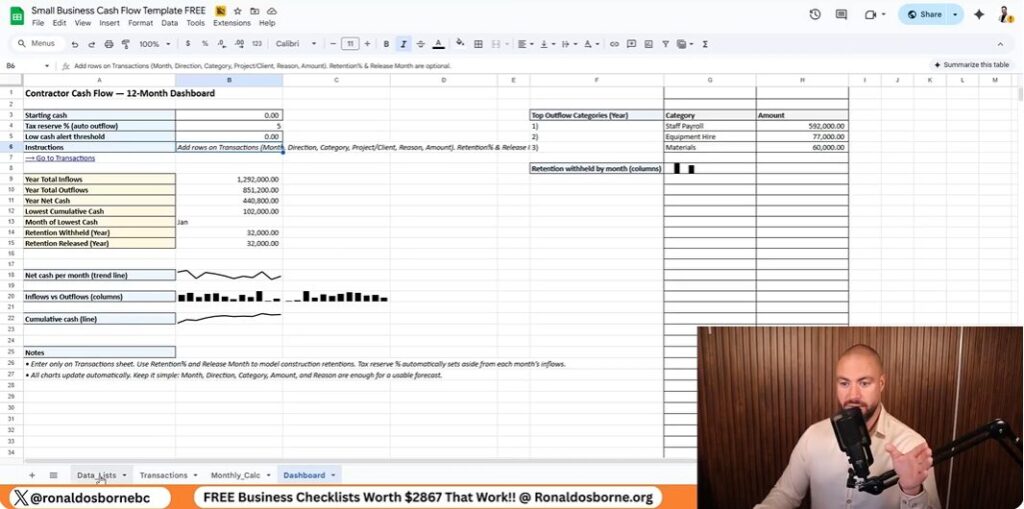
When you open the template, you’ll notice a “data list” section. This is where the magic starts. By default, it’s set up for typical small business needs, but you can customize it in seconds. For example, if you want to track equity, just type “equity” into the data list. Instantly, “equity” appears as an option in your transaction dropdowns. I built this flexibility in because, as a coach, I’ve seen how every business is unique. Whether you’re tracking projects, retentions, or something industry-specific, you can adapt the sheet on the fly - no formulas to break, no headaches.
Now, head over to the transactions tab. This is where you log your business’s real-life money movements:
You can keep it super simple - just track money in and out - or get as detailed as you like by breaking things down by project, retention, or custom categories. It’s all about what works for you.
This is where you can breathe easy. The template automatically calculates your net and gross cash flow for each month, so you always know where you stand. The dashboard rolls up all your data, showing:
All calculations update instantly as you enter transactions. No more late nights worrying if you missed something - the math is handled, and your cash flow picture is always up to date.
With my template, you’re in control: customize, track, and let the spreadsheet do the heavy lifting - so you can focus on what matters most: growing your business.
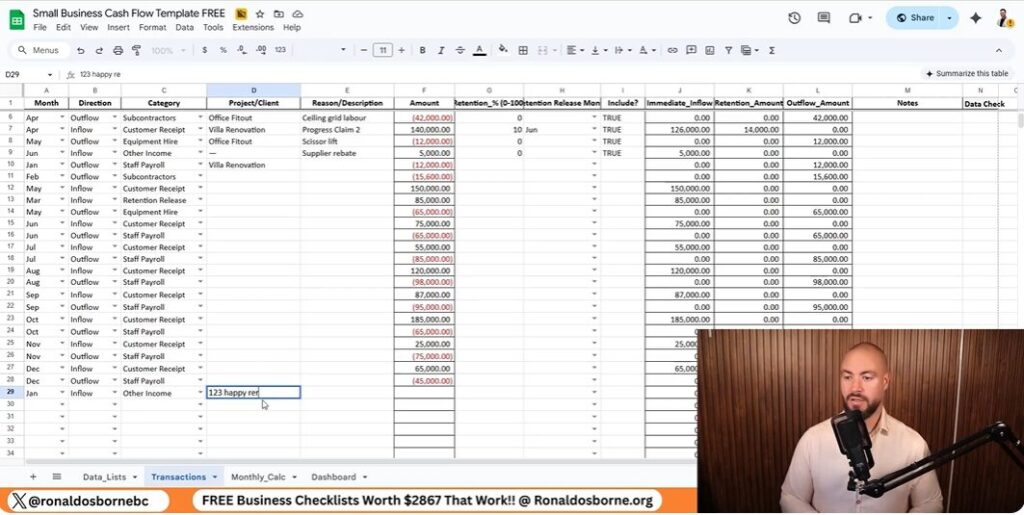
Let me share one of the most powerful features of my free cash flow forecast template - the dashboard. This isn’t just a place to track numbers; it’s your financial command center. Over the years of coaching small business owners, I’ve seen firsthand how a clear, visual dashboard can transform the way you manage your money. It’s not just about seeing what happened; it’s about understanding why it happened and what you can do next.
The dashboard pulls all your monthly data together into a single, easy-to-read view. At the end of the year (or any time you need a snapshot), you can instantly see your total inflows, outflows, and net cash position. No more scrolling through endless spreadsheets or trying to piece together the story of your finances - everything you need is right there. This big-picture perspective is essential for making smart decisions, planning for growth, and preparing for tax time.
One of my favorite elements is the cumulative cash trend line. This simple chart tracks your cash position month by month, showing you exactly how your business’s cash is growing - or shrinking - over time. If you see that line dipping or flatlining, it’s a clear signal to investigate before things get out of hand. I always tell my clients: “You want that line going up, not down!” This visual cue is a lifesaver, helping you catch potential cash flow problems early, so you can adjust your spending, chase overdue invoices, or ramp up sales before you’re in the danger zone.
Ever wonder where your money is really going? The dashboard automatically highlights your top three outflows each month. For most small businesses, these are usually staff payroll, materials, and equipment hire. By seeing these expenses front and center, you can quickly spot areas to optimize. Maybe it’s time to renegotiate supplier contracts or review staffing needs. Knowing your biggest costs empowers you to make changes that have the most impact on your bottom line.
Here’s a feature I added after seeing too many business owners blindsided by a sudden cash crunch: low cash alerts. If your cash balance drops below a threshold you set (like $5,000), the dashboard flashes a red warning for that month. This isn’t just a pretty color - it’s a real wake-up call. When you see red, it’s time to take immediate action. Maybe you need to delay a purchase, speed up collections, or talk to your bank. The dashboard gives you the heads-up you need to stay out of trouble and keep your business running smoothly.
With my free cash flow dashboard, you’re not just tracking your finances - you’re diagnosing issues and improving your business in real time. It’s the difference between reacting to problems and preventing them altogether. That’s the power of having the right tool at your fingertips.
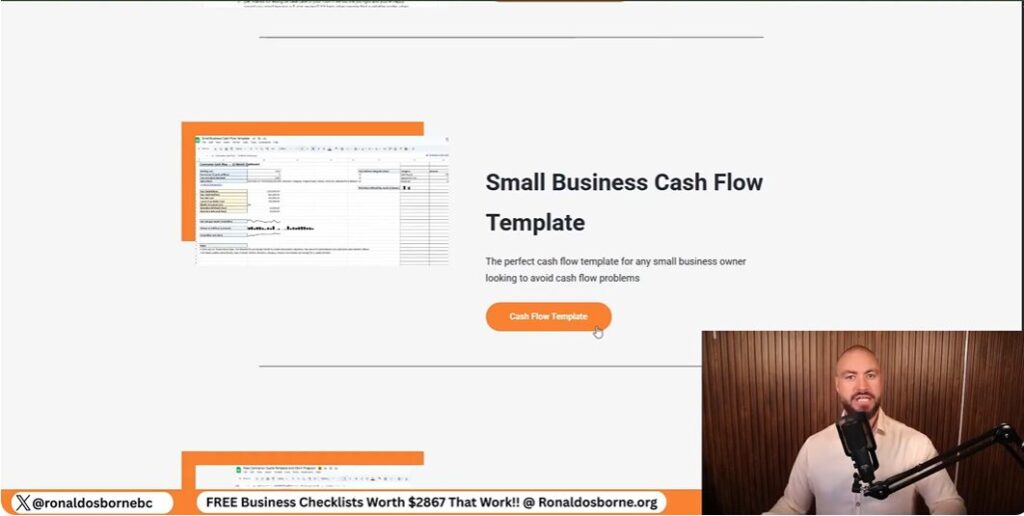
Let’s get real for a moment - my free cash flow template is a game-changer for most small businesses, especially if you’re a contractor, startup, or running a company with annual revenue under $2 million. This tool was designed for you: the business owner who wants clarity, control, and confidence without the hassle or cost of complicated software. But as your business grows, your needs will change, and it’s important to recognize when it’s time to level up your financial systems.
As your business scales, you’ll notice the volume of transactions increases, and manual entry can start to slow you down. If you’re processing dozens (or hundreds) of invoices and payments each month, or if you’re juggling multiple bank accounts, it might be time to look at more advanced solutions like QuickBooks, Xero, or similar accounting apps. These platforms sync with your bank, automate data entry, and generate reports with a click - saving you hours every month.
I’ve coached hundreds of business owners, and here’s the honest truth: DIY tools like my free template are perfect for learning the ropes and keeping costs low. You get hands-on experience with your numbers, which is invaluable in the early stages. But as your business grows, your time becomes more valuable. Spending hours updating spreadsheets is time you could spend closing deals, leading your team, or developing new products. That’s when automation starts to make sense.
“When hiring a bookkeeper feels worth every penny, that’s your sign you’ve outgrown the free sheet.”
Remember, there’s no shame in upgrading. The goal is to use the right tool for the right stage of your journey. Start simple, master your cash flow, and when the time comes, don’t hesitate to invest in automation that frees you up to focus on what you do best - growing your business.
Let’s be honest - nothing wakes you up faster than a cash flow mistake. I’ve seen it all in my years as a business coach, and I can tell you: a single error in your cash flow forecast can sting more than any MBA tuition bill. But here’s the good news: those mistakes are often the best teachers. When you use my free cash flow forecast template, you’re not just filling in numbers - you’re learning to spot red flags before they become emergencies. That’s the kind of real-world education you can’t get from a textbook.
One of the most important best practices I recommend is making your cash flow review a monthly habit. I had a client who used to dread looking at her finances - she’d put it off for months, then panic when bills piled up. Once she started using my template and set aside just 30 minutes at the end of each month, everything changed. She could see exactly where her money was going, spot trends, and make decisions with confidence. She told me, “Ronald, I finally sleep at night because I know what’s coming.” That’s the power of regular check-ins: they give you control and peace of mind.
Now, let me share a personal wild card moment. Early on, I was helping a contractor input his transactions. He accidentally left out a minus sign on a $15,000 outflow. The dashboard showed a huge cash surplus, and for a moment, we thought he’d hit the jackpot! But when we double-checked, reality hit - he was actually in the red. That little mistake caused a lot of unnecessary stress, but it taught us both a valuable lesson: always double-check your entries, especially those minus signs. The template makes it easy to spot these errors, but a quick review can save you a world of worry.
Another best practice is to use the template’s dashboard and visualizations to your advantage. Don’t just glance at the numbers - look at the trends. Is your cash position improving month over month? Are certain expenses creeping up? The trend line and top outflows summary are there to help you make smarter decisions, not just record history. And if you ever feel stuck or unsure, remember you’re not alone. I encourage you to join my free online community. There, you can share your own cash flow stories, ask questions, and even have a laugh about the time you mixed up inflows and outflows. Trust me, we’ve all been there!
In conclusion, using a free cash flow template isn’t just about tracking dollars - it’s about building confidence, learning from your mistakes, and connecting with others on the same journey. Mistakes will happen, but each one brings you closer to mastery. So download the template, make it your own, and don’t be afraid to reach out for help. I’m here, my community is here, and together, we’ll make sure your business stays healthy, resilient, and ready for anything.

Ronald Osborne is an Australian entrepreneur and experienced business coach. With over ten years of business and mentoring experience, an MBA specializing in Finance, along with launching/partnering with over 10 of his own companies around the globe, he has been able to achieve his version of success. Ronald has been able to help large telecommunication companies, law firms, trade businesses, and everyday business owners improve their business and take it to the next level.