How To Start A Concrete Business

The construction industry has experienced a favorable growth over the years. This expansion is mainly due to the US government's infrastructure investment amounting $1.3 trillion, rising residential and commercial demands, and the growing emphasis on eco-friendly construction practices. With these facts, it may be a good timing to start your own concrete business.

Whether you have been very passionate about the construction industry or you just want to invest in another profitable business, breaking into the concrete industry might sound intimidating at first. With careful planning, effective marketing, and focused execution, you will be on your way towards a successful concrete company. Take this article as your guide on how to start a concrete business this 2025.

Why Start A Concrete Business

Before you test the waters, it is important to assess important factors that greatly impact your business such as the demand in your local market, profitability, and success rate. Is there a high demand for driveways, foundations, and construction in general in your area? If you see these opportunities exist around you, align your supply and services based on the needs and preferences of your target customers. Make it a habit to research more and be aware of potential challenges you might meet and be prepared for possible solutions.

Understand The Demand In Your Area

Understand The Demand In Your Area

Latest statistics show that there are 92,904 concrete contractors in the US contributing to the market value of $15.24 billion in 2023. It is projected to reach $25.02 billion by 2031 with a CAGR of 6.66%. Concrete production has even generated an annual revenue of $68 billion in 2024. Despite these promising figures, the concrete contracting market has a low concentration with only four companies who play a major role in the industry. These facts give startup concrete businesses enough encouragement and a chance to achieve favorable success.

Startup Costs And Profitability

Concrete Business Startup Costs And Profitability

Based on market and industry trends, a concrete business can be profitable but it requires a decent investment to start and some time to break even. Typically, the total estimated startup cost ranges from $40,000 to $100,000. This amount can still vary depending on the actual costs of your business licensing, insurance and bonding, tools and equipment, vehicle, office set up, marketing efforts, and initial supplies. To keep costs as low as possible, you can always start small and slow by initially renting tools and equipment until you can afford to scale up.

Depending on your chosen business model, pricing, and local demand, the time to reach profitability also varies. The first few months is expected to be a time for investing in branding and acquiring new clients. By the time your business reaches one year and onward, that's the time you can expect to see net profits with consistent booking of concrete jobs and competitive pricing. Most concrete businesses report a profit margin of 10% to 20%, relatively low compared to other industries.

Success Rate

In general, the success of a business depends on how they manage to overcome the industry's major challenges. Within the 3-year survival period, about 56% of construction firms remain are still running and operating and about 26.6% of these firms remain in business after 10 years. Many concrete and construction businesses fail due to many reasons such as inadequate financial management, poor quality control, and failure to adapt to industry trends.

Just like any other business, this is not an overnight success. Thorough market research and adapting to new industry advancements will help your business push through despite the challenges. Also, don't forget about investing for your branding and marketing strategies. This is crucial for your business to stand out amidst the competitors and attract more customers.

Learn The Trade And Get A Hands-On Concrete Work Experience

If you are already a skilled mason, then think of yourself as ahead of the game. But if you are still new to the industry, consider taking short courses and getting hands on experience from apprenticeships, trade schools, and on-the-job training with professional contractors. This business requires skill, precision, and a strong understanding of how concrete work processes are being done. As a business owner, you need to have the skills, knowledge, and experience to understand how a concrete business operates.

Basic and advanced knowledge about concrete mixing, pouring, forming, and finishing is non-negotiable. You also need to know about different concrete mixes and their corresponding application. This ensures proper execution and efficiency in handling different projects such as volumetric construction. To keep everyone in your team safe, you need to be familiar with construction safety and local building codes. Spend separate time to train your team about these important protocols to remind them that safety is a top priority in the workplace.

Being educated and experienced is a must in the concrete industry. Knowing the craft helps you handle your team and troubleshoot possible challenges better. If you are already confident about your skills and knowledge, it is time to proceed to securing legal requirements for your business.

Create A Detailed Business Plan As Your Guide

Create A Detailed Business Plan As Your Guide

A business plan doesn't need to long and complicated. It only needs to have the important details that are useful as it serves as an overview of how your business operates. Spend enough time to know more about the industry and align your goals with the recent trends and customer preferences. The competitive market calls for enough understanding and preparation for what's about to happen, so make sure to include these important parts of a comprehensive business plan:

Starting a concrete business is never easy, but if you come prepared and fully loaded with what you need, you'll have high chances of surviving the challenges brought by the competitive market.

Secure Licenses, Permits, And Insurance

Obtaining all the legal requirements is important for any business to operate legally. This is the first step to gain the trust of your target customers and establish credibility for your business. Depending on the state where you are located, there are different regulations and state-specific permits that you need to comply. Here are 4 basic legal requirements that you need:

  1. Business Registration: Choose a business structure that fits your business and preferences. It could be sole proprietorship, LLC, or a corporation. The type of business structure you choose determines your taxes and other licenses needed. Register with your Secretary of State and get an Employer Identification Number (EIN) if you plan to hire workers and staff.
  2. Contractor's License: Most states, specially California (CA), require a concrete or a general contractor license. In order to obtain this license, you need to pass a trade exam, provide proof of experience, and submit financial statements.
  3. Insurance and Bonding: Getting a general liability insurance will protect you from potential claims due to injuries and damages. Consider also getting a worker's compensation insurance if you are hiring a team and a surety bond especially for commercial or public jobs.
  4. Permits and Zoning: Check with your local agencies for necessary zoning clearance if you are working remotely, and other business operation permits.

Invest In The Right Tools And Equipment

Invest In The Right Tools And Equipment

In the construction industry, investing in the right tools and equipment is as important as having practical skills and knowledge to do the work efficiently. The list of essentials you need might be long and overwhelming but you do not need to acquire everything all at once. As you learn how to start a concrete business, prioritize the most important ones that you need to start gradually.

Basic Hand Tools

Power Tools And Equipment

Forming And Support Gear

Safety Gear

These tools and equipment may consume a huge part of your startup cost but these are essential to provide exceptional services and the best customer service. If you need additional funding, contact banks and investors that offers low interest or installment rates for construction businesses.

3 Effective Steps To Build A Brand And Market Locally

3 Effective Steps To Build A Brand And Market Locally

Your branding creates the first impression for your business, so make sure to come up with a name and logo that is relevant and easy to remember especially when you are trying to build your online presence. In this modern world, people mostly rely on the internet to find products and services they need. This is where the importance of having an optimized website and an updated social media account comes in.

Build A Professional Website

Having a professional website can do wonders for your concrete contractor business. It helps you stand out among the many competitors in your area through ranking on top of search engine results. The main goal is to attract more of your target audience and convert them into paying customers. That's why it is crucial to make your website user-friendly and well-organized. Ensure that all important details about your business is accessible, making it convenient for all people who visits your page. In order to be more virtually visible, appropriate SEO techniques should be utilized.

Incorporate SEO Techniques

The right SEO techniques will benefit your business by making it rank on top of search engine results which boosts online visibility, attracts target audience, and generates leads. It is considered to be the most cost-effective marketing strategy that offers long-term results compared to paid ads. Aside from these benefits, SEO practices can provide insights on consumer behavior by tracking traffic and user engagement. Here are 5 techniques you can use for your business:

Social Media Marketing

Facebook and Instagram are popular social media platforms wherein you can enhance brand awareness by running paid ads and campaigns so that your business can reach your target customers easily. Posting relevant content, reels, and promotions can encourage engagement and gain more attention. If you want to reach a broader audience, utilizing different social media platforms to advertise your business is also a cost-effective way.

Price Concrete Jobs Wisely And Focus On Quality

Profitability can be easily reached when you have priced your concrete services competitively. Avoid underpricing as it devalues your efforts and does not work long-term. Also, overpricing can push customers away. Approximately 20% of construction firms reportedly fail in the first year, and 50% stop their business operations after 5 years. This is mainly due to poor financial management and over expansion without proper resources. These can be avoided if thorough research and planning has been done beforehand. Analyze how your competitors price their services and make it a basis for your pricing.

To stand out among your competitors, focus on a certain niche that aligns with your expertise. Be clear about each service you offer and set transparent prices to avoid confusion. Many concrete businesses offer free quote before a customer books a service so they will have time to prepare their own budget and funding options.

Short Summary

Starting a concrete business is more than just the skills and physical work. It requires planning, securing business licenses and permits, complying to local regulations, and implementing cost-effective marketing strategies to make your business thrive. Aside from these, you also need enough funding and resources to start your business. Tools, equipment, and machinery takes up a large portion of your startup fund but it is very essential to boost productivity and efficiency in every construction project you tackle.

Following these steps on how to start a concrete business will help you prosper in the challenging construction industry. With continuous learning and determination to succeed, you will be able to create a solid client base and make a name in the industry.

How To Start A Plumbing Business

Business opportunities are everywhere, even the leaks and clogged drains in your home can turn into something profitable. If you are a plumber who wishes to expand your expertise or a beginner who is passionate about fixing things, starting your own plumbing business might be the right path for you. Even though the population of plumbing businesses in the US has already reached 132,000, the demand for residential and commercial services still continues to increase. This brings a good opportunity to all aspiring plumbers to start their journey towards a thriving business that aims to make home living better. If you are interested in learning how the industry works, read this helpful guide on how to start a plumbing business efficiently.

Make Sure You're A Licensed And Certified Plumber

As obvious as it seems, getting a license is the first requirement you will need for you to become a plumber and perform plumbing jobs legally. This is the first step to establish credibility and trust with your customers. In order to become a certified plumber, you must meet these specific requirements that may vary for every state or region.

  1. High School Diploma or GED
  2. Complete a plumbing apprenticeship - typically 4 to 5 years
  3. Work as a Journeyman Plumber and take the exam
  4. Get a Master Plumber license - optional, but highly recommended
  5. Check state and local requirements
  6. Maintain and renew your license - other states require continuing education to stay updated with building codes and safety protocols

Aside from getting licensed and securing other essential requirements, getting liability insurance is also needed specially if you are going solo or starting a business. This will protect you from potential claims due to injuries and damages due to a plumber's nature of work. Also, consider getting a certification from the Occupational Safety and Health Administration (OSHA) to ensure safety and healthy working conditions. By staying up to date with latest trends and technological advancements, you will be able to stay ahead of your competitors in the industry.

Do Your Research

Doing thorough research about the plumbing industry provides a clear grasp of what it is like to run a plumbing business with the present market state. A comprehensive market analysis is crucial so that you will have an idea of the local consumer behavior, common challenges met, and the success rate of a business. Managing your expectations during the first phase of your planning period helps you tailor your business goals and align them with the needs of your customers. To give you an overview, this section will talk about major insights about the industry.

Market Value Of Plumbers

Market Value Of Plumbers

As part of the construction and infrastructure industry, the US plumbing sector is valued between $121.5 billion and $158.6 billion, a promising figure for existing and new plumbers. The past years has shown a positive growth with a CAGR of 3.3% from 2017 to 2024. With plumbing being a large industry, it employs between 564,000 and 736,000 individuals, contributing a lot to providing jobs in the US. It is expected to grow by 2% to 6% from 2022 to 2033, adding an estimate of 26,300 to 42,600 jobs annually. With these figures, there is an expected shortage of 550,000 plumbers by 2027 due to an aging workforce and other challenges. These data show a potential for you to grow and thrive in this industry.

Startup Costs And Profitability

Plumbing Startup Costs And Profitability

Typically, it costs $17,000 to $60,000 to start a plumbing business which consists of license application, insurance, working vehicle, tools and equipment, safety gear, business registration, marketing and software integration, and initial inventory. The total cost varies if you already have existing tools, vehicles, and other essentials.

Starting small and scaling up in the long run is the most practical way to reach profitability. With a usual profit margin of 15% to 25%, plumbing businesses are expected to break even in as early as the first year. Residential services typically cost $150 to $500 per job which gives a solo plumber an estimated annual gross revenue of $75,000 to $150,000 and small teams $250,000 to $500,000 annually depending on the work load they have accomplished. To achieve higher chances of profitability, choose a specific niche and a good location to start your business. Also, practice efficient scheduling and time management to ensure superior customer service.

Success Rate

Statistics suggest a high failure rate for plumbing businesses in the US compared to other industries. While this is an undeniable possibility, it is important to determine and focus on the key factors influencing success. Choosing a location near urban developments with low competition and high demand will most likely offer a consistent demand for these services. Businesses with high reputation also tend to have higher success rates. That's why it is important to work on enhancing your marketing strategies, brand awareness, and company reputation.

Craft A Plumbing Business Plan

Craft A Plumbing Business Plan

Start smart with a simple yet detailed business plan that serves as an overview of what your business looks like and how it is going to operate. Take enough time to research and plan out your plumbing business, providing yourself with ideas on how to face potential business challenges and overcome them easily. With a highly competitive industry, it is crucial to know ahead of time how you would want your business to be seen by your target market. Include these aspects as you go along with your business planning:

Think of this as your roadmap that will make your planning and brainstorming stage easier. Starting a plumbing business is challenging, but with enough preparation, research, and determination, you will be able to kick off and move along with the process trouble-free.

Set Up Your Plumbing Tools, Vehicle, And Tech

The nature of plumbing work requires quality tools and equipment. It is the backbone of a plumbing business, that's why it is essential to invest in a complete and quality toolkit to ensure productivity and efficiency of every plumbing job you tackle. While it may not be necessary to buy everything all at once, make sure to have what you initially need and scale up once you have established a client base. You may visit auction and garage sales to score some affordable deals and save money in the long run.

Basic Hand Tools

Pipe Installation And Fitting Tools

Power Tools And Equipment

Diagnostic And Testing Tools

Safety Equipment

Aside from a complete plumbing toolkit, invest also in digital tools that will help streamline business processes and promote productivity in your workplace specially if you are planning to handle larger jobs as a plumbing contractor. To manage appointments, quotes, and invoice, use a job scheduling software like Jobber and Housecall Pro. You can also incorporate a mobile payment system to accept on-site payments. Don't forget the importance of a digital camera or a high quality smartphone to document jobs and projects though before and after photos.

The long list of plumbing essentials may be overwhelming but it is always safe to invest only on what you initially need and build up once you have saved up. After securing what you need, focus on registering your business to operate legally. This is one of the most important step as you learn how to start a plumbing business.

Register Your Plumbing Business And Secure An Insurance

Register Your Plumbing Business And Secure An Insurance

Starting a plumbing business involves more than just your skills and a complete toolkit. You'll need to meet several legal requirements to register your business, building trust and credibility with your customers. Doing so will protect everyone involved including you as a business owner, your workers, and your clients. To give you an idea about the process, here's a straightforward list of what you need to comply:

  1. Choose a business structure. Do you want to operate as a sole proprietor, a limited liability company (LLC), or a corporation? LLC is the most common choice for plumbing businesses due to liability protection and tax flexibility.
  2. Register your business name. Check the name availability on the United States Patent and Trademark Office website.
  3. Register with your state to get a business license. LLCs and corporations need to be registered with the Secretary of State. You’ll receive a Certificate of Formation (or similar) once approved.
  4. Get an EIN (Employer Identification Number), especially if you are going to hire workers and employees. This is also needed if you are going to open a business bank account.
  5. Get a plumbing license. As mentioned beforehand, you'll need to be a certified plumber before you can offer your services to the community.
  6. Secure a contractor license if required. Some states like California (CA) require this in addition to a plumbing license if you are planning to take on large projects.
  7. Purchase business insurance. Consider getting general liability insurance to shield your business against injury or property claims and a worker's comp if you have employees.
  8. Open a business bank account to keep your personal and business finances separate. This is also needed for proper accounting, taxes, and professionalism.
  9. Get local permits and zoning approvals, especially if you plan to start initially as a home-based contractor business.

Depending on your state, take time to research specific regulations and requirements that you need to comply with. Create a checklist if you don't want to miss anything and to stay organized. After completing all the needed documents and permits, it is now time to create strategies that will make your business stand out.

The Right Way To Build Local And Online Presence

The Right Way To Build Local And Online Presence

The trend nowadays is that people usually look for a plumbing company online before calling one. Creating an effective marketing strategy will make your business more visible and accessible to those who need it. Since most businesses are now practicing the use of websites and social media to promote their products and service offerings, we will discuss more about the right way of building local and online presence.

Create A Business Website

In today's modern world, a user-friendly website is not just an accessory - it's a must for plumbing business owners who want to raise brand awareness and to stand out in the competitive industry. The goal is to convert organic traffic into leads or even paying clients. There are techniques on how to rank in the first few spots in search engine results and draw the attention of your potential customers - that is what you call search engine optimization (SEO).

Search Engine Optimization

SEO is the reason why many websites rank in the first page of search engine results. Techniques may vary from business to business, but here are the most basic ones that you can follow:

Social Media Marketing

Utilizing social media platforms such as Facebook and Instagram can help you reach your target audience easily. These platforms offer paid ads and campaigns that you can customize to reach your desired demographics. You can post relevant content, before and after photos, and even reels to draw attention and gain more followers. Technically, it's a good approach to raise brand awareness and reach a broader audience.

Nail Down Your Pricing And Services

Your pricing determines the profitability of your business. Set a competitive price that is not too high and not too low, enough to compensate for your work, skills, and effort. Research about how your competitors set their prices and make it a price basis for your business. Be clear about what you offer and set different prices for each, such as emergency repairs, residential, and commercial plumbing. Focusing on a certain niche or category will help you stand out among thousands of plumbers in the US.

Typically, plumbers charge $150 to $500 for every residential plumbing job, while a 24/7 emergency work costs $200 to $1,000+ per job depending on the work complexity and duration. If possible, offer free quotes and be transparent about it so that customers will be able to prepare for the budget needed.

Focus On Customer Service

Focus On Customer Service

Happy and satisfied customers are the best marketers, so be sure to provide efficient plumbing solutions, prompt responses, and reasonable prices. Do not underestimate the power of word of mouth referrals in this industry. It does a lot more for your business than you think.

Give attention to small gestures that will eventually create a bigger impact such as initiating clear communication, providing after-service follow ups, and even maintaining cleanliness by wearing shoe covers before entering a home. These simple things will leave a big mark on every customer, making them talk about and referring your business to others.

Final Thoughts

More than just skills and expertise, starting a plumbing business is all about careful planning, effective marketing, proper pricing, and ensuring customer satisfaction. The plumbing sector is a huge part of the construction and infrastructure industry, requiring business owners to follow local protocols, submit requirements, and get specific licenses in order to operate legally. After a successful business registration, it is crucial to invest in a complete toolkit and equipment needed to perform a plumbing job efficiently. Building an online presence is more of a new trend to follow for businesses in today's generation. It allows your business to be seen and promoted while you sleep. Having an SEO optimized website and updated social media platforms is the key to achieve enhanced online visibility.

The journey on how to start a plumbing business may be overwhelming and challenging, but with the right advice and guidance from the industry experts, you will be able to enjoy a profitable business right at your hands.

How To Start A Welding Business

The growth of the construction and infrastructure sectors in the US significantly created an impact to construction-related businesses including the welding sector. Due to the increase in demand, the American Welding Society (AWS) has projected a shortage of approximately 400,000 welders by 2024. This industry setback can be a great opportunity to jump start your way to launch a profitable business.

If you enjoy building things from scratch and working with your hands, then being a welder might be the right career for you. Whether you want to transition from your old welding job or you want to start a company as a beginner, there are a lot of things that you need to consider and that's what we are going to talk about. In this article, we will learn the basics on how to start a welding business.

What You Need To Know About The Welding Industry

Before dipping your toes, it is important to be aware of what the industry looks like. Most welding services are related to construction, automotive repair, metal fabrication, pipeline welding, and even art installations. Take time to research about in-demand niches with low competition in your local area and brainstorm about the possibility of focusing on that category if possible. Preparing yourself through thorough research and deep understanding of the basics will help you set goals and overcome potential obstacles.

Industry Insights

Welding Business Industry Insights

The welding industry has shown a significant expansion in the past few years. Employing over 592,000 welders, the US welding market is valued at $4.3 billion in 2024 and is expected to reach $5.6 billion by 2030. This shows a compound annual growth rate of 4% between 2024 and 2030. The increasing demand in the residential, commercial, and industrial sectors has driven this rapid growth to expand even more in the next years. With these figures, it is safe to say that taking a risk to start a welding venture is worth the try.

Startup Costs And Profitability

Startup Costs And Profitability

Typically, starting a welding business costs around $10,000 to $50,000 depending on the scale and niche you have chosen. If you want to initially start small by doing freelance work, needing no physical shop and minimal tools, a budget of $10,000 to $20,000 would be enough. But if you want to go full-scale with complete equipment and hiring additional workers, you might need a bigger amount approximately $30,000 to $50,000. These costs are comprised of business registration fees, tools and equipment, safety gear, marketing and branding, and workspace if you are considering a physical shop.

Most small welding businesses in the US reach their profitability within 6 months to 2 years, having a profit margin of 15% to 45%. Starting small and eventually scaling up can help you save on unnecessary expenses. You can choose to rent or acquire used tools and equipment but make sure they are all in good condition. Follow a good pricing model to maximize your profit while avoiding low job volume or inconsistent work. It is always important to build relationships with existing clients to encourage word-of-mouth referrals. Additionally, achieving profitability is easy when you handle your cash flow efficiently

Success Rate

The usual survival rate for new businesses in various industries is approximately 75% to 87% for the first year. Since the welding industry is in the manufacturing and construction sector, it is acceptable to project a 10-year survival rate of around 43.6%. Consider the shortage of welders in the US an opportunity to succeed with this kind of business. The high demand for these services and the low number of workforce signifies a good sign to join the industry. Try specializing in a certain niche to stand out and to enhance your skills more. Maintain your quality standards to retain existing customers and attract new ones.

Tips On How To Start A Welding Business

Like any other business, it is not an overnight success nor a one-size fits all process. There are strategies that work for others yet doesn't work on yours. That's why it is important to understand your business well and assess your skills to see what strategy will be effective for you. Aside from creating these strategies, there are important tips on how to start a welding business that you should consider.

Build Your Skills And Certifications

If you are literally starting from scratch, it is better to get some experience through a formal skills enhancement training. There are a lot of programs offered by trade schools, community colleges, and other governing industry bodies in your area. Enroll in these short courses to get a hands-on experience, learn about different welding processes such as DEC, and a feel of what an actual job looks like. The certifications you earned through these programs will help build trust with potential clients and take on more jobs with higher pay. Continue to learn about new technological advancements and enhance your skills over time.

Create A Well-Structured Business Plan

Developing a business plan doesn't have to be very complicated. You only need a clear outline of how your business will operate. This will serve as your guide as you set goals and make important decisions for your business. Having a clear grasp of what your business looks like, it will help you prepare for potential challenges that may come your way. Include these important aspects in your comprehensive business plan:

After taking some time to complete this step, it is now time to gather essential tools and equipment that you need.

Invest In The Right Tools And Equipment

Invest In The Right Tools And Equipment

Since welding is a gear-heavy job, investing in the right tools and equipment can either make or break your work quality. If you want to start with a limited budget, you don't have to buy everything all at once. Prioritize only the most important tools and scale up once you have established a solid client base. You can even buy second hand tools and equipment from garage and auction sales in your area. Renting is also a good option specially if you still cannot afford to buy. Depending on your niche, here are what you need:

To get your money's worth, acquire your needs at reliable suppliers such as ESAB and Miller, some of the companies offering quality welding consumables and equipment in the US. For your business' productivity, you can utilize a software where you can track all information for every project such as date of target completion, payments received, or when customers cancel their appointments. When you have finally gathered all the welding tools you need, complying to legal requirements and insurance is the next step.

Register Your Company And Get An Insurance

The first step to establishing trust and credibility with your customers is to register your business and secure all other legal requirements. Since welding also requires a bit of physical work, getting an insurance is highly recommended. It is important to protect both your business and workers from potential claims and risks. So before launching your business, make sure you have all these documents and requirements:

Welding Licenses And Certifications

Business Licenses And Permits

Safety Regulations And Compliance

Insurance

Check your local rules and regulations regarding additional requirements in your area. Make sure you don't miss any single license or permit to avoid delays and issues in your business launching. You can also try being a member of welding associations in the US to gain more insights about the legalities and processes. After you have completed all documents, it's now time to work on your branding and marketing strategies.

Work On Your Brand And Market Your Services

Work On Your Brand And Market Your Services

Aside from building a solid skillset and experience, working on your brand to get your name out there is more than essential. The quality services and good customer service you offer would be nothing without an effective marketing strategy. As you discover more about the local market and industry trends, create suitable and appropriate ways on how to promote your business efficiently.

Build A Professional Website

For business owners, having a website is not just a trend but a necessity to thrive in the competitive market. With the help of SEO, your website will surely top search engine results and eventually, attract more customers. Here are useful techniques to boost your online presence and make more money:

Social Media Marketing

Social media has created a platform for businesses to advertise their products and services to a broader audience. The presence of paid ads and campaigns will help your welding company reach its target market and achieve more sales. You can use Facebook and Instagram to promote your services as you post relevant content, before and after photos, reels, and testimonials from your past customers. Ensure consistent posting to gain more followers, likes, and engagements.

Establish A Solid Client Base

Having a strong client base can help with your local presence through the power of word-of-mouth referrals. The impact of quality work and excellent customer service doesn't just stop at one customer. It usually passes on from one existing customer to a new one. Always remember that your customers are the backbone of your business. Without them, you won't be able to make a name in your community and attract more potential clients in the long run. So make sure to reply to their concerns, messages, and inquiries as prompt as possible.

Short Summary

A welding business may be your plot twist this year 2025. Following the right multiprocess and techniques, you will be able to create a challenging yet profitable venture as a side hustle or as a full-time job. Start by conducting thorough research about the market to have a clear understanding of the industry. This will help you set goals and expectations while building your skills and getting necessary certifications. Gathering cutting-edge welding equipment encourages productivity and efficiency among your team. Most importantly, work on your business registration and licenses to foster trust and credibility with your customers. Once you have accomplished everything, focus on your branding and marketing. Follow these steps on how to start a welding business and for sure, you will be able to make a name in the industry.

How To Start A Decorating Business

Celebrations happen all year-round. Weddings, birthdays, anniversaries, and corporate events - you name it! The list is endless. To make celebrations lively, people look for expert decorators to revamp their venues according to their chosen theme. That's why the demand for these services are constantly increasing. If you've got an eye for style, starting a decorating business might be the dream career you've never expected. It is the perfect way to unleash your creativity while making money. Not only that, you make celebrations more memorable and appealing.

If you're contemplating if this business is right for you, read this insightful article and it will guide you on how to start a decorating business to maximize your skills and resources. With determination and consistency, you will be able to make more profit than you think. And the catch? You don't need a formal degree to get started.

What Is A Decor Business

A party or event decorating business specializes in transforming your venue or space into a custom theme based on your preference. This pertains to any kind of celebration such as birthdays, weddings, gender reveal parties, engagements, school events, and even corporate gatherings. The main goal of a decor business is to bring a customer's vision to life through customized design, color combination, and creative use of decor elements.

Industry Insights

 Industry Insights

As of 2024, there are approximately 94,293 event and party decorating businesses in the US. There has been a reported 4.1% decline in the number of decorating businesses compared to the previous year but the market still continued to grow. Event decoration services in the US is valued at $10.5 billion and is projected to expand at $25.9 billion by 2030, showing a CAGR of 5.5%.

Despite the decreasing number of businesses in the decorating industry, the demand for these services continue to grow due to the increasing number of corporate events such as meetings, formal dinners, and products launches which calls for a need of themed decorations. This basically means that it is not too late to join the industry. Great customer service and quality services will let you stand out in the competitive market.

Key Services Offered

To give you an idea, here are the services offered by most decorating businesses to any celebration or occasion:

How Much Does It Cost To Start A Decorating Business

How Much Does It Cost To Start A Decorating Business

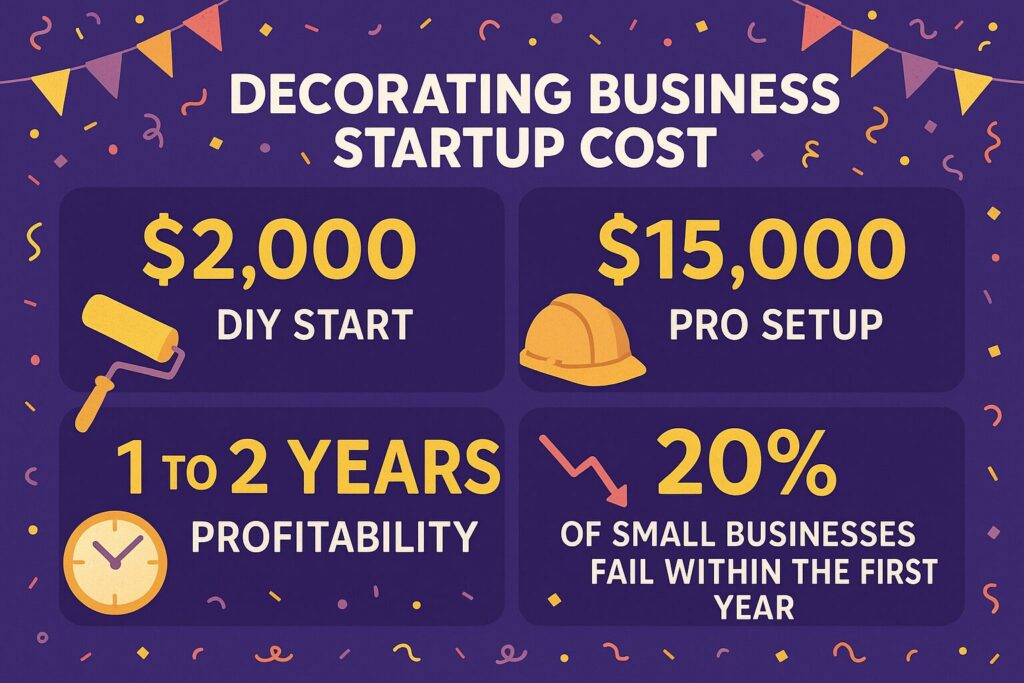
Launching your own event design business can be relatively affordable and attainable compared to other businesses. For a start, you can begin from home through online marketing and scale gradually once you have earned enough profit. Typically, it only costs $2,000 to $15,000 depending on the business model you have chosen and how big you want your business would go. A DIY start doesn't need much and would only cost more or less $2,000 but if you want to start with a pro setup, prepare a total budget of $10,000 to $15,000. Startup costs vary depending on many factors to consider.

Profitability

Decorating businesses start to reach profitability within 1 to 2 years depending on many factors. When you start with lower costs and expenses, you'll probably end up with faster profitability. Remember, you can start small and scale up once you are capable. Always update your marketing strategies to maintain a continuous flow of clients coming in. If possible, focus on enhancing your marketing efforts to boost your online visibility. Also, check you pricing strategies if it is giving you enough profit to compensate your efforts and startup costs.

Success Rate

According to the US Bureau of Statistics, 20% of small businesses fail within the first year, while 50% more will fail after 5 years. However, if you focus on creating a strong branding and creative service offerings, you will most likely retain and attract customers more than your competitors. Building a solid portfolio will also take your business to a higher level. This will serve as a proof of your quality work and a testament of your dedication to your clients. If your business is on the creative side, try to be social media savvy by utilizing Pinterest and Instagram. It is the best platform to showcase your work and reach a broader audience.

Define Your Niche And Style

Define Your Niche And Style

Before anything else, take some time to think and decide what kind of decorating you want to do. Are you interested in styling big events or intimate gatherings at home? Or are you drawn to decorate corporate gatherings and product launches? Defining your niche in the first stages of your business preparation will help you determine your budget and target market. It will also guide you with managing expectations specially during the first months of business operation. Here are the types of niches you can choose from depending on you preferences:

Events And Party Decoration

If you love the festive vibe of every celebration, this niche is for you. Basically, this includes birthday, wedding, an other parties of the same kind. This is probably the most common category due to the popularity of the demand.

Home Decoration

There are customers who prefer intimate celebrations at home rather than big venues. This niche involves transforming a simple home into a whole new space ready for festivity through home decor pieces and theme related decors.

Corporate Events Styling

Corporate events call for a formal and professional styling which are easier and simpler to do. Most companies only require minimal design based on their branding and purpose of gathering.

Styling And Planning Agency

Choosing this niche doesn't only focus on designing and styling. It also includes all-in-one services such as planning and coordination for all types of events. You might need to hire a team to assist you and provide an on time turn around of services.

Assess your skills and analyze your local market when deciding on which niche to focus on. This will allow you to focus on a certain field of expertise to create a more productive and efficient environment for your decorating business, leading to more positive feedback and reviews from your customers.

Work On Your Skills While Creating A Portfolio

Work On Your Skills While Creating A Portfolio

Innate talent, creativity, and expertise is the most important factor to consider when planning to run a decorating business. Even if you consider yourself an expert in this field, take some time to refine your skills by continuously learning about decorating principles, color theory, space planning, and modern trends. You can attend local training and workshops in your area, or look for self-paced online courses. There are also books that can provide good insights about styling and designing for different events. Keeping up with modern innovations and learning to play around with the preferred budget will show your clients that you are not just committed to provide quality work. Indeed, it shows great professionalism.

Most clients look for your sample designs to know if your style matches their vibe. If you are still starting, try to decorate your own home, volunteer to style a family member's birthday bash, or create mock set ups. Do not forget to take high-quality before and after photos of your set up and post them on your website or social media accounts. This is a free marketing and promotion for your decorating business to score your first few clients.

Develop A Business Plan

Successful businesses always have a well-prepared business plan. This serves as a guide on how to start a decorating business and set goals for your upcoming venture. Making sure that your objectives meet the demands of your potential clients, a clear understanding of your business will help you handle all the possible challenges and risks along the way. As you develop your own comprehensive business plan, here are important points that should be included:

  1. Executive Summary
  2. Market Analysis
  3. Business Description
  4. Business Model (Sole Proprietorship, Limited Liability Company/LLC, and Partnerships)
  5. Services Offered
  6. Marketing Strategy
  7. Budget and Funding Options
  8. Projected Cash Flow

Completing these information will help you prepare of what's about to come as you move along with the process of starting your decorating business. After this crucial step, proceed to registering your business to operate fully and legally.

Set Up Your Decorating Business Legally

Set Up Your Decorating Business Legally

Just like any other business, complying to licenses and permits does not only ensure that you are operating legally but it also builds trust and credibility to your future clients. Doing so protects both your business and your workers, if applicable, from potential claims and risks. Whether you chose event decorating, interior design, or opening your own one-stop shop styling agency, you need to complete all these legal requirements before you can finally start.

  1. Business name registration
  2. Employer Identification Number (EIN)
  3. General Business License
  4. Open a Business Bank Account
  5. Business Insurance
  6. Draft Contracts and Service Agreements
  7. Understand Tax Obligations

Check with your local or state's regulations for specific documents they require to make sure nothing gets left out. Once you have everything ready, it's time to plan out effective marketing strategies to boost your business' online visibility.

Build Local And Online Presence That Works While You Sleep

Starting a business in this modern world calls for a strong online presence. It usually creates a lasting impression to your potential clients. Building a user-friendly website with your portfolio, services offered, contact information, and other useful information can be very helpful to boost your online visibility. Also, do not forget about the power of social media marketing to attract more customers and the impact of email marketing for your brand awareness.

Create A Professional Website

A professional website is not an accessory, but an all-in-one place for your target market to know more about your business. That's why it is considered a necessity for all business owners nowadays. With the right SEO strategies, your business website will be able to perform well in search engine results. Here's how:

Social Media Marketing

Social media has become a very powerful tool to promote your business and raise brand awareness. There are a lot of social media apps that allows you to run paid ads and campaigns, helping your business reach its target market. You can use Facebook and TikTok, but for a better showcase of your portfolio, use Pinterest and Instagram. Post before and after transformation of events you have decorated or create reels of celebrations you have handled. To encourage consistency, use a content calendar to manage your posts.

Email Marketing

In your website, you can customize a landing page that collects emails of potential customers in exchange for discounts and freebies. You can use Mailchimp or Mailerlite to schedule weekly newsletters, limited offers, and event reminders to your target audience to promote your services. Keep your emails short and visual to keep customers engaged and interested. Include call to action strategies such as "Book Now" or "Contact Us Today" to encourage customer engagements.

Building Local Presence

Aside from boosting your online presence, it is also important to make your business known in your community through the traditional way. Whether you have a physical store or not, be engaged with what's happening around you. Join event supplier exhibits and seminars to expand your network and expect possible collaborations with other related businesses. Work with other suppliers to complete a project and include that accomplishment in your portfolio. Set up promotional banners or posters in high traffic areas to let other people know about your decorating business.

Event And Party Decoration Checklist To Keep Everything In Place

Event And Party Decoration Checklist To Keep Everything In Place

Being prepared and organized is the one of the keys for your decorating business to succeed. It shows your dedication and commitment to provide the best solutions for every celebration or gathering set up. Additionally, checking what you need ahead of time will ensure promptness, cost-efficiency, productivity, and professionalism in handling your decorating business. To keep everything organized, you can utilize a planning software to track everything. Taking note of these essentials will help you assess and prepare for every project that you need to complete.

Before The Event

One Week Before The Event

Day Before Or On The Day Of Set Up

If possible, prepare for a project one month before the date set to avoid setbacks in decor supplies and to finalize the design if ever changes are to be made. It is important to follow standard protocols and requirements for every venue to avoid penalties and fines. Do not forget to leave every venue clean and green. To ensure that your decorating business is a success, be consistent with the work quality you provide and fill every venue with your creativity and passion.

Final Thoughts

A decorating business can be both rewarding and profitable specially when done right. Despite the decreasing number of decorating businesses in the US, the demand remains consistent and increasing. This point of supply and demand is a good sign to start your journey in this industry.

To achieve success, you must first understand the nature of a decorating business and choose a niche to focus on. Work on creating a good portfolio by showcasing your sample works and after that, prepare your startup budget. Develop a good business plan and ensure compliance to legal requirements based on your state's regulations. For the most important part, take time to create a good marketing strategy to enhance your local and online presence for it can make or break your business. Take this as your go-to guide on how to start a decorating business and experience the fruits of your labor.

How To Start A Fishing Business

Is the sea calling you? Starting a fishing business is perfect for those who love the sea and turn their passion into something profitable. Just like any other business, the process of starting a fishing company is challenging yet rewarding when done right. It requires a lot of planning, investing in the right gear, and handling all the necessary permits and licenses. With approximately 73,200 fishing businesses in the US, this also calls for a need to create a good strategy for your business to stand out.

If you are really passionate about entering this industry, this insightful article will give you an overview on how to start a fishing business the right way.

Start Exploring The Industry And Create A Business Plan

Start Exploring The Industry And Create A Business Plan

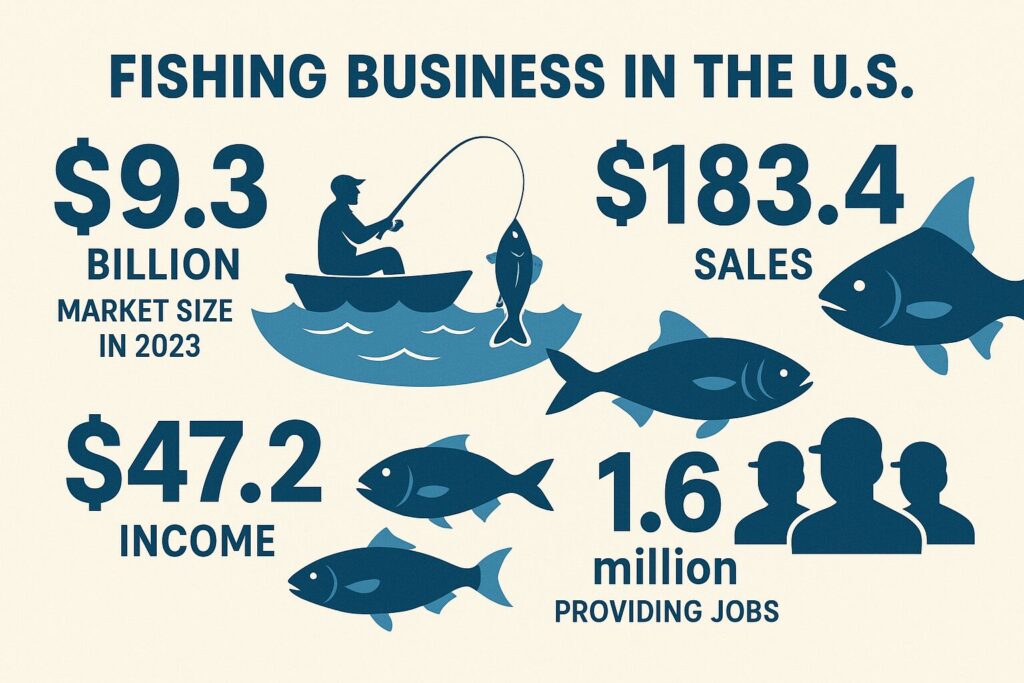
The US fishing industry has experienced challenges in the year 2023 with a slightly decreased market size of $9.3 billion, while the number of fishing businesses have increased. Commercial fisheries and the seafood industry has reached $183.4 in sales and $47.2 billion in income, providing 1.6 million jobs. Before adding up to these numbers, there are many factors that you need to consider such as the business models to choose from, time needed to reach profitability, and the success rate of this kind of business.

Fishing Business Models

Before you proceed, determine your niche first so that you will have a clear idea of the licensing and other requirements needed. Here are the options you can choose from:

These common business models come with different challenges. Knowing your niche will help you assess your experience, find a good location, and work around your budget.

Fishing Business Profitability

Fishing Business Profitability

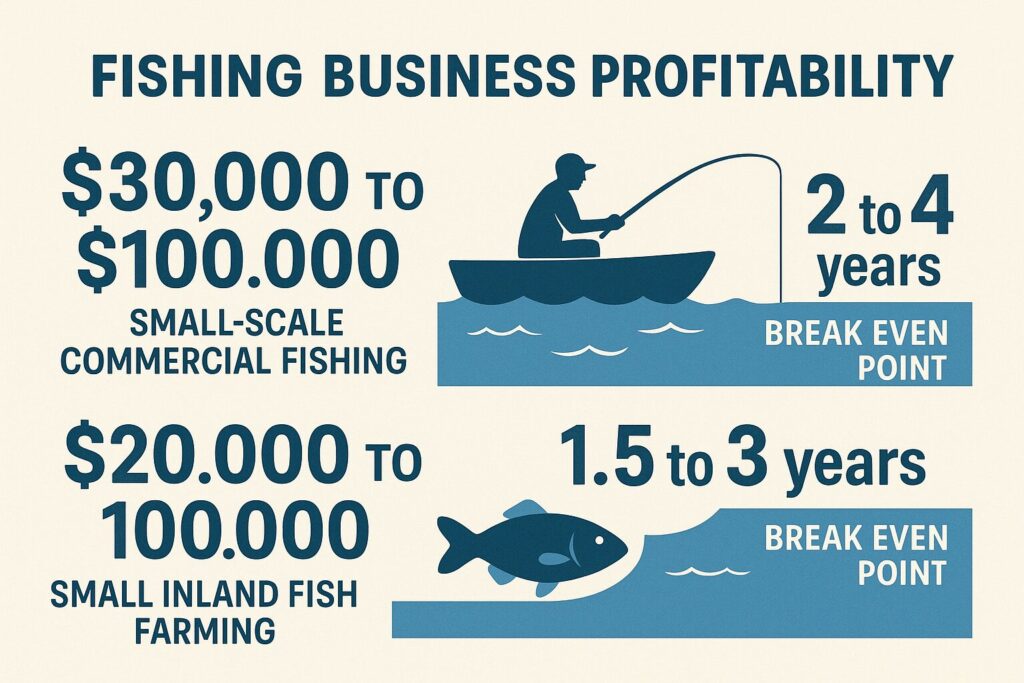
Knowing a business' profitability is the key to determine if it is worth pursuing or not. Start with researching estimated startup costs so that you will have an idea for your budget and funding options. Small-scale commercial fishing typically costs $30,000 to $100,000 while small inland fish farming ranges from $20,000 to $100,000. These costs vary upon the equipment acquired, location chosen, and other assets you may have.

With these initial costs to launch your business, the time frame to reach profitability also differs. Commercial fishing often takes 2 to 4 years to break even while fish farming takes 1.5 to 3 years. Having an idea about the break even point will help you manage your expectations and find better strategies to maximize your operations.

Success Rate

Success Rate

Compared to other industries in the US, fishing has a more favorable success rate. The US Bureau of Labor Statistics has reported 50.5% of businesses in the agriculture, forestry, and fishing sectors are still existing and operating after 10years. These sectors have the highest survival rates because they give solutions to the basic needs of the majority. Given a 3-year period, 70.6% of fishing businesses are possibly still operational during this time. This shows that a fishing venture is a worthy investment despite the competition.

To ensure success, start small and scale up upon demand. Build partnerships with local markets, restaurants, and distributors to make sure that your stocks will sell out after harvest. Lastly, work on your online presence to reach a wider audience.

Develop A Business Plan

After thorough market research, use the information you gathered to create a comprehensive business plan. This includes your business goals and objectives, local market analysis, services you will offer, pricing, marketing strategies and your budget. Having a clear understanding about these things will help you with your goal-setting and decision-making. You will need these important information as you go along with your business operations, creating a clearer path and letting you stand out in the competitive market.

Handle All Legal Requirements And Permits

Depending on the type of operation and location of your fishing operations, there are specific fishing permits and licenses that you need to comply. Dealing with your business' legal requirements will help build trust and credibility, so before starting your operations, do not neglect this crucial aspect. First and foremost, you'll need to register your business name. Make sure it is unique, relevant, and catchy. Here are other common requirements that you need:

  1. Commercial Fishing License: If you are planning to harvest and sell fish such as shellfish, finfish, and crustaceans, you'll need this to apply for this license through your local Department of Fish and Wildlife or Marine Resources. If you plan to operate on federal waters, getting a permit from the National Oceanic and Atmospheric Administration (NOAA) is highly needed.
  2. Vessel Registration: Your boat should be duly registered or documented by the US Coast Guard if it is over five tons. State registration is needed for smaller boats while you should get a vessel documentation if you are using a larger boat. Do not forget to comply with safety inspections to ensure secure operations.
  3. Charter Or Guide Fishing License: This is needed if your are doing recreational or guided fishing trips. Most states require a charter boat license and a Captain’s license (OUPV or Master License) issued by the US Coast Guard in collaboration with the National Maritime Center.
  4. Aquaculture Permit: If your business operates on controlled environments, you'll need an aquaculture facility permit, water discharge permit, and a land zoning approval.
  5. Business Licenses And Tax IDs: Aside from specific permits, you'll need to comply with standard business requirements such as a business license, Employer Identification Number (EIN), sales tax permit, and food handling license.
  6. Additonal Requirements: If you plan on handling highly migratory species such as tuna or sharks, groundfish, shellfish, and reef fish, check with NOAA’s National Marine Fisheries Service (NMFS) for other documents you might need.

Contact your local fisheries department to know what other documents and licenses you need to comply with. Always check recent news and view updates from the involved government agency as requirements may change annually. Consider also joining relevant local associations for they can guide you go through the whole process.

Invest In Quality Equipment

Invest In Quality Equipment

The tools and equipment you need depend on the type of operations you will be involved in. Invest in quality gears to ensure safety and efficiency, specially for commercial fishermen. For startups on a budget, you don't need to buy all equipment at once. You can even acquire used tools and boats that are still in good condition. You can easily scale up and buy brand new once you have started to enjoy profit. This ensures you will not go over your budget and maximize any amount you have earned along the way.

4 Tool And Equipment Categories You Need To Consider

On you planning and canvassing phase, you can look for relevant garage or auction sales in your community and maybe score some affordable tools that may be useful for your operations. Always prioritize safety and productivity for your business. It will not only protect your catch but your life as well.

Find One Perfect Location

Just like any other venture, location plays a crucial role in attracting more sales and potential customers. In the US, Alaska is top one for commercial fishing and covers 60% of all US seafood harvests. The state has an abundant marine life and pristine waters, making it a good location to catch a variety of fish. If positioning in North America is not possible for you, at least choose a good dock spot that has a good access to both the waters and to your target market. Consider also the competition in your chosen area. If possible, look for low competition yet high demand areas to ensure high profit. This is an essential part as you learn how to start a fishing business.

Your location also impacts the peak season of your operations. During March to late April, warmer temperatures may trigger feeding patterns. This season is best for inland and freshwater fishing. The best months to increase your operations is during the summer (June-August). During this season, the demand is high due to longer days, calm waters, and a lot of tourists coming in. Slower days are expected during winter which happens between December to February.

Market Your Fishing Business

Market Your Fishing Business

The traditional way to market a business has somehow evolved. The rise of technological advancements and the internet changed the way products and services are being promoted and sold. In this competitive industry, it is essential to create marketing strategies that will help your business boost its online visibility and reach a wider audience, leading to higher sales and profit. We have identified some useful techniques that you can use.

Develop A Website

Having one user-friendly website can solve all your marketing worries. Almost everyone uses search engines to look for products or services that they need. Optimizing your website using these SEO techniques will help your business compete with the headliners of the industry:

Build Local Presence

Work on claiming your Google Business Profile to enhance your online visibility. Incorporating your complete business name, address, website, service hours, areas served, and social media profiles will provide easy navigation for your potential customers. Confirming your pin on Google maps will easily guide your customers if they are looking for your business. If there are local markets, restaurants, and hotels in your area, collaborate with them as a supplier of seafood products they need and get referrals. Attend food festivals and local exhibits to promote brand awareness. The traditional way of selling can never go old even in this modern and technologically advanced world.

Use The Power Of Social Media

Social media has played a very important role in every business' growth and success. Share some photos or reels of your recent catches, satisfied customers, and your vessel floating on scenic waters. This will create an impression of productivity and efficiency to your audience. Run ads and promotional offers on any social media platform that you have. Doing so will hit two birds in one stone - encouraging potential customers to engage while advertising what you can offer. Focus on Instagram and Facebook if you want visual and local engagement, while you can also utilize YouTube or TikTok for informative guides and storytelling.

Short Summary

Joining the fishing industry is a lot more than you think, but it will be easy once you have learned the right process on how to start a fishing business. First step is to conduct a market analysis and create a business plan based on the information you gathered. Other businesses may require simpler or fewer legal requirement, but running fishing operations are different. There are a lot of licenses and permits you need to secure depending on your chosen niche and state regulations. After handling the legal side, make sure to acquire quality tools and equipment that you initially need. Finding the best location can either make or break your business. Look for a convenient location near both the waters and local markets. This will ensure your catch reaches the market fresh. Lastly, plan out the best marketing strategies to make your business stand out in the competitive market and enhance online visibility. Follow these steps and surely, you'll achieve long-term success and growth.

How To Start A Junk Removal Business

Business opportunities are everywhere, even the junk and clutter you see around can turn into unexpected profit. Starting a junk removal business can be a bit challenging, but with the right approach and marketing, you will be able to give solutions to the garbage and clutter problems in your community.

In the US, approximately 350 million tons of waste is produced every year, while there are only a total of 21,426 junk removal businesses - apparently not enough to cater to that much waste to be disposed of in proper places. Aside from hauling heavy garbage, their service scope also includes cleaning a garage full of unused things, tidying up a foreclosed property, and hauling heavy furniture. If you are enthusiastic about doing these things, then you have come to the right place. Let's go through every step on how to start a junk removal business in this informative article.

Some Considerations Before You Start A Junk Removal Business

Starting a junk removal business needs enough preparation. Behind the physical demands and workforce required, there are still many factors that you need to consider in order to develop an effective approach to achieve long-term growth for your business. You should have enough knowledge about the competitive market so you know where to start and what to expect.

Conduct Local Market Research

Conduct Local Market Research

The waste removal business has been showing tremendous changes over the years. The market size has reached $10.4 billion in 2023 which shows growth caused by urbanization, construction activities, and increased awareness of proper garbage segregation. The residential areas have contributed mostly to this market growth, reaching $6.1 billion in annual revenue for 2024 alone. This is due to home renovations, decluttering, and moving. It is projected to reach a CAGR of 3.7% between 2020 and 2025.

Getting a feel of how this business works in your area can help you assess the needs and preferences of your target market. Start by surveying the community if there are construction sites, universities, or residential areas around. Use the information you gathered to figure out what kind of garbage or junk can be collected and determine the type of services you can offer.

Create A Comprehensive Business Plan

After doing a thorough research of the industry, use the relevant information you gathered to create a comprehensive business plan. This is generally an overview of what your business looks like and how it will operate based on the recent market trends and demand. Make sure to include these important details into your business plan:

  1. Comprehensive Summary stating your goals and vision for your business. 
  2. Local Market Analysis that shows recent trends, statistics, and technological advancements that you should consider as you plan things out.
  3. Budget And Funding Options to carefully examine for a proper cash flow management.
  4. Business Model or structure that will show how your business will operate, whether you'll do it solo or with a partner. The most popular business structure is Limited Liability Company or LLC because it separates your personal assets from your business.
  5. Marketing Strategy determines your approach on how you boost the visibility of your business to its target market. 
  6. Projected Income within a year of providing services which is also based on the needs and preferences of the potential customers in your area.

Writing a detailed business plan serves as your guide as you go through the whole process of launching your junk removal business. After this step, look deeper into the cost considerations so you could prepare your resources.

How Much Does Starting A Junk Removal Business Cost

How Much Does Starting A Junk Removal Business Cost

Preparing your budget for the possible business expenses is one of the most challenging yet crucial parts. Make sure to allocate sufficient funds for your junk removal business to operate fully on your target date, especially if you've seen high and continuous demand for these cleaning services in your area. In this section, we will discuss the main factors that impact your budget allocations, so make sure to focus your funds on these matters to maximize your investment.

Vehicle, Tools, And Equipment

Priority should be given to acquiring durable vehicles, tools, and equipment but also assess your urgent needs. Without these, your business won't be able to operate to its full potential. A heavy-duty truck usually ranges from $5,000 to $40,000 while quality tools and equipment typically cost $500 to $2,000. If a brand new truck is way out of your budget, you can start by renting or buying a used one until you can fully upgrade into a new one as your profit grows. For other tools, safety gear, and equipment, buy only what you really need and avoid overspending your money.

Insurance And Legal Requirements

Making your junk removal business legal and licensed is non-negotiable. It builds credibility and trust from your existing and potential clients. Licensing and legal requirements usually cost around $300 to $1,500 depending on your state's specific rules. Getting insurance gives you protection from liabilities and risks, which usually ranges from $500 to $2,000 every year. Complying to these requirements will not only protect you as a business owner, but also covers your workers and customers.

Labor And Workforce

Labor And Workforce

The junk removal industry has employed 67,000 people in the US in 2023. Depending on the size of your workforce, you also have to consider labor costs before you launch your business. Junk removal requires a lot of physical work, so make sure to hire physically fit workers and pay them fairly. Expect to pay around $100 to $300 for labor costs, and may increase to $500 with a heavy workload. You may choose to pay by project or hourly rate, which typically costs $18 per hour.

Aside from these important things, there are also other matters to take into consideration such as marketing expenses, dump fees, and software. In total, the startup costs for a junk removal business will usually cost around $6,000 to $50,000.

Gather The Right Equipment

After handling your budget allocations, it is now time to acquire the needed tools and equipment to jumpstart your productivity and efficiency. You don't really need a lot. Focus only on what's urgently important to avoid unnecessary spending. Include these important things in your checklist:

Remember, you can always start slow and small. There are a lot of used tools that are being sold online that are still in good condition. Find some good deals on Craigslist, Facebook Marketplace, and local auctions so you could save money in the first phases of your business. Start with the basics and scale up as your client base and job size grow.

Price Your Services Wisely

Price Your Services Wisely

The way you price your services can either make or break your business. Follow a pricing model that will give your team a fair compensation and enough profit for your business to thrive. Based on the leading junk removal businesses in the US, the average cost of junk removal can range from $200 to $250, or $1.25 to $2 per cubic foot. Some price their services based on volume, the type of junk removed, or hourly rates. Make sure that you account operational expenses such as labor, gas, disposal fees, and truck rent if applicable.

Profitability

Successful junk removal businesses in the US have reported an average gross profit margin of 32.74%, showing a good opportunity to earn. Typically, profitability is reached within the first year or two. This time frame can vary due to many factors such as location, operational efficiency, customer service, and competition in the area. To achieve faster profitability, you must define your niche and develop a strong online presence. You can also try collaborating with construction companies, universities, and residential communities. Focus on providing exceptional customer service to retain more customers and attract new ones.

Success Rate

A junk removal business may be profitable but there are reports suggesting a 50% failure rate within five years. To ensure a high possibility of success, preparing for possible business challenges is crucial. This is where you will appreciate the need for market analysis and a comprehensive business plan before you launch the business. It helps you oversee developing obstacles and prepare for a possible solution ahead of time.

Stand Out Among Other Junk Removal Businesses: Develop An Effective Marketing Strategy

With the challenging junk removal market, the need for a strong marketing strategy to stand out among other competitors should be prioritized. Identify your unique selling points and effectively convey them to your target market. To create an exceptional strategy, a clear understanding of the competitive market should be done in order to be fully aware of your customer's needs and preferences. Customize your strategies to align with the demands and continuously learn about the industry. It's one of the most important factors to consider when learning how to start a junk removal business. This will eventually boost your visibility and appeal.

Online Presence And SEO

With the rise of the internet, it is important to focus on establishing a strong online presence. Incorporating SEO techniques when building a professional website can significantly boost your visibility. Your website should contain necessary information such as contact details, address, email address, services, and other company details. Additionally, include before and after photos of cleaning jobs your team has done with consent from your past customers. To reach your potential customers, here are some SEO techniques to enhance your online presence:

Partner With Local Businesses

Look for establishments, companies, or communities near you where you can establish business partnerships with. For example, try to tie up with dormitory owners so that you can instantly provide services whenever there are renters moving out. You can also do the same with construction companies. After they accomplish renovation or construction projects, that's when your services come in handy. This approach can encourage more cleaning or junk removal jobs for your business.

Social Media Ads And Campaigns

Social media has become a powerful platform for businesses to reach a wider audience and promote their services effectively. There are certain social media apps that can let you run paid ads which can reach your target audience, such as Facebook, Instagram, and Tiktok. People have been using these platforms not just for socializing but also for finding services that they need.

Register Your Business According To Your State's Regulations

Register Your Business According To Your State's Regulations

Complying to the legalities and insurance plays a very crucial role in this business as the job requires moderate to intense physical work involving heavy and sometimes, dangerous objects. These certain conditions call for extra protection for both your business and your workforce. At least get the general liability insurance added with a vehicle and worker's comp insurance to protect you from potential risks and claims.

As for the legal requirements, here are the permits and licenses you need:

  1. Business name registration
  2. Employer Identification Number (EIN)
  3. General Business License
  4. Hauling or Junk Removal Permits (if required)
  5. Insurance
  6. Local Dumping Regulations Compliance

Short Summary

Starting a junk removal business doesn't need formal education. It only needs enough time to research more about the industry and create a strategic business plan based on the demands of the customers. You don't have to spend a lot in the first phase of starting your junk removal business. Renting or buying a used vehicle will do and acquiring secondhand equipment is also acceptable. Hiring reliable and physically fit workers for your team and making sure to secure an insurance to protect both your business and your workforce are important aspects of your preparations. Additionally, create a user-friendly website to boost your business' visibility. Treat this venture more than just a small business by complying to the legal requirements and following the appropriate pricing model. Follow these steps on how to start a junk removal business and enjoy the fruits of your labor!

How To Start A Storage Business

A storage business is a unique yet profitable way to earn. With a lot of people downsizing, moving, or just needing extra space these days, this business is considered a smart move. There are over 52,000 storage facilities in the US which clearly signals a noticeable interest and demand for these services. Ranging from traditional storage facilities to a niche-specific service, there are a lot of things that you should know before dipping your toes into the industry. From the planning stage to creating a good marketing strategy, this helpful guide on how to start a storage business will tackle all the possible aspects that you should look into.

Understanding Storage Businesses

As simple as it may seem, but a storage business is a lot more than you think. It is crucial to differentiate among the many types of storage businesses to actually know which type you are really interested in. Learning about their startup costs, profitability, and success rate can help you on your decision-making process. Some common types include:

Business Startup Costs

Business Startup Costs

A storage business is indeed a very profitable venture, but it actually needs a huge amount of money to build your own facility. The numbers vary depending on the type of storage you will be building but usually, it will be based on costs for land acquisition, construction of buildings, licenses, security, and marketing. For a small indoor storage facility, it costs around $50,000 to $250,000 while a large facility needs over $1.5 million to $3million to be built. However, a mobile storage starts at $100,000 and sometimes will reach a total of $500,000 depending on the size and delivery. These figures greatly depend on many factors. Also, if you want to save up on these potential expenses, you can buy an existing facility or start small and expand as your client base grows. That's why it is important to identify your preferences to have a close estimate of the startup cost.

Profitability And Possible Income

Profitability And Possible Income

With the high startup cost brought by building your own storage facility, you should analyze first if it is really worth the investment. With over 10.2% of US households who utilize self-storage units, it is safe to say that this industry has a broad market, signaling high profitability if done correctly. The usual profit margin of a storage business is 40% with an average rental fee of $16.42 per square foot, not bad for a low-maintenance venture. The estimated time frame to reach a stable flow of income is 2 to 3 years post-construction. To reach profitability, it is crucial to consider your location and operational efficiency. Look for a property near residential areas to achieve higher occupancy rates. Practicing effective management and utilizing technology for better service can also attract more clients.

Success Rate

Building a storage facility can be a bit risky due to high startup expenses and overcoming marketing challenges. Despite these factors, statistics show that there is approximately 92% success rate for newly built storage facilities. This indicates a strong and resilient market. With its profit margin higher than other businesses, there is an assurance of success and profitability despite the risk.

Things To Consider Before You Start A Storage Business

Just like other businesses, opening your own storage facility requires a lot of brainstorming and weighing possibilities to come up with the best decision. It is crucial to study how the industry works, research about the market, and determine the pros and cons. This will save your business from potential failure in the future.

Market Demand In Your Area

Market Demand In Your Area

The US self-storage business is currently valued at $44.3 billion and is projected to reach $50.01 billion by the year 2029 with a CAGR of 2.44%. In 2025, developers are expected to add another 54 million square feet of storage space and an additional 43 million square feet for the next year. These figures alone show an industry with a positive growth, making it a good venture for investors. Digital integration has also led customers to easier ways of transacting such as online leasing, virtual tours, and smart access systems, making it possible to book rentals online. Also, approximately 79% of customers require storage for six months or less, which means the need for flexible terms should be considered.

Positive Points

Possible Limitations

Craft A Comprehensive Business Plan

Craft A Comprehensive Business Plan

Out of all the things that you need to prepare for your new venture, sitting down to write a business plan is one of the most important. It is a detailed overview that guides business owners on where to start, what to do, and what to expect as this allows you to project future income flow. As you study the industry, you will be able to align the recent trends with your personal goals and strategies. These are the most important aspects that need to be included in a well-developed business plan:

A detailed and well-prepared business plan helps you stay focused and makes it easier for you to get funding resources that you need. In the first stages of your preparation on how to start a storage business, take enough time to craft your strategies and plans before finally launching your storage business.

Find The Right Location To Build The Perfect Storage Space

As the number of storage facilities in the US continues to increase every year, it is important to consider the perfect location. It can either make or break your business. If you are planning to build a physical storage facility, look for a site with high demand and less competitors. An area near residential condominiums, offices, universities, and apartments is a very convenient site. It can easily attract nearby customers, leading to continuous rentals and a solid client base. Selecting a strategic area can greatly affect operational efficiency and profitability, offering accessibility to customers and enhancing overall reach.

Other important aspects to consider when looking for a good location are the security, assess ongoing competition in the area, and zoning regulations that may possibly affect the business. Analyzing the demographics in the area you chose can also give you useful insights to attract more clients and eventually contribute to long-term profitability.

Handle The Legal And Licensing Side

Handle The Legal And Licensing Side

All businesses need to go through legal compliance in order to operate smoothly. For a storage business, there are specific permits, insurance, zoning approvals, and other requirements you need to comply with depending on your state's rules and regulations. This process usually involves paying fees, application to local authorities, and going through inspections to make sure that your storage facility meets all the required standards.

It is also important to consider the benefits of getting insurance for your storage business. It protects your property from possible risks such as potential claims from customers and possible damages. You might need general liability insurance, property insurance, and specific coverage for items stored in your facility. After complying with the important documents and legalities, prepare to draft your rental contracts to outline the terms of service, responsibilities, and liabilities for both you and your customers. This establishes a clear and solid foundation for your business.

Consulting a business law expert can help you go through the whole process and ensure that you have fully complied with the legal obligations as you focus on growth and customer satisfaction.

Invest In Security And Technology For Your Storage Property

Integrating strong security protocols and modern technology into your storage business is very important to protect and secure assets and belongings. Customers trust you so security is really non-negotiable. That's why it is important to ensure every client's peace of mind. Through buying and installing modern tools and equipment for your storage units, it helps reduce theft, damages, and vandalism. Securing stored items efficiently enhances safety and improves your overall operations. Here are some useful tools to add into your property to facilitate security and safety:

Following modern trends such as online bookings and automated billing can also give your company an edge. As you adopt to these technological advancements, it can further build up your reputation while attracting more clients at the same time.This strategic approach not only protects your investment but also promotes customer satisfaction and trust, eventually leading to more rentals and long-term success in the industry.

Non-Negotiable Marketing Strategies For Starting A Successful Storage Business

Non-Negotiable Marketing Strategies For Starting A Successful Storage Business

Without a well-prepared marketing strategy, your business won't thrive in this competitive industry. Using the best approach that aligns with both your goals and customer preferences will eventually increase your sales and attract more of your target market. Use these effective strategies to create a good visibility for your business.

Create A Professional Website

In this modern and evolving world, everything has changed, including the way businesses are being promoted and advertised. Almost everyone has access to the online world, making it a better option for making products and services visible to all. Creating a professional website makes your business available for your target audience to see. In order to stand out in the thriving online market, here are SEO tips to drive organic traffic:

  1. Using Relevant Keywords: Conduct a comprehensive keyword search using a reliable SEO tool. Focus on relevant keywords that your target audience often use. For example, use "Self Storage" or "Storage Units Near Me" in your website pages and blogs.
  2. Local SEO: Claim your Google Business Profile to establish a solid foundation for your online visibility. Make sure to input the right information such as name, address, service hours, service areas, website link, social media links, and reviews from past clients.
  3. Location Service Pages: Building location-specific service pages as part of your website menu is helpful if you are serving a lot of areas. This helps your website rank in Google search results whenever a potential client searches for a certain service or product plus their location. For example, Storage Business Miami.
  4. Publish Quality Content: Write blogs that are relevant to the services or products you offer. Most of these contents are frequently asked questions or general knowledge about a product or a service. This will help you rank for long-tail keywords. 

Run Local Facebook Or Google Ads

Social media and Google are good platforms that you can use to promote your services. Social media apps already have a paid advertising feature that lets you customize your ads depending on location and target market. The Pay-Per-Click advertising for Google is a costly yet worthy investment. You are obliged to pay every time your ad gets a view or a click. Both methods can effectively promote your services and products to a wider audience, making it possible to attract more paying clients.

Set A Competitive Pricing Strategy

Your pricing strategy greatly impacts your profitability. The average rate of storage units in the US is priced at $16.42 per square foot good for a month. If this pricing works for you, then consider it an advantage. Make sure to research how your competitors price their products and services and weigh it together with your operational expenses. Offer promos and discounts but avoid pricing it too low as it may affect your profit.

Final Thoughts

Starting a storage business is definitely not an easy task to deal with. Aside from the high capital or startup cost needed, there are many things that you need to consider as you discover how to start a storage business. This includes studying about the industry, developing a good business plan, finding the right space, making your business legal, and investing in tools that promote safety and security. Creating a marketing strategy that works with your target market is also a challenge for storage business operators. Find the balance between reaching your goals and providing solutions for your customers. By doing so, you will be able to reach profitability soon and stand out in the industry for the years to come.

How To Start A Floral Business

As the floriculture market continues to grow, it is a great opportunity for you to enter the competitive industry with enough knowledge and preparation. A promising market value of roughly $7.84 billion as of 2024 is expected to increase around $13.47 billion by 2034. That's a great figure to start with. If you want to be successful in this industry, you must carefully plan your marketing strategy, acquire new knowledge, research suppliers in your area, and find the best location if you want to have a physical store.

Whether you love to add life to people's memorable moments with flowers or you just want to create an extra stream of income through a flower business, there are always challenges that come along the way before you can finally start. We have meticulously made a comprehensive guide on how to start a floral business for you to understand the industry more and be able to smoothly go through the whole process.

Why Starting A Floral Business Might Be Right For You

Starting this type of business can be both fun and rewarding at the same time. You get to unleash your creative side while earning from it. With a lot of people frequently celebrating birthdays, anniversaries, wedding ceremonies, and any other occasion, the demand for floral arrangements may consistently rise. If you're thinking if this might be the best time to launch your own flower business, first and foremost, it is crucial to study the industry trends so that it would be easier for you to craft the perfect game plan.

High Demand Of Floral Businesses

High Demand Of Floral Businesses

The latest data states that there are 11,744 florist shops in the US as of 2024. Because of this, the market value has reached $7.84 billion and is expected to continually grow with a Compound Annual Growth Rate (CAGR) of 6.2% possibly reaching $13.47 billion by 2034. These figures show that the floriculture industry is indeed a thriving market and with the right business plan, you will be able to enjoy a steady flow of income.

Great Profitability

The usual profit margin of flower businesses often reaches 40% to 70%. With this high rate, there are still many factors that dictate the time needed for a flower shop to become profitable such as location, business model, and management. Usually it takes several months to a few years to achieve profitability just like any other business. It is important to practice good inventory management, strategic marketing, and dedication to provide superior customer service will help you achieve your desired results. 

Success Rate

As the recent floral industry statistics in the US show growth and resilience, the market is expected to expand in the next five years. Florists and business owners who adapt to the modern trends such as online bookings and event styling may have higher chances to succeed. Considering your location is one thing. Focus on serving high-traffic areas to easily attract customers. Make sure to offer a variety of product offerings such as incorporating other gift items in addition to flowers and doing customized floral arrangements to add up to event styling. Also, building your online presence helps you reach a wider audience. Taking note of these factors as you go will eventually increase your possibility of reaching success.

Startup Costs

Startup Costs

Starting your own flower shop will cost you around $10,000 to $50,000 depending on your preferences of the following:

Learn The Basics Of Floral Design From An Expert Florist

Diving into the floral design business requires full understanding of the basics. While it doesn't need a formal degree to be a florist, a good training can give you the opportunity to gain more knowledge and skills to start your own flower shop. There are online courses available to fit your schedule. You can learn at your own pace and go through the lessons again if you need to. Search for local workshops and even apprenticeships with expert floral designers. This gives you hands-on experience and clear expectations of what really happens as you work on your own flower business.

More than just creativity, there are key skills that you need to provide good service to your future clients. You need to have a grip about color theory and proper flower care. Through these important skills, you will be able to promote quality and efficiency in your workplace, driving more clients to purchase from you again. As trends and customer preferences change as time goes by, you also need to stay updated to keep up. Investing in more time to learn can position your business to a higher ground.

Brainstorm On A Business Plan That Works For You

Every business is unique. It was never a one-size-fits-all. That's why it is important to develop a business plan that fits your goals, personal preferences, and the recent industry trends. This is a crucial part on learning how to start a floral business. Analyzing market demand and consumer behavior in your local area will help you decide on these important aspects to carefully consider for your flower business:

  1. Goals and objectives: Identify what you want to achieve with your business. Whether it's your passion project or another way to increase your income, knowing your mission will lead you to more meaningful success.
  2. Target market analysis: Analyze the needs and preferences of your target market. Doing so will help you create strategies to attract and retain more of your target audience.
  3. Services you offer: Planning out the products or services that you will offer will prepare you in finding the best suppliers. Offering a wide array of bouquet options for different occasions and flower arrangements for events is a good start.
  4. Shop Location: Placing your business in a strategic location is an easy way to attract passers by. Choose an area with high traffic and easy to locate.
  5. Pricing guide: Take a look at the pricing strategies of your competitors and finding affordable suppliers will help you achieve a high profit margin. Make your prices not too high and not too low, just enough to have a reasonable profit.
  6. Budget and financing options: Looking at your projected business operational expenses, it is crucial to stay within your allocated budget or consider funding options. Going beyond your target budget will ruin your cash flow management in the long run.

For a startup flower business, you can set up an online flower boutique at first before you sell in a physical shop. This way, your target audience will start to discover your business by the impression you have made through your online presence.

Legal And Financial Aspects To Consider Before You Start

Legal And Financial Aspects To Consider Before You Start

All businesses need to go through the legal and financial aspects before it can finally operate. It is one way of building your credibility in the industry. The first step is to choose a business structure. It can be sole proprietorship, LLC (Limited Liability Company), and partnership. Each of these structures have different legal and financial requirements so it is crucial to choose wisely. The most popular choice is the LLC because it offers legal protection and flexibility.

Next, register your business. Think of a business name that is both catchy and easy to remember. If you have employees or you want to open a business bank account under your name, get an Employer Identification Number (EIN). Check with your state's rules and regulations about the licenses and permits needed to operate your business. Compliance to these requirements is very important to legally operate.

A sales tax permit is also necessary. It allows you to collect sales tax from your customers buy good tax-free from wholesalers. For your cash flow management, use an accounting software or hire a bookkeeper to track your finances from day one. Lastly, consider getting general liability insurance to protect your business from lawsuits and claims.

Find Reliable Suppliers Of Fresh Flowers

Find Reliable Suppliers Of Fresh Flowers

In the top states of America, there are about 600 doors of wholesalers from which you can choose from. Pick a local supplier who has the most consistent quality and inventories. Visit local farms for seasonal varieties or work with an established wholesale supplier who can provide consistent flower supply. It is essential to give much attention to the quality of your flowers since they are your frontline product. Consumers in the US purchase approximately 10 million cut flowers daily, which contributes to a $7 billion worth of annual expenditure. 80% of these flower supplies comes from countries with favorable growing conditions such as Ecuador, Colombia, and Kenya. Learning about the bloom cycles of in-demand flowers will help you manage your supply.

Building good relationships with your suppliers is as valuable as providing the best flower quality to your clients. They are your valuable partners to achieve success in this industry.

Set Up A Convenient Location For Your Flower Shop

Choosing the right location for your flower shop is crucial to your business's success. Consider a location that has high foot traffic and is very accessible. Good visibility and easy access can attract customers which makes it an effortless marketing for your business. Setting up near parks, event venues, and malls can enhance your shop's appeal, making it a go-to flower shop for passers by.

Understanding the demographics of your location can also help you customize your product offerings depending on the needs and preferences of the locals. Also, research about nearby competitors and develop strategies to go beyond what they can offer. By considering these factors, it ensures you stand out in your area's competitive market.

Marketing Strategies For A Startup Flower Business

Marketing Strategies For A Startup Flower Business

Getting noticed in the competitive floriculture market needs a lot of planning, focused execution, and consistency. With all the known strategies and techniques, you must know what works best for your business. Develop easy yet effective marketing strategies through these essential aspects to consider.

Launch One User-Friendly Website

The way technology and internet evolved has affected us in many ways, including the how services are being advertised. The traditional ways have slowly drifted apart and has shifted to modern techniques such as building a website to establish a strong online presence. People nowadays are drawn to the internet, that's why it is very helpful to have a user-friendly website which stands as your online catalogue. Here are feasible techniques on how to build a good website:

  1. Keyword Research: Conduct a comprehensive keyword research often used by your target market through reliable SEO tools. For example, keywords like "how to become a florist," "starting a flower shop," and "floral designer" should be used in your site pages and contents.
  2. On-page Optimization: After a thorough keyword research, use them in page titles, headings (H1, H2, H3), URLs, image alt texts, and meta descriptions.
  3. Target Local SEO: If you are targeting to serve multiple areas, creating an area-specific service page can greatly impact your search engine result rankings. For example, create a "floral design Miami" service page if you are planning to serve that area.
  4. Claim Your Google Business Profile: Claiming your Google Business Profile affects your online presence positively. Input the right information such as business name, shop address, contact number, website links, and reviews from your clients.

Use Social Media To Showcase More Of Your Products (Instagram And Pinterest)

Social media has become a powerful platform to promote any kind of business. There are a lot of effective techniques you can try such as running paid ads and campaigns to reach a wider audience on social media. For a flower business, Instagram and Pinterest are the best choices. You can showcase your sample flower designs and arrangements in a very aesthetic manner, drawing a lot of attention from potential clients.

Set A Competitive Pricing Strategy

Profitability is always the goal of every business. With a profit margin of 40% to 70%, balancing between the initial costs and the projected profit is important. There are a lot of things to be considered in computing your revenue. This includes labor, supplies, tools, rent, and marketing expenses. Setting competitive pricing can determine your business' success. Make it reasonable enough for the quality that you are providing while making sure that you can still pay your workers, pay rent, and have good income.

Short Summary

There's no easy way to make a business successful. Part of your hustle is to do market research, develop a good business plan, acquire continuous knowledge, and find a good spot for your physical store. It may sound very straightforward, but the truth is, the whole process is very overwhelming. This insightful article has provided a lot of useful information on how to start a floral business. Follow the steps by heart and be consistent in your efforts For sure, you will experience the best out of your chosen venture.

How To Start A T-Shirt Business

A t-shirt business is an exciting way to unleash your creative and entrepreneurial side. It is perfect for people who want to start a side hustle or someone who dreams of a work from home set up. If you think launching your own t-shirt store is hard, think again. It is indeed one of the most doable businesses in the world. With the help of technology, modern advancements, and a good marketing strategy, selling your own t-shirt brand can be an easy and efficient way to earn. Take a few minutes of your time to read this step-by-step process on how to start a t-shirt business.

The Demand And Profitability Of A T-Shirt Business

The Demand And Profitability Of A T-Shirt Business

As we all know, clothing is one of our basic needs. Everyone wears t-shirts, from children, to adults, and the elderly. This long-term need for clothing manifests a good venture for those who want to start a business. In 2024, the t-shirt industry in the US reached an estimated $5.3 billion, with a projected CAGR of 3.68% from 2024 to 2028. By 2029, the expected market size is expected to reach $13.55 billion. This proof alone shows the undeniably high demand for t-shirts in the market. Before finally immersing yourself into this business, let us discuss more about the factors that will determine your growth and success in this industry.

T-Shirt Business Profitability

With a relatively high profit margin of 30% to 60%, business owners can expect signs of profitability within 6 months to 2 years. Reaching this milestone requires not just mere execution but a lot of strategic planning, effective marketing, and adaptability to market trends. The most common niche in this industry is the online print-on-demand services. As a lot of online selling platforms cater to these products, the annual revenue of t-shirt businesses has reached $995,000 per year and entrepreneurs earning $120,000 annually. These figures show that adapting to trends and researching about your target audience can help you reach profitability.

Success Rate And The Underlying Factors

Success Rate And The Underlying Factors

Custom t-shirts with unique or professional designs are the trend nowadays, with this niche reaching a CAGR of 11.1% from 2023 to 2030. A lot of people have found the need to customize designs for special occasions or gatherings such as reunions, marathons, school, and political-related events. This high demand could mean high success rate for t-shirt printing businesses. Here are the main factors that can affect the growth of this particular business:

How To Start A T-Shirt Business: 6 Things To Consider

How To Start A T-Shirt Business: 6 Things To Consider

While starting a business may be straightforward, there are still a lot of things to consider. To make sure that your business will experience long-term growth, it is important to take these things into consideration when you're learning how to start a T-shirt business:

  1. Startup Costs: What makes this venture very doable is the low startup costs. With an amount of $250 to $1,000, you can already start a print-on-demand service. For bulk printing, you need an amount of $1,500 to $5,000 depending on the volume and quality of shirts you are offering.
  2. Market Demand: Usually the demand for t-shirts are consistent all year-round with seasonal increases during holidays and events.
  3. Marketing Strategy: Creating a unique and effective marketing will help you stand out in the competitive market. Think of the best ways to promote your product to a wider audience.
  4. Supplier: Finding a supplier who offers quality yet affordable t-shirts might be a challenge. Research about potential suppliers and find out about their consistency and pricing.
  5. Returns And Customer Service: Returns and refunds are unavoidable. Handling these concerns professionally says a lot about your customer service.
  6. Design Saturation: Conducting research and staying updated with current trends will help you keep up with the flow of the industry. Look for design inspirations but make sure to create one that fits your branding.

Considering these factors will help you a lot with going through your decision-making process as you start your business.

Find Your Niche And Target Customers

After doing all your necessary market research, find a niche that has a high volume of customers but with low competition. Remember what the law of supply and demand states. The price of a product is determined by the relationship between supply and demand. In order to gain more profit, it is crucial to find the balance between the supply offered by competitors in your area and the requirements of your customers.

Trying to sell your products to everyone is one of the biggest mistakes entrepreneurs face. Finding the right niche will narrow down your options and it will be easier to promote your products. You can start with your personal choices or passion. Are you into anime, K-Pop, gaming, or fitness? There's a separate niche for every hobby or passion and the audience also varies. The ultimate goal is to create a branding that captures the attention of your target customers.

Real-Life Example

Let's say you are selling a t-shirt for pet lovers for $10.

Having a full grasp of this concept helps you make smarter decisions when it comes to your prices, production, and marketing.

Brainstorm And Find Inspiration For Your Designs

Brainstorm And Find Inspiration For Your Designs

Once you've found your niche, it's the right time to focus on your t-shirt designs. Your masterpiece shouldn't be complicated but must be original and relevant to your target market. Start by drafting digital mock ups of your designs. Learn and play around with cool fonts, colors, and design placements to create a few samples to choose from. Minimalism is the new trend nowadays, so try to incorporate few but complimenting elements. Hiring freelance designers can also be helpful but counts for an additional operational cost. If you are on a limited budget, unleash your creativity by practicing on Canva or Adobe Photoshop. You can always scale up when you already have enough money to hire an official t-shirt designer.

Make sure that every design you create has high resolution and follows the right print guidelines (300 DPI, transparent background) to avoid affecting the quality once printed on the t-shirt. After finalizing your sample design, it's time to find a reliable supplier of quality shirts.

Find Suppliers Of Quality T-Shirts

The quality of your can either make or break your business. Partner with a supplier or a t-shirt source who can cope up with your preferences and quality requirements. Typically, soft cotton fabrics are the most popular choice in the t-shirt printing market. In 2025, approximately 41.7% of apparels with digital prints are made of cotton. This is due to the fabric's comfort and easy wash care, which makes it perfect for any type of climate.

However, you also have to consider other potential customers such as the preferences of the sports-inclined ones. Most runners and gym-goers prefer a dri-fit shirt. This is a microfiber polyester blend that lets sweat move quickly from your body to the exterior of your clothing. Additionally, it helps keep them dry and comfortable during exercise or hot weather, making it a popular choice for sports enthusiasts. This is the type of cloth used by popular sports brands such as Nike and Adidas.

Consider also the cut, fit, and the weight of the fabrics depending on your customer's preferences, climate in your region, and the purpose of the shirt. Once you already have chosen a supplier, test print two custom designs to see the result.

Choose A Business Model That Fits Your Budget Allocation

Choose A Business Model That Fits Your Budget Allocation

After searching the best fit from one supplier to another, let's move on to choosing a business model that fits your budget and preference. There are two known ways to start a t-shirt business. You can choose between print-on-demand which a more efficient choice for starters, or bulk printing if you are ready to handle inventories.

Print-On-Demand (POD)

POD is the most attainable and cost-effective method to produce t-shirts. Instead of holding on to stuck inventories, this method only fulfills an order whenever needed, allowing flexible sizing and serving different age groups. This is perfect if you want to sell online with a number of designs ready or open for customization, just like the popular Printful. With these being given, you also have to be ready with your shipping rates, production timeline, and cities/regions you are going to cater for deliveries.

Bulk Printing

This method lets you order and print in bulk and handle the inventory. Chances are, you'll also handle the storage yourself. This is also perfect if you have fast-moving products. Bulk printing may require a higher investment but it yields better profit margins. For risk-takers who prefer this method, it is crucial to create the most effective marketing strategies to avoid potential failure and risks.

After choosing your preferred business model, secure quality ink and durable printers to ensure you offer high-quality products. You can also include other print products in your list such as sign boards, stickers, cards, to maximize your job productivity.

Pick The Right Platform To Serve As Your T-Shirt Store

Nowadays, the most efficient and cost-effective way to start a t-shirt business is to utilize ecommerce marketplaces and online platforms. Where you sell matters as much as what you sell. Picking the right site can potentially increase your sales and build relationships with loyal clients. By launching your own online store, you will be able to reach your target customers without focusing too much on hard selling. You can use WooCommerce and Shopify if you want to take control of your branding, or you may opt to choose other existing online marketplace such as Etsy and Amazon if you want take advantage of built-in traffic. These are the most popular online platforms being used by the majority of residents in the US. Hence, utilizing these will also help your grow and scale your business.
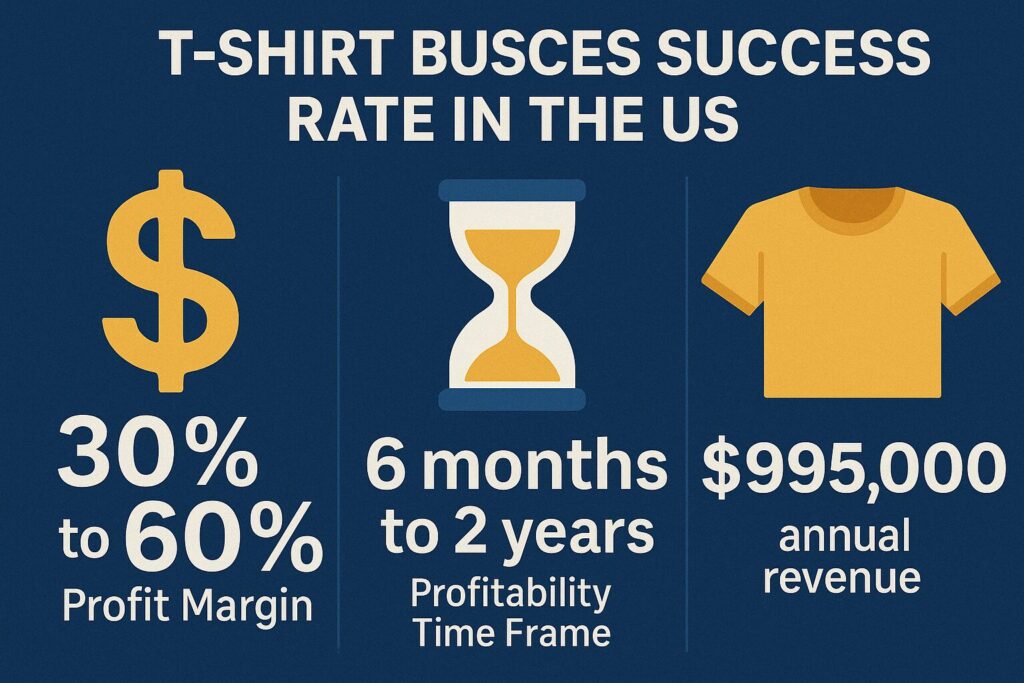
Whatever platform you choose, still stick to crafting unique designs while also focusing on your brand quality. The platform you choose is only a medium to sell your products. What matters most is how you handle your business amidst a number of competitors.

Market Your T-Shirts Like A Pro

Market Your T-Shirts Like A Pro

The US t-shirt industry has experienced a significant growth through the years due to the need for casual clothing, the rise of online shopping platforms, and the technological advancements in custom printing. Customers don't come on their own, unless you market it. As you hop into the industry, it is crucial to create a marketing strategy that will attract your target audience effectively. Focus on these three main factors that will play a huge role in your business' long-term growth.

Branding And Visual Identity

Your brand identity creates your product's first impression. Create a unique and creative logo that will represent your business. Make sure that it represents your identity and captures the attention of your customers. Study about color psychology and incorporate colors that greatly represents your mission and values as a business. Use this logo in your shirts, packaging, website, advertising materials, and social media posts. This will create your own identity and makes you stand out among your competitors.

Building A User-Friendly Website

For a t-shirt business, it is important to focus on your online presence. Building your own professional website and optimizing it with effective SEO techniques will help you rank in search engine results. Here are SEO tips that can help boost your website's visibility and rankings:

  1. Relevant Keywords: Conduct a keyword research to determine keywords that are relevant to your business. For example, you can use "start a t-shirt business" or "custom t-shirts" in your website pages or blogs. Use reliable keyword research tools that are available in the internet. 
  2. Local SEO: This is important when you want to boost you visibility in the areas you serve. Create a service page customized to a specific location and the services you offer. Let's say, "custom t-shirt printing New York."
  3. Quality Content: Aside from service pages, you must also include quality content or blogs. This will help you rank for long-tail keywords. Include topics that would answer most of your client's inquiries and questions.
  4. User-friendly interface: Ensure that your website loads fast and is easy to browse. Include a toggle menu for your online shop so that your website visitors can easily choose a product and check out right away.

Social Media And Email Marketing

Most clothing brands establish their social media accounts to reach a broader audience. Facebook, Pinterest, Instagram, and Tiktok are the most commonly used social media platforms. You can opt to run paid advertising to boost your followers and brand visibility. A recent trend nowadays includes brand collaborations with popular social media influencers who strongly represent your brand. Offer them a bunch of free products and encourage them to post relevant content in return.

Do not underestimate the power of email marketing. Plan out a way to direct your social media followers to a landing page where they can provide their email address in exchange of special discounts and limited offers. Send weekly or bi-weekly newsletters to keep them updated.

Short Summary

Starting your own t-shirt business may be a challenge for some but it comes easy when you follow these steps that we pointed out. Always remember that it is not all about just designing and printing cool designs but it is more of building a connection with your target audience. Determine your niche first so that you will know what kind of design and t-shirt type you are going to focus on. Find reliable supplier of t-shirts and printing equipment to start with. You don't have to start big right away. Prioritize what you can afford as of the moment and scale your business once it has started to gain some profit. Lastly, build your online store and website to boost your brand visibility. Enjoy the process on how to start a T-shirt business and take your time in building a profitable t-shirt business.

How To Start A Medical Courier Business

Ever since the COVID-19 pandemic hit us, the need for medical-related services has dramatically increased. Additionally, the escalating number of road accidents, surgeries, and chronic diseases worldwide has triggered the high demand for healthcare logistics. With these undeniable realities, the US medical courier industry is valued at $4.56 billion approximately and is expected to double by 2030. This goes to show that a healthcare-related business is profitable and competitive at the same time.

Unlike traditional courier services, medical couriers carry and deliver delicate materials such as lab specimens, medicines, medical equipment, and patient's personal records. If you are interested to be part of the industry and learn the steps on how to start a medical courier business, this informative article is for you.

Understanding The Medical Courier Industry

Before diving into the industry, understanding market dynamics of a medical courier business is a must. As easy as it may sound, getting into this business requires careful planning, research about current market trends, compliance to regulations, and obtaining certifications. The technological advancements that we have today paved the way for easy and convenient service delivered to clients which includes real-time tracking, temperature control, and AI integration. Given these modern changes, you need to go with the flow and consider these factors in the long run. Be knowledgeable of the factors that can greatly affect your income and consider these as you move along to establish your medical courier company.

Profitability And Success Factors

Profitability And Success Factors

Profit margins for medical courier businesses usually range from 15% to 20%. Focusing more on creating sustainable marketing strategies, ensuring accomplished operations, and prior route planning can possibly strengthen these profit margins. The use of AI and software for efficiency also improves profitability.

The average annual income for medical courier businesses in the US ranges from $47,000 to $105,000. Depending on the location, client background, and deliveries completed, you possible income can possibly fluctuate.

Timeframe To Profitability

Same with other businesses, the time required to reach your ROI and achieve profitability depends on many factors. It includes initial investment, overhead expenses, operational costs, and the revenue generated. Securing long-term contracts from different clients and managing cash flow effectively may offer you a possibility of gaining more profit in the first year. Develop consistency in implementing your strategies to have a stable client base.

Given these important details to consider, it is also important to know your responsibilities and scope of work. Unlike regular delivery, it doesn't service food and other non-medical deliveries. Medical courier services caters to the following:

Why Start A Medical Courier Business

Why Start A Medical Courier Business

Getting into the healthcare industry is a noble and rewarding job. It plays an important role in the medical ecosystem by making sure that all essential supplies and other medical necessities are transported safely and promptly. Being part of this industry does not only offer a good income source, but also provides the feeling of satisfaction of being able to save lives. If you want to start as an independent medical courier or a business owner, you might want to explore more about the rewarding benefits of starting this type of business.

High Demand And Growth Potential

With the growing market of the medical courier sector valued at $4.56 billion, the need for quality medical delivery service has also increased and will continue to expand in the coming years. Launching a startup medical delivery business will offer you a possibility of a stable income when done correctly. With the right marketing strategies, you will be able to succeed in this industry and build a reputation.

Low Startup Costs

Compared to other businesses, starting a medical courier service requires lower costs. Typically, you need $4,000 to over $100,000 to start. Investing in one reliable vehicle for a start can already perform a number of deliveries, enough to scale up and invest in another one. Have a few reliable drivers is enough to keep ball rolling.

Flexible Work Set-Up

Business owners, specially in this type of venture, can work at their own pace based on the demand of the services they offer. This is perfect for those who are eager to have a work-life balance. Using apps and software that manages deliveries and schedules can make this even more possible. On the other hand, customers can also book your service from anywhere, finding no need to meet up constantly or build an office directly for a startup.

Recurring Income And Long Term Contracts

The usual set-up with medical facilities is not a one-time service but through long term contracts. Supplies and items need to be replenished every now and then, encouraging your clients to continuously avail your services. This helps promote consistent income for the business and brand loyalty for the client.

Develop A Good Business Plan

Develop A Good Business Plan

In order to achieve success, you need to make a well-organized business plan. Conduct a thorough research first before creating a business plan to have an overview of the market and a basis of the strategies you are going to make. Learn about the needs of the healthcare community and analyze the competitive medical field. By understanding these factors, you will be able to come up with lit ideas that are good for your business. Here are other important things to include in your business plan:

  1. Business structure: Determine a business structure that fits your goals and preferences. You can choose among sole proprietorship, limited liability company (LLC), and incorporation.
  2. Business objectives and mission: Knowing your your main reason as to why you launched this kind of business will help you determine how you are going to make it thrive.
  3. Market research and analysis: This includes current trends governing the industry, consumer behavior, and challenges met by medical couriers along the way.
  4. Services you plan to offer: After doing research, you should come up with medical courier services you will offer based on the needs of your target audience.
  5. Pricing strategy: Make your competitors' pricing range a basis for your own. Make sure to provide competitive pricing and package tiers to attract more clients. If you offer payment terms, indicate the duration and conditions.
  6. Budget and financial projections: State your current budget for all overhead expenses and how you project the future financial status of your business.
  7. Marketing strategies: Make sure to stand out in this competitive market by crafting effective marketing strategies based on technological advancements and the demand for medical deliveries.

Having a well-prepared strategy and plan will give a strong impression to your future partners and investors. This implies your confidence and dedication to provide the best medical courier solutions in your area.

Register Your Business: Comply Medical Courier Requirements And Get Required Certifications

Register Your Business: Comply Medical Courier Requirements And Get Required Certifications

Having your medical courier business registered is the first step to enhance your credibility and reliability amidst the competitive market. It is crucial to comply with the requirements based on your state's rules and regulations before starting official operations and services. This includes securing the necessary permits and licenses to protect your medical courier company, drivers, and employees, if there are any. Doing this is the most important step on how to start a medical courier business. Here's a list of legal documents and requirements that you need:

HIPAA Certification: Implement Safety And Compliance Procedures

The Health Insurance Portability and Accountability Act (HIPAA) promotes confidentiality of every patient's information. Medical couriers deliver confidential information and documents of patients. It is important for every medical courier to complete and comply with the HIPAA training and regulations.

OSHA Training: Handling Bloodborne Pathogens

Part of a medical courier's job is to handle bloodborne pathogens which are infectious agents. To avoid untoward incidents, completing the Occupational Safety and Health Administration or OSHA training program to get a certification is essential.

By completing these legal requirements and protocols, it will help you establish a professional and trustworthy medical courier service. Hence, driving your business towards profitability and success.

Invest In Vehicles And Important Equipment

Invest In Vehicles And Important Equipment

A medical delivery business lies heavily on reliable transportation to ensure safe and fast deliveries. Choose a vehicle with enough cargo space and is fuel-efficient to save on costs. Also, consider vehicle features that can secure sensitive items throughout the delivery. Aside from investing in a quality vehicle, there are also other materials to consider.

  1. Communication devices: Clear communication is needed in order to provide efficient medical courier services. Mobile phones, radio, GPS devices, and tracking software will enhance communication within your team.
  2. Printing and labeling machines: To organize items on your deliveries, proper labeling should be practiced. You need label printers, code scanners, and a label software to manage items easily.
  3. Packaging materials: Bubble wraps, foam sheets, and temperature-controlled containers are essential to keep sensitive materials and pharmaceuticals in its original state as it goes through the whole duration of the delivery process.
  4. Route Planner Software: Planning every route ahead of delivery schedules will help you save time and fuel consumption. 

The right vehicles and equipment encourages efficiency and productivity. Eventually, it will lead you to business growth and expansion. Next, we will discuss building networks with different healthcare providers to get more clients.

Build Your Network With Healthcare Providers

Reaching out to different people in the medical sector and building professional relationships with them will help you attract clients. By doing so, you can establish your credibility and visibility within the healthcare community. Engaging with doctors in hospitals and clinics will help you understand the needs and challenges faced, allowing you to customize your services accordingly. You can also build your network with healthcare personnel working in a pharmacy, laboratory, and owners of medical supply companies. This strategy creates a strong impression for your business and opens up to opportunities to get more referrals.

Leverage social media and healthcare-related events to meet more professionals in the field. Offer the best pricing and excellent customer service to secure long-term contracts and recurring services as well.

Create A Marketing Strategy To Attract Target Market

Create A Marketing Strategy To Attract Target Market

There are many ways to market your medical courier company. You can even choose between online and offline techniques depending on your preferences. Developing a feasible and effective marketing strategy is crucial to attract and retain clients.

Build One Professional Website

As the majority relies more on the internet, launching a professional website for your company greatly impacts your online presence. It acts as your online catalogue for your target audience to view. Include important details about your service offerings such as pricing and packages available. Don't forget to claim your Google Business Profile and place your contact details which includes phone number, email address, office address, website link, service hours, and social media links. Here are other SEO techniques you can use for your website:

  1. Create Meaningful Content: Conduct keyword research about your medical courier business. Use these keywords not only in your content but also in page titles, headings, URLs, image ALT text, and blogs. Your blogs should deeply relate to your main keyword and will help provide answers to customers.
  2. Service Pages: For a business serving multiple areas, creating a service page specifically for every location will help drive organic traffic. Customize every page depending on the services being offered in a certain location.
  3. Encourage Customers To Leave Reviews: Reviews and feedback can build credibility and trust. It is also a great way to promote your business from a client’s point of view.

Use the right keywords related to "medical courier" to fill your website with SEO-optimized contents and pages so that it appears on top of search engine results. This allows you to reach a wider audience and eventually convert into paying clients.

Listing Your Business On Google My Business

Creating a Google My Business Profile helps you reach more customers across the internet by managing how your company appears on Google and Google Maps. It helps your target audience locate you easily. Provide the necessary information such as contact number, address, operating hours, and email address to engage with potential customers regularly.

Running Social Media Ads And Campaigns

Social media has also become a powerful tool nowadays. It is cost-effective and effortlessly effective in many ways. Build your accounts in Facebook, Instagram, LinkedIn, and Tiktok to provide easy access for your target market.

Running ads and campaigns on social media ensures you reach specific demographics and communities that will potentially avail your service. Use the analytic tools to monitor your ad performance and see if it is reaching the right audience. Then you can customize or manage these ads based on the data you have gathered.

Distributing Promotional Materials

The traditional way of advertising can never go wrong. Giving out flyers and brochures where they can read about your medical courier services and necessary contact details to hospitals, pharmacies, and nursing homes can also help promote your delivery service straight to the right market.

Attending Local Healthcare Events

Networking and engaging with people in local healthcare events can encourage word-of-mouth referrals and even direct client close deals. Build a positive relationship with people in the medical field to have an opportunity to understand their needs, which eventually helps you tailor your medical courier service based on the preferences of the majority. Make sure to answer their queries and questions right away if there are any. You can also give a free trial or demo to a few people who are interested.

Final Thoughts

Achieving success for your medical courier business requires careful planning, compliance to relevant training programs, and dedication to provide the best customer service. Understanding the industry's demands and market trends gives you an idea of what to expect and guides you on developing your own effective marketing strategy. Also, investing in the right equipment and building relationships with healthcare providers in your area can help you achieve success and profitability. Dipping your toes into the industry may seem overwhelming, but with this comprehensive guide on how to start a medical courier business for you to easily follow, surely you will be able to overcome the challenges.