
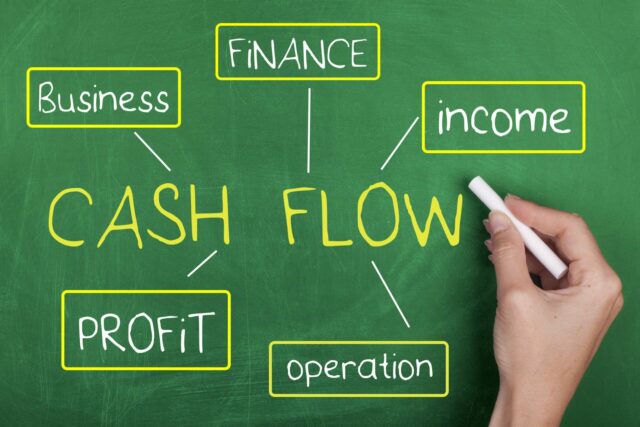
Accounting can isn't the most exciting aspect of owning a small business (sorry accountant small business owners) Why? Because all of these terms and numbers can be difficult. But (yes there is a BUT), these numbers and terms will help you be a better, more insightful business owner! How can you grow your business if you don't understand cash flow vs revenue?
It might be difficult, my friend.
Not to worry, even if you figure this out. You should consider chatting with a seasoned cashflow-revenue-bean-counter, such as a small business consultant.
The cash equivalents and net cash that come in or go out of a company are known as cash flow. Inflows are represented by cash, whereas outflows are represented by money spent. The ability of an organization to produce optimized free or positive cash flow reflects its credibility to develop stakeholder value.
Free cash flow (FCF) is the cash generated through normal business activities by a firm also known as any amount left after spending on capital expenditures
Positive cash flows imply that a company's reserves are growing, allowing it to reinvest in its business strategy, pay debts, refund the money to shareholders, provide a cushion against future financial difficulties, and cover business expenses.
The gap between cash flow and revenue is that the former is not accrued. It measures the real funds on hand as well as any amount that comes in and out of the organization. Managing the flow of funds is important to a firm's capacity to stay operational. Companies must have enough cash on hand to fulfill their short-term financial commitments at all periods.
The cash flow statement (CFS) is a financial statement that illustrates the sources of funds and how they are spent. This statement's top line starts with the period's net profit or earnings, taken from the income statement.
Revenue is at the top of the income statement; after all costs and expenses have been deducted, net income is the outcome, which is at the bottom. Because of the locations, revenue is generally referred to as the top line, while net profit indicates the amount of money left over after all expenses have been paid.
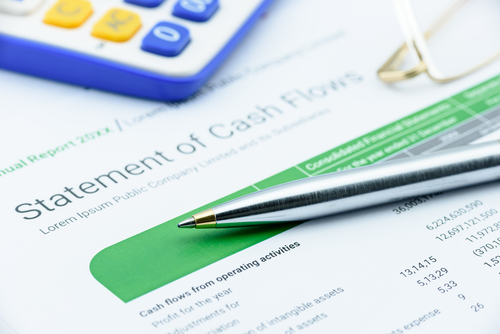
Cash coming in from operations includes changes in cash from current liabilities and current assets, including short-term items. In this part, accounts receivables, or amounts owed by customers that are collected, are reported as cash. When financial obligations or accounts payables owed to suppliers are paid, they are documented as operating activities.
The investing activities section records any amount paid or generated from long-term assets. For instance, purchases of property, plant, and equipment, such as a new production plant, are noted here.
These activities also include purchasing automobiles, office furnishings, and land. The sale of assets, such as a building or a section of the company, frequently results in credits to investing activities. In a nutshell, any long-term investment buys or sells that has a financial consequence is classified as an investment activity.
Equity or debt financing are the two most common methods for companies to fund their operations. Funds obtained via shares sold, the issuance of a bond, or the borrowing of any amount from a bank is accounted for as financing activities' cash flow. Repurchasing stock, Paying dividends, and paying down a loan or bond are all examples of cash outflows in this section.
Cash flow vs revenue is starting to make sense now, isn't it?
Revenue is also a one-way stream of money into a business, whereas cash flow is the sum of the inflow and outflow. As a result, unlike revenue, it has the potential to be negative.
The money generated from normal business operations or core business operations is known as revenue, which is computed as the average selling price multiplied by the number of units sold. It is the top line statistic from which net income is calculated by subtracting costs. On the income statement, revenue is also known as sales.

The total amount generated through selling of services or goods connected to the company's principal business is referred to as revenue. Because it appears at the top of the income statement, it is commonly referred to as the top line.
The total income produced by a corporation before expenses are removed is referred to as revenue. Understanding the difference of cash flow vs revenue is crucial for small business success.
Although the phrases revenue and cost of sales are sometimes used interchangeably, they are not synonymous.
Revenue acts as a business's lifeblood. It is a broad term encompassing various sorts of sales and returns, such as money gained through bank investments or interest earned from bonds. Gross revenue shows how much the firm is selling. In contrast, proceeds from sales refer solely to the amount made from the sale of a product or service.
Do you think companies would get creative displaying their revenues differently?
On the other hand, companies can present their profits in various ways, based on the accounting method utilized and the industry. Retailers, for example, announce net sales rather than revenue since net sales indicate inflow after goods return.
Depending on the source of fund inflow, it can be divided down and listed as various items listed on a firm's income declaration.
Many businesses, for example, report operating profits independently, which is money earned from the business' primary operations. Non-operating revenue, on the other hand, is any amount collected from other sources, such as profits from an asset being sold or investment profits.
Accrued revenue is income collected by a business owner for products or service offerings delivered but not yet paid for by the consumer.
Revenue is reported when a deal transaction occurs in accrual accounting, and it may or may not symbolize cash in hand. It has a long-term impact on fund metrics, although it does not always do so immediately.
Unearned revenue is the polar opposite of accrued revenue in that it accounts for advance invoice payments made by a client for any service or goods that have yet to be provided.
If a corporation receives prepayment for its goods, the revenue is recognized as unearned. Still, the revenue is not recognized on the income declaration till the period in which the products and services were delivered.
Other than the traditional selling of a good or service, some organizations can generate inflow of finances from various sources. The forms and the sources of these financial aspects vary depending on the firm or organization.
Rental income may be a source of income for real estate investors. Tax collections from income tax expenses or property would most likely be the main source for the local and federal governments. A government agency may also profit from an asset sold or the interest earned on a bond.
Donations and grants are the most common funding sources for charities and non-profit organizations. As a result, universities could profit not only from tuition fees but also from other investment gains.
A small business' revenue and cash flow are two financial measures that assess the operation's financial condition. The key difference between the two is that revenue evaluates the efficiency of a company's profits and marketing efforts. In contrast, cash flow is an indicator of the company's liquidity.

The financial statement on which cash flow and revenue are presented differs from the two approaches. It measures total income generated over a period. The top line of the income statement is reported as revenue. As it quantifies items sold during the accounting period, it is reduced to reach the company's net income, which is the income statement's bottom line.
The amount created by the business' operating, financing, and investing activities is referred to as cash flow.
The pleasant and unpleasant changes in the current liability and current asset accounts produce operating cash flow. Modifications in the firm's investment account create investing cash flow. Finally, the long-term obligation and equity accounts create financing cash flow.
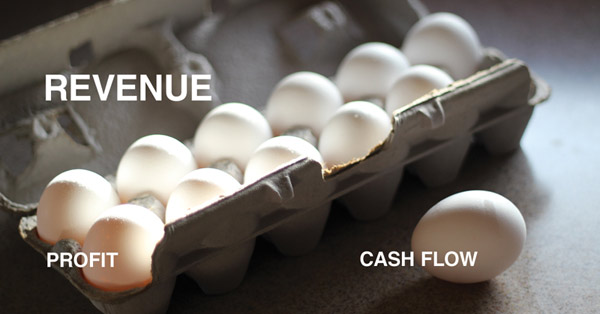
It is dependent on the business and the conditions to determine which is more significant.
For example, a company may profit every month, but its funds are locked up in accounts receivable or hard assets, leaving none available to clear staff payments.
When a debt is paid off, or the business receives a boost in profits, positive movement of fund returns. Cash flow is more crucial since it allows the business to continue operating while making a profit. Alternatively, a firm's profits and movement of funds may improve, but their debt level remains high, resulting in a loss.
But WHY the loss?
The lack of profit margin ultimately has a negative impact. Profit is more essential in this case. Another thing to keep in mind when deciding whether to prioritize cash flow or revenue is that the former may be purchased.
A business owner can invest his or her possessions in the business as capital spending. Alternatively, they can take out a startup loan from a bank to maintain profitability until movement of business fund improves.
Both cash flow and revenue are critical financial measures that are equally significant for your company.
This is very interesting, but, in a battle, who wins? Cash flow vs revenue?
For income tax purposes and to generate the income statement, you must monitor the number of volume of products sold, which convert into dollars flowing in. Therefore, the declaration for fund coming in and out cannot be prepared without the statement.
It's also vital to remember that cash flow and revenue do not increase in lockstep. For instance, if your company borrows more monetary resources, it will have a big amount coming in and out, but the debt repayment will have very little influence on the total sales and profits.
In contrast, if a company has a lot of loans, it will spend a lot servicing that long-term liabilities. Its financial position could be precarious.
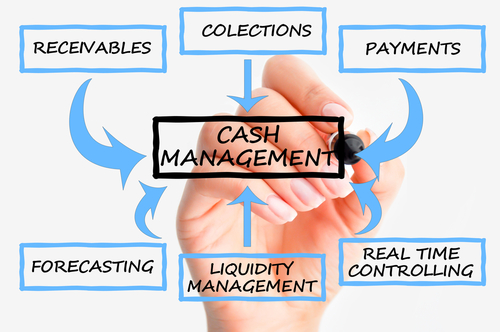
There are a lot of idioms in business finance. One of the most commonly heard phrases is "cash is king". The majority of firms fail to owe to issues with fund management. Profit is good, but funds coming in and out is required to keep the business running.
It's common for startup businesses to struggle with generating and retaining capital. This is frequently due to accumulated debt and the amount required for debt payments and fund operations.
How can you gain a better understanding of cashflow?
Owners can gain a better understanding of their debt and cash by knowing free cash flow as well as some ratios. Cash position, fund management, and the link between gross profit and cash are also crucial to comprehend.
The stream of funds, operating cash flow, capital expenditures, changes in working capital, and dividends are all factors that affect free cash flow. So it means that free cash is the fund you have left off that you could spend.
Is there a whole in your cashflow bucket?
Analyze the concept of money's time worth. A dollar now is devalued tomorrow, but it is more valuable if you put it to good use. The goal of the free cash principle is to discover a way to put your new cash to good use.
Free Cash Flow = Operating Cash Flow - Capital Expenditures - Working Capital - Dividends.
Financial ratio analysis can assist you in figuring out how liquid your company is and how well it will fulfill its short-term debt repayments. The ability of a company to pay its short-term financial obligations is referred to as liquidity.
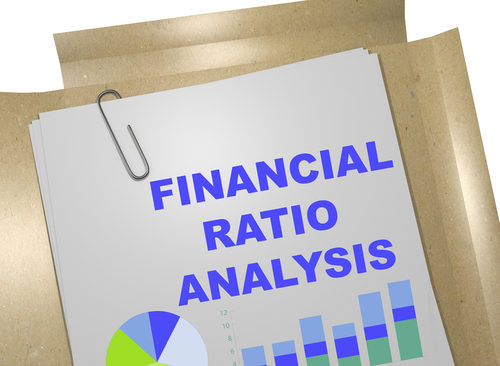
To keep your fund records, you might want to create monthly budgets. Cash flow statements can be prepared at regular periods to analyze the inflow and outflow of funds. This will assist you in budgeting the amount you have available for your business's numerous tasks.
Inventory and accounts receivable, two of your current asset categories, can significantly impact funds coming in and out of the firm. The things you sell are usually your inventory. The accounts receivable account represents the credit you offer to customers. Your movement of funds can be improved by selling items and collecting receivables more quickly.
Accounts payable can also be timed as a short-term strategy. Clear your payments on the due date, not ahead of time. This allows you to put your funds to good use while still having it.
The key to successful cash management is to be educated by utilizing the resources at your disposal. Develop an awareness of how your business' fund flows, how to gain financial stability, and build a budget to keep your cash balance in good health.
You've got this. Sure, this lingo might be terrifying now, however, anything is possible if you continue to work at it! Now you should have a comprehensive understanding of cash flow vs revenue. If you don't, it can't hurt to read this again, my friend.

Ronald Osborne is an Australian entrepreneur and experienced business coach. With over ten years of business and mentoring experience, an MBA specializing in Finance, along with launching/partnering with over 10 of his own companies around the globe, he has been able to achieve his version of success. Ronald has been able to help large telecommunication companies, law firms, trade businesses, and everyday business owners improve their business and take it to the next level.