What Are The Up-Front Cost Of A Small Business

Making the decision to start a small business is thrilling, but it may also be intimidating if you're a first-time business owner. Upfront cost estimation, fretting about long-term sustainability, and acquiring startup finance are stressful tasks and full-time jobs, and not every business owner can afford a Startup Consultant.

The cost issue is crucial because the initial expenditure can be substantial. According to a study by the Kauffman Foundations, the average cost is roughly $30,000, and costs rise every year.

Fortunately, some types of organizations, such as home-based businesses and micro-businesses, have reduced financial entrance hurdles.

A company is more than just furniture and office space. Startup costs, particularly in the initial stages, necessitate thorough accounting and planning. Unfortunately, most new firms overlook this step, instead counting on a slew of new clients to keep the organization running, with disastrous outcomes.

The costs involved in starting a new firm are known as startup costs. A business plan, researching charges, loan costs, and technological fees are all part of the pre-opening startup costs. Likewise, advertising, labor cost, and promotion are all part of the post-opening starting costs. Different forms of business structures, such as partnerships, sole proprietorships, and corporations, have various initial costs, so be informed of your prospective business's charges.

Because every firm is unique, it necessitates a unique set of initial fees. However, a few costs are universal to all sorts of businesses and after reading this article you'll know what are the upfront cost of a small business are.

Up-Front Cost Of A Small Business

How Can You Figure Out How Much It Costs To Start A Business?

The easiest method of calculating your upfront costs is to write a business strategy. Then, for the next 3 to 5 years, the financial forecasts part of your plan should forecast earnings, sales, and expenses.

Other resources, such as the SBA's launch costs spreadsheet, might help you estimate your finances. Templates can assist you in estimating your early investment expenditures so that you may determine how much funds to request when seeking startup funding.

Remember, many of the starting costs listed below are ongoing. Office supplies, rent, and wages are all expenses that must be covered annually, quarterly, or monthly. The office furniture and incorporation fee, for example, are one-time charges.

A decent rule of thumb when determining your business launch costs is capable of covering six months of upfront cost. You can not expect your overall value to start to ease your costs until after that initial phase has passed. So while you find your bearings and work on recruiting customers, you'll need a cushion.

Setting a Firm Budget

Setting a Firm Budget

Costs to Consider when Starting a Business

Despite the fact that this is a normal list of business launch costs, your real startup costs will be determined by your individual firm and industry.

Here are a few usual startup expenditures to keep in mind:

Accessories: $10,000 to $125,000

More or less, every company will require rapid hardware financing. Based on the sector and the company's size, beginning hardware expenditures might range from $10,000 to $125,000. To opt for a loan, you have to keep in mind the down payment too. This varies according to the loan type and can range from 0% to 20% of the equipment value.

If you're beginning a shipping company or moving, you'll need to finance a vehicle. You'll require stoves, commercial-grade ovens, dishware, and cooking utensils if you're operating a restaurant. You'll need styling chairs if you own a hair salon. Computers are required in almost every business.

These prices, of course, vary depending on your sector and your company's size. In addition, hiring staff could be an additional cost because you may also have to acquire individual equipment.

Fees For Incorporation: Less Than $300

While establishing a business, one of the first things you should do is pick a new corporate entity with legal, financial, and tax ramifications.

You'll need to file articles of organization or articles of incorporation with your state if you want to incorporate your firm or form a limited liability company. Depending on the state, the filing price might range from $50 to $725. In most states, however, the charge is less than $300.

You'll almost certainly need to apply for state or federal licensing or permissions even if you're not operating. Depending on your location and industry, you'll require different documents. Businesses in the aviation and agriculture sectors, for example, require federal authorization. Trade-specific license is issued to service-based sectors. Whereas a sales tax permit is issued to retail companies.

Monthly Office Space Costs

Monthly Office Space Costs

Whether you buy or rent, the rental or buying cost of a retail or office space will be a significant part of your constant expenditures. You may spend anything from $100 per month per person to $1,000 per month per employee, depending upon the nature of the workspace you're utilizing.

You can reduce these costs by working from home at first or looking into coworking spaces, which are perfect for small enterprises. In addition, you can reduce overall expenditures by owning a service-based business by flying straight to clients.

Inventory Costs
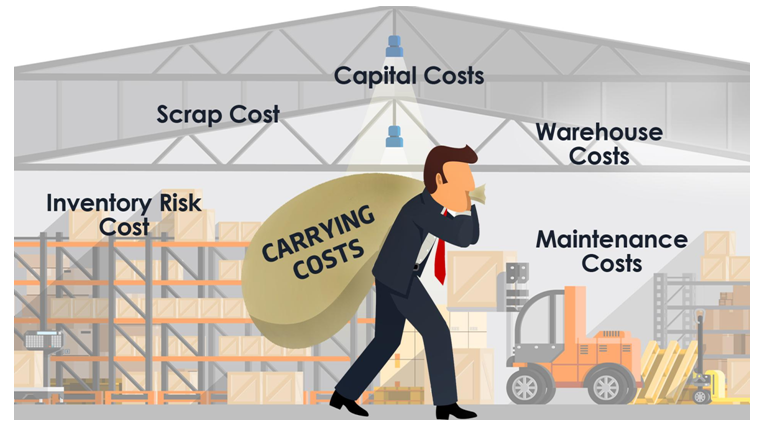
inventor cost

If you work in the wholesale or retail distribution or manufacturing, you'll almost certainly need to obtain inventory quickly.

It's difficult to know the exact amount of inventory on hand: you risk spoiling or damage if you get a huge amount of inventory. But, on the other hand, you potentially lose clients who will not wait for back-ordered items if you have too few. This is particularly true for seasonal firms, whose inventory might fluctuate significantly.

You should set aside 17 to 25 percent of your inventory expenditure based on your sector. Consider acquiring additional inventory while you're first starting. In the early phases of your business, you'll want to attract more customers and earn as much income as possible.

Marketing

Monthly Office Space Costs

Banners, signs, and business cards are examples of physical marketing items. However, you might also think about sponsored ads and more creative solutions like films and prizes, which may necessitate hiring a video producer or a consultant.

The Bookkeeper's COO, Courtney Barbee, advises keeping total marketing spending minimal. Seek to maintain your ad materials to less than 10% of your whole expenditure.

The majority of your small-scale business marketing may be done for free. However, thanks to online marketing and other social media tactics, advertising expenditures for small firms just getting started now are generally significantly lower than they would have been 20 years ago.

Website

website cost for a small business

The maintenance total cost estimate of a website is approximately $40 per month. You'll want your business website to look sophisticated with the best layout design, be easy to use, and visualize data about your products, services, hours, and contact details when you construct it. You can not hire a website designer (who possesses great design skills and tech skills) with a limited budget as it's an expensive option.

You can not trust a cheap tech novice or a designer with dirt-cheap fees for your website to save. However, having a helping hand with the website development will take a lot of heavy lifting away. On the other hand, a professional web designer assures you of domain privacy, as a branded subdomain is expensive, and you have to purchase a custom domain from day one. This domain helps you create technical maintenance requests.

Squarespace, Wix, and Weebly, for example, make it simple and inexpensive to create a website; they offer many cheap plans for your site development. By visiting these sites, you can have a more accurate estimate of their charges. Most content management systems are occasionally free, but premium subscriptions are available for an additional cost. The developer cost could be $100 - $180 on an hourly basis. Expert Market has made a web design comparison tool to help you get the web design pricing details.

Plugins offer different plans that allow you to choose a free plan and upgrade them later to have a better version. The cost of plugins ranges from $0 to $100+ annually. You can pay by the project for design customizations or by the hour. It is advisable to set up a firm budget while planning to launch your own small business.

The hourly cost of a designer ranges from $50-$80/hour average cost

Payroll Accounts

payroll for small businesses

Even if you're starting and don't have much revenue, you must pay your employees. Payroll is made up of the following items:

Earnings after deductions.

Commissions.

Bonuses.

Paid vacation

Overtime pay is available.

Paid vacation

Payroll costs will, of course, differ from one startup to the next. Employees typically cost 1.25x to 1.4x their annual salary for this service. After factoring in different payroll tax bills and insurance, a worker on a $40,000 payroll will cost you roughly $54,000.

If you're alone proprietor or manage a small business with largely 1099 contractors, a frugal payroll budget might work - and both scenarios are very common for most startups.

Payments

  1. Interim Payments
  2. Advance Payments
  3. Customary Progress Payments
  4. Prompt Payment
  5. Invoice Payments
  6. Contract Financing Payments
  7. Performance-Based Payments

Professional Consultants: ( $1,000 - $5,000 annually)

consultant fees for a small business startup

It's tempting to do everything yourself when it comes to your business. And, besides, who understands your company better than you? Working with specialists and professionals, on the other hand, can be worthwhile.

Certified public accountants, for example, can explain the various legal structures, assist you in selecting an employee benefits package, and check that you're meeting your obligations as an employer. In addition, they'll draft your tax statements and assist you in saving money when tax season arrives.

You also don't have to employ a full-time accountant. However, meeting with your accountant a few times annually to examine your financial accounts and get advice and general financial guidance is often a good idea. Regularly consulting with an advisor might also help you avoid severe legal issues.

It's tempting to do everything yourself when it comes to your business. After all, who knows your company better than you? Working with specialists and professionals, on the other hand, can be worthwhile.

The hourly prices charged by each CPA and lawyer differ. The amount and difficulty of the jobs you require outsourced, the time required to accomplish the tenure of your consultant, and your projects all influence expenses. Therefore, you can cut unseen costs by doing simple jobs in-house and outsourcing just the most difficult projects. In addition, there may be a few places where you may get free legal counsel for your business.

You can also handle fundamental bookkeeping tasks like processing and handling, creating and tracking invoices, payroll, and managing inventory with the help of decent company accounting software.

Typically small business owners invest around $1,000 and $5,000 annually, according to SCORE, in administrative chores such as legal and accounting bills. However, as a startup, you'll lean on the bottom of that spectrum, using those annual cost-cutting strategies we described.

Taxes

taxes for small businesses that are new startups

When it comes to budgeting, figuring out how much to set up for business taxes can be difficult. It relies on deductible expenses, your revenue ( difficult to forecast), and the type of business entity you have.

Companies pay 21 percent corporate income tax under current federal law. However, business revenue and losses are passed through to the proprietors' personal tax returns in the case of pass-through entities. As a result, pass-through firms can deduct 20% of their income without paying their business taxes.

However, engaging with a CPA can often save you money and time. A qualified CPA can tell you what you need to know.

Insurance ($1,200 annually)

Your business model requires the same level of security as your home, health, and vehicle. There are many different types of business insurance, such as security against lawsuits from consumers and disaster insurance for probable fires that could close down your business for weeks.

Your startup's insurance needs are entirely determined by your company's number of employees, industry, and other factors associated. A sole proprietor operating an online business, for example, has significantly fewer insurance needs than a construction firm with multiple employees.

Here are a few important types of insurance to consider is designed to safeguard, and insurance premiums differ depending on a variety of factors:

Shipping

However, if you work in retail, you may be responsible for sending things to customers. If that's the case, you'll need to include shipping costs, such as packing postage and materials, in your startup budget. These expenses can cost excessive money depending on what you're supplying.

Small company owners can benefit from services like Stamps.com, which can help with shipping costs.

Loans

loan for a small business startup

Loans are required to build up a proper setup for a new business. There are many types of loans available for new business owners. A loan with a fixed interest rate can give you a maximum annual interest rate (AIR). Remember that credit cards, revolving loans, and accounts receivable financing have more interest rates than other funds.

Small business owners would be interested to know about a suitable business loan provider. Let's look into a few options, such as:

BlueVine is considered the top business loan provider because of less processing time and higher loans granted to the business owners.

OnDeck is best regarded as a business loan provider for loyalty benefits and prepayments. So if you have paid off 50% of your existing credit line, you get a waiver on the interest rate of the remaining loan amount. But for that, you will need to take a new plan or renew your existing credit line.

Choose Fundbox as the best business loan provider if you are looking for future insights. Only Fundbox sends alerts if there is a decrease in the cash flow lower than the pre-determined amount. It also provides insights feature, which is helpful for businesses.

This business loan provider brings great news for owners with a bad credit history. So even if you have 500 as your credit score, you could still apply for a loan from this business lender. This can be a great way to seek investments for your startup.

Average Cost For A Small Business Startup

After learning about the various costs involved in launching and running a small business, it is time to learn about the average cost. It is imperative to know that the average cost varies according to the industry, the business type, and the size.

The average cost could range from anywhere between $1 million for opening up a franchise of an international food chain to less than $10,000 for setting up an online consultancy. According to Forbes, the average cost to merely register your business is $145. Of course, there are plenty of other costs that follow.

Conclusion

One of the most challenging aspects of running a business is creating a budget. However, being realistic about your starting costs — and how much capital you may have to loan instantly from a business loan provider or business lender, the rates for start-up business loans differ by loan type and lenders — would go far toward providing success to your firm.

Establishing a new or small business comes with many hurdles, and you want to stay profitable. Therefore startup business with consultancy services from a startup consultant will help you go to the next level faster and less danger of failure. Companies specializing in startup consulting can assist you with specific parts of your business plan. It isn't easy to set your company unique in a crowded market. Advisors are accustomed to getting projects up and running rapidly. Consultants may use consultant scheduling software, but it's not just about the technology; it's also about the knowledge. Now you understand what are the upfront cost of a small business will be.


Should You Seek Investment From Others For Your Startup

Introduction

We answer the question should you seek investment from others for your startup. Typically, high-valued and venture capital technology enterprises are associated with start-up investment. In actuality, only a small number of businesses are funded by venture capital. Instead, traditional bank loans, investments from family and friends, and personal debt are used to fund many more businesses. The range of funding types available might make it difficult to decide how to support a firm. For the enterprise and its business professionals, each credit score of finance comes with its own set of risks and rewards.


The most prevalent types of investments will be discussed in this article. It will also illustrate which business practices and business models are most suited for external finance, as well as the motivations for seeking — or avoiding — outside funding. Finally, we'll discuss some of the concerns entrepreneurs should consider before accepting financial statements from investors and where a startup consultant can help you evaluated the pros and cons.

statup investor riding an increasing profit trend

The Different Types of Startup Investments

There are four different types of start-up funding. Loan and personal savings or pension funds are the first and most common. Businesses incur the second type of debt in the form of loans and lines of credit. Business acquaintances, family, and friends are the third source of funding. Venture capitalists and angel investors are the fourth types of funding. These are the elite types of investors that provide you with an investment opportunity.

Debt and Personal Savings

The majority of entrepreneurs and startup founders start their enterprises with personal savings. These funds could be in the form of cash, retirement accounts, or investments. From the entrepreneur's standpoint, personal savings implies reducing the interest rates connected with loans.

However, only a small percentage of entrepreneurs can sustain successful startups with their own money. Therefore, another source of funding is personal credit cards and bank loans. The disadvantage of utilizing bank loans and personal credit cards is that the owner is personally liable for repayment if the firm fails.

Traditional Loan for a Business

Business loan for startup business

In the form of lines of credit loans or lines of credit, debt accounts for about 40% of new firm capital. Business loans are available for certain amounts of money, at a specific interest rate, and with specific repayment periods. Business loans are typically used to fund beginning costs, but lines of credit for regular running expenses are also prevalent. This area is dominated by small banks specializing in analyzing soft information such as company plans and market research. In addition, because the entrepreneur's private possessions are not utilized as security, business debt offers the entrepreneur additional protection in bankruptcy.

However, this may not be the case in third-world countries with insufficient credit infrastructure. In such instances, the entrepreneur's guarantee may be required to back up the business loan.

Friends and family

friends and family investing in a startup business together and everyone is excited

Friends and family of the founder are frequently used to fund new firms. This funding can be arranged as a loan, with the lender being paid back with interest unless the company fails and is forced to file for bankruptcy.

The money can also be constituted as an investment, with the funder receiving a portion of the company's upside if it succeeds. Family and friends typically do not want control over business decisions when providing external finance.

Angel Investor

angel investor flying in to help lift up a startup founder

Angel Investors are individuals who invest in small businesses. One can say angel investors are rich individuals who invest in a start-up in exchange for a share of the company's ownership. They typically invest tiny sums of money. They may provide mentorship and guidance to budding entrepreneurs in addition to the investment, or they may expect some control over corporate decisions.

Traditionally, angel investors have supported less than 3% of all new businesses and 7% of the fastest-growing businesses. On the other hand, Business Angel investing grew at an exponential rate in 2014-15. The success of IT companies' initial public offerings has resulted in a slew of billionaires who have transformed into competitive angel investors. For some, angel investment has become a sociological status symbol, and these investors frequently participate in "party rounds," or funding rolls with no principal investor and very little due diligence. Because each investor gives a small amount, such rounds can culminate in a firm with many angel investors.

If each angel intends to "guide" the founder, there may be too many chefs in the kitchen. Moreover, even offering a respectful ear to their counsel (frequently contradicting or insignificant) can take up a lot of your time. As a result, if you're seeking angel investors, you should limit your number to a few.

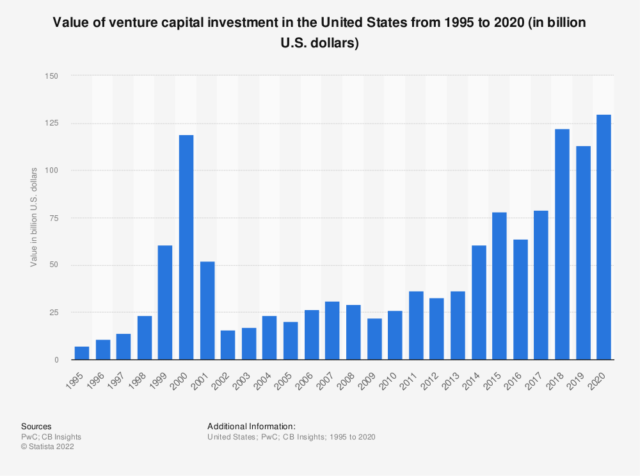
Venture Capital Firm

value-of-venture-capital-investment-in-the-us-1995-2022

Venture capitalists are people who invest in businesses.

Business venture funds finance less than 1% of all new businesses. Instead, many people put their business funding into a business concept, which then invests it in a range of businesses in exchange for shares. Khosla Ventures, New Enterprise Associates, and Sequoia Capital are some of the three venture capital firms that have made significant investments in Asia.

Venture capital firms, like angel investors, may provide mentoring and counseling in exchange for a portion of the company's control.

Cons of External Funding For Startups

man walking to go meet with an investor to seek funding for his startup

Tim Berry is one of the well-known angel investors, and the shocking fact about him is despite being an angel investor, he does not support the idea of seeking investments from others for your start-ups. Here are 10 arguments he debated to convince an entrepreneur not to seek external funding.

Investors at start-ups are co-owners, partners, and bosses at times.

all employees standing around a boss

Aside from that, finding start-up investors is difficult.

Start-Up Using a Lean Approach

group of words with lean as the focus

A Method of Avoiding or Deferring The Requirement for Outside Funding

The lean start-up philosophy focuses on creating a minimal viable product and efficiently utilizing corporate resources. Lean start-ups can support their expansion through customer sales, avoiding the need for outside capital. Building a product rapidly, monitoring consumer response, and applying these results to enhance the product swiftly or business idea are all part of the lean start-up process. As a result, the company creates a customer base early on and can support expansion through sales.

The benefits of avoiding or postponing external finance through the bootstrapping or lean start-up philosophy are numerous. First, entrepreneurs have more control over their business decisions and are not required to chase investors. Second, they can keep a bigger share of ownership inside their own company because their ownership share isn't diminished in early funding rounds. Third, they can make every business decision on their own.

Bootstrapping is a strategy used by entrepreneurs who are concerned about these difficulties. These lean start-ups, also known as bootstrapped businesses, do not seek outside capital until they have a viable product. The three-step method of lean development is as follows:

A lean start-up focuses on capital conservation and profit maximization throughout the first and second steps. Some lean firms seek outside investment during the third phase. These lean firms are ideal candidates for crowdsourcing funding, especially if they create physical goods.

The first step in this business strategy is to come up with a business idea or a custom solution. Next, the concept is prototyped, sold, and fine-tuned. Finally, customers' revenues fund the company, which is reinvested to expand and enhance the product. Once a company has a successful product, angel investors or venture capital are sought to fund expansion.

A more conventional start-up model, on the other hand, starts with a business plan. After that, the entrepreneur looks for finance. Product development usually does not begin until the company has received funding. Then, instead of being reinvested in the company, profits from client sales are distributed among several investors.

Pros of Seeking External Funding

group of investors talking about a startup

Angel investors are a fantastic alternative funding option for a business that might not be able to receive a small business loan, whether it's because it's too new or because it's in a higher-risk field. The following are seven reasons why angel investors can be a good fit for your start-up.

While many successful start-ups emerge from large cities such as Boston, San Francisco, and New York, successful firms can also be found in every tiny town in between. As a result, Angel investors are looking for those companies all around North America. According to a study from the Angel Capital Association (ACA), in 2021, the ACA will have about 8,500 members in 30 states and two Canadian provinces.

Furthermore, because angel investors only fund enterprises they are interested in, practically any industry can obtain funding. Technology, health care, financial, consumer product, government, education, and energy were among the industries funded by angel investors, according to the same 2021 research.

Angel investors are also prepared to commit to higher-risk businesses or industries if they offer a good return on investment.

Minimal Paperwork

pile of papers stacked very high

The amount of paperwork required is minimal. While you'll need a financial projection, pitch, and a business plan to complete an angel investment, you won't require nearly as much paperwork as you would for a business loan. The investment is usually completed with the use of a convertible note, which is a short-term debt with an interest or discount rate, a valuation cap, and a maturity date. Investors can convert a flexible note into preferred shares on a certain date or event.

No Monthly Payments Required

Angel funding does not need monthly payments because it is not a loan. Because you won't be making a monthly loan payment, this can aid your short-term cash flow. In addition, Angel investors are compensated when a business is acquired or raised additional capital.

Support and Guidance

You're not only getting money from an angel investor, but you're also learning from them. This is important for a company since it allows you to rely on the investor's expertise when making investment decisions, resulting in higher success.

Networking Opportunities

networking group of angel investors

Angel investors can connect you with potential clients, assisting in your company's growth. Investors can also put you in touch with other firms they've backed, which can help you build strategic alliances. Some of those other companies might be interested in making a strategic investment in your company, which could lead to an acquisition later on.

Final Thoughts On Seeking Investment For Your Startup

Conventional startups and lifestyle enterprises are better suited to bootstrapping since they grow slowly and are geared to support the entrepreneur. Businesses with a unique business plan and a vast prospective target market, on the other hand, are likely to receive venture capital funding. However, external investment for these enterprises comes with its own set of risks: the owner's equity is eroded, and the entrepreneur loses some control over the company's future. These risks can be reduced by obtaining a good deal through enhanced transparency or minimizing the capital required through lean start-up approaches.

Before approaching an angel investor for funding, several things to think about. There are numerous advantages, including developing experience to help your company grow. Angel investors are less concerned with risky businesses and industries, and you may use them to network for future investors.

You are, however, giving up some of your company's stock and, as a result, some of your judgment power. Investors will expect a quick financial return and use their clout to ensure it. Furthermore, you might not be able to find an early investor at all.

While moving forth with angel investments in your business, consider all of the reasons listed above, as well as communicate with your legal and financial counsel. You can utilize startup consulting services to ensure you are making the appropriate decision. Now you can identify should you seek investment from others for your startup.

Is There Any Government Assistance for Startups

startup grants

Life was never easy for startup founders, especially newcomers, and things worsened with the Covid-19 pandemic chaos. The money is tight and resources limited; however, a standard business owner tries to do his best and survive in a highly competitive market. This left many founders wondering is there any government assistance for startups.

The good news is that the struggling companies or development companies can seek financial assistance from the government (state or federal) and even the private sector in business grants or loans, there is still a potential for commercialization for newcomers.

The U.S Small Business Administration provides loans and grants following a standard loan program, to eligible organizations to promote and instigate economic growth. Any SBA-approved lender would have specific grant requirements and a different eligibility criterion- this is why you need to do your research including all your business concerns.

If you are clueless about where you can get help, worry not; we have covered you. We also know a brilliant startup consultant that can guide you each step of the way.

All the Programs You Need to Know About

grants to startup files

Federal stimulus aid

For all the businesses that conform to the eligibility requirements, President Biden of the United States has recently passed a federal aid by the name of "coronavirus stimulus bill" that provides $1.9 trillion in assistance in loans, grants, and tax credits to all the small businesses. These businesses can use the aid provided by the US official grant providers, to up their marketing game, create better opportunities or get better with their technology tool area and have profitable financial statements.

Free government grants For Startup Businesses

free grants sign

You can search the federal or state government sites to explore the most comprehensive fund offers that align with your business goals and budget. The pattern of fund assistance in the federal government is not only for start-ups or small businesses. But there is a web of fund-flow through nonprofit organizations, local and state governments, and educational institutions (even for the profit companies).

We have enlisted the government assistance programs to know if it fits your need and align with your business plan. To dig in further, you can visit their official websites (or visit grants.gov to start your search from the programs offered by the federal government) and check out the requirements for example what kind of application you have to submit that can ensure a business with loans guaranteed, these application types may include electronic application, fast-track application, standard loan application. You can also seek help from an application guide provided by the US government, to fill up your application forms.[thrive_leads id='415']

Here are some of the government assistance programs that you can leverage:

Free money from government grants, loan programs, and funding opportunities requires extensive paperwork. As a result, the application process is time-consuming and technical. More importantly, ensure that you qualify for the money by fulfilling all the administrative and legal prerequisites alongside. You want to make sure, therefore, that you are eligible before applying in addition to the legal, administrative, and auditing prerequisites.

Apart from these, many other "specific" programs motivate small businesses started by women, disabled people, or people of color. But unfortunately, these people are often discouraged and find it hard to fund their start-ups, especially after the novel Coronavirus pandemic. Many were left wondering is there any government assistance for startups

Therefore, for their business's financial management, they can leverage the following government-assisted programs.

Contracts Assisted by the Government

government contracts on a founders desk

Several minority-owned businesses, environmentalists, black-owned businesses, rural communities, and several other low-income communities can also consider the following federal grants.

Assistance Program for Natural Resource Sales

SBA has set aside a major monetary percentage for the natural resource goods and surplus properties for bidding by start-ups or small businesses. It also provides training and counseling.

Here are the categories that can leverage governmental assistance to businesses.

Additional Grants For Startups

man handing a founder funds and a contract

Several nonprofit and other corporate entities provide grants to enhance entrepreneurial spirit for small businesses to manage their financial services.

Industry-Specific Grants

These programs set by federal agencies also assist with sales, marketing, and supporting a wide array of technological potential breaming tools. The federal business grants can save these small start-ups from revenue loss and aid them in fulfilling their financial obligation. These grants can be significantly impactful for startup industries that are particularly challenging.[thrive_leads id='415']

Final Thoughts On Government Assistance For Startups

apply now to a government grant for startups button

Grant funding programs can easily create and boost economic growth to assist diverse businesses or entrepreneurs such as movie theatre operators, women or black-owned businesses, talent representatives, agricultural businesses, or even innovative ideas with high commercial potential. Considering many people wonder if is there any government assistance for startups.

To complete the application cycle, you must go through the eligibility requirements on each program's website. Then, witness actual business growth with no worries about business taxes and ensure seamless business management with the government financial aid. Thankfully no founder will need to worry about is there any government assistance for startups now that we have answered that question.

How Long Does It Take Before A Startup Will Be Profitable

Introduction

It is impossible to define an average time to profitability for a startup company as different startups measure profitability in various ways. Conventionally, it can take two to three years, but it does not reflect your performance as poor. This is because the entrepreneur can take an income from a business even while showing a loss on paper. Similarly, the investors can profit regardless of the company's performance if they get a fixed interest rate. However, we wanted to be sure we answer how long does it take before a startup will be profitable with researched information. You can always discuss your startup financial position with a startup consultant.

What Is Profitability?

business trending towards it being profitable

Profitability is the amount of financial gain yielded by a business or activity. In other words, profitability can be defined as a measure of the financial gain with the business expenses incurred by a business.

Profitability can also be defined as the difference between the revenue generated by a business entity and the product cost.[thrive_leads id='415']

Profitability ratios enable you to evaluate your company's ability to generate profits. While there are many, the business owners need only five to evaluate their profitability. These are as follows:

  1. Operating profit margin percentage
  2. Gross profit margin percentage
  3. Return on investment (ROI)
  4. Return on equity
  5. Net profit margin investment

Difference Between Ramen Profitability and Actual Profitability

Ramen Profitability

Ramen profitability means minimal profits, just enough to survive without indebted and maintaining 100% equity. Ramen profitability for a startup means being barely profitable to allow the business owner to meet basic expenses. Online businesses that require fewer startup costs reach ramen profitability quickly. This method is the fastest way to address how long does it take before a startup will be profitable.

Actual Profitability

In the case of actual profitability, the owners take handsome amounts as salaries and have enough left to declare profit on the books. The meaning of profitability differs from business to business, depending on your goals. At the same time, some entrepreneurs want more money in their pockets without worrying about the company's profitability on the record. Other business owners in search of investors want a formal profit.

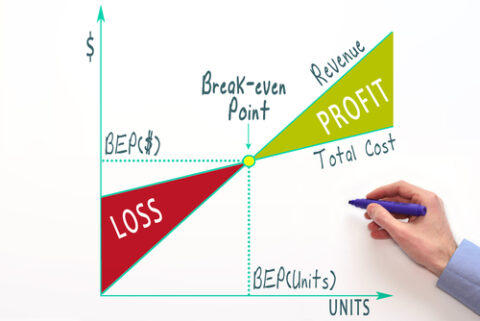
Understanding Break-Even Analysis

breakeven analysis to help startup founder see if he is in profit

There's a lot to keep track of when you run your online store. You must track the inventory levels, monitor the product quality, and provide great customer service. You must also keep track of your finances and manage a steady cash flow to be in the business.

The most crucial report for making financial decisions is the break-even analysis. It can assist you in determining how much spending room you have in your budget and how you should go about pricing your products. Ensuring you know how long does it take before a startup will be profitable. The break-even analysis is a crucial part of a business plan.[thrive_leads id='415']

Factors Determining Business Profitability

Business profitability can be measured in three ways: business owners, investors, and the overall business. Your business profitability depends upon the following factors:

Profitability in Relation to the Type of Business

It takes an average of three years for a startup producing creating a new product to become successful. In addition, there are costs associated with adding a partner or expertise to the payroll to develop items, also marketing costs. This is why you should know know how long does it take before a startup will be profitable.

Occasionally, a business will profit from a new product before being on the market for three years. However, these occasions are uncommon; most owners must wait patiently.

On the other hand, because it costs so little to start, an online business may be profitable right away. All that is required to start an online business is a device and an internet connection. However, not every online business idea will turn a profit right away, as marketing and product costs can pile up quickly.

Profitability Analysis Year Wise

dollar signs increasing on a startup business screen

Tip: Although analyzing profit yearly gives us an idea about the way forward. It is imperative to compare monthly profit as well to check the trend of your profit.

Let's look into what the profit tells about your business year after year.

Business profitability in the First Year

According to research conducted by Forbes, most businesses do not make any profit in the first year. After that, it takes between 18 to 24 months to make a profit. In addition, almost 25 percent of businesses fail during the first year.

Even larger companies trying to hire new employees or expand their product lines may face profit cuts during the initial year. If they make a profit, most of it goes as tax deductions.

For most entrepreneurs, the launch year is full of excitement and motivation about the following:

But we tend to ignore the costs involved in initiating and sustaining the product launch. However, the first year goes by with a lot to celebrate.

Profitability in the Second Year

profitability timeline for a startup

Things start becoming a lot clearer in the second year. But, again, it is all about maintaining a positive cash flow. Your savings tend to get exhausted, and you look around for internal and external funding to keep the business running.

Internal Funding includes your savings, credit cards, borrowing from friends and family. At the same time, external Funding includes small business loans and small business government grants.

This is not all! While you have put in all efforts to attract customers, the battle between lead conversions and having long-term customers still needs to be fought. The repercussions of starting a real company begin to appear at this stage.

It is advisable to focus on achieving micro milestones and monitor daily growth to achieve realistic goals. Then you can focus on know how long does it take before a startup will be profitable.[thrive_leads id='415']

Realistic Third Year

startup founder measuring the performance of his third year in an office

The joy you once felt at the prospect of starting anything has given way to apprehension over whether you made the appropriate business choice. You have crossed the launching phase and entered the transition phase.

Year three marks the validation stage. You have had enough time to validate your business idea. Now it is time to respond to the validation by following steps such as:

Look at the history of all major companies. Try to understand know how long does it take before a startup will be profitable. You'll see that they often operated in relative obscurity for many years until one day they realized that what it had was valuable. Businesses that get overnight success are rare, and one should not follow their business success guidelines.[thrive_leads id='415']

In reality, it does take almost four years to refine every aspect of your business, such as:

Building a successful startup is not an easy task. Although you'll need knowledge and decision-making skills to establish a great firm, it'll ultimately come down to having the fortitude to see it through. Just keep in mind that it will take a long time.

Between years four and six, the final push before success usually occurs. Only then will you begin to feel confident in your abilities. You'll have a consistent stream of new consumers a well-defined brand, and you'll be updating your products and services regularly.

Years Seven to Ten

Your business plan has been successful. But, if you're like most businesses, you'll see success between the seventh and tenth years.

Profitability Varies With Business Type

startup founders dividing the profits of the last business year

While some business owners enter the industry with full knowledge about the kind of business they wish to start, many novice entrepreneurs find it hard to figure out their startup statistics, ideal customer, the type of business that suits them. However, your financial statements, such as a balance sheet and income statement, indicate where you are heading. It is overwhelming to know exactly how long it will take to become profitable.[thrive_leads id='415']

Let's look into the most lucrative small enterprises and know how long does it take before a startup will be profitable. Each of these businesses is rapidly expanding and can offer you a comfortable living and rewarding experiences. Most of them don't demand high initial costs. The smartest entrepreneurs may establish a profitable business with the appropriate combination of hard work, perseverance, and resourcefulness or a funding source.

Affiliate Marketing

Affiliate marketing is ideal for driving sales and generating online revenue. Affiliate marketing is the tactic of earning a commission by promoting the products of another individual or company. The affiliate finds a product they like, promotes it, and earns a portion of the profit from every sale they make. In addition, affiliate links from one website to another are used to track sales.

Although it seems like quick money, you see profits by the sixth month. As there are three parties involved in affiliate marketing including:

Earning a consistent income via affiliate marketing can be tough. To stand out from other marketers advertising the same products can be even more difficult. However, there are steps you can do to become successful and generate a more reliable cash stream once you've established a blog, website, newsletter, or social media account. It is advisable to take it as a side business option before earning.

Link building is important for affiliate marketing. Advertisers use affiliate links to track the traffic sent to the advertiser's website. Therefore, avoid using bad links that are spammy and offer value to your website.

Beauty Products

beauty product for startup ideas

This field has a lot of scopes; you could be a mobile salon owner, direct cosmetic and skincare seller, a beauty blogger, or a make-up artist. The initial costs can range from $10,000-$20,000, including physical product development, business startup cost, and marketing. If you offer a range of products, you can add $5,000 for each product.

Many entrepreneurs and brands claim to have spent years perfecting their latest skincare and cosmetics product line. However, the two-year timeline from concept to shelf is more a marketing myth than a reality. It takes years to develop the product, and even when supported by the best marketing plan can take time to resonate and become profitable.

Freelancing

freelancer working away in a sunny location

A self-employed person who is not working for an employer is called a freelancer. However, most companies reach out to individual freelancers to utilize their skills for projects. Freelancing does not need a lot of initial costs; the profitability varies according to your primary goals.

It means meeting basic living expenses for some freelancers, which is achievable in the first year. But if your target is to earn a six-figure revenue, it can take five to six years.

E-commerce Store

ecommerce store startup business idea plan with details on a laptop

The primary goal of ecommerce businesses is to reach maximum potential customers with no physical boundaries. Ecommerce companies cost less than establishing a physical store as all it needs is a subscription and buying a theme for the online store, which costs only 100 dollars. Your product page can have more sales with the correct optimization tools and beautiful product photography.

According to a study, ecommerce businesses tend to become profitable quicker than any other startup. While other companies wait for years to earn a profit, ecommerce businesses generate revenue faster due to online ads. Realistically, you should not expect profit in the first year; give yourself a period between 18 to 24 months to establish a strong footing and start enjoying profits. With this model, there is less concern about know how long does it take before a startup will be profitable.

Real Estate Brokering

Although Proptech (property technology) startups are on the rise when launching a brokerage of your own, you will face the following initial costs:

Having a business plan and building contacts is a good way to start. However, the business profitability can be seen only after the first year. After that, it takes around 18 months to have the reputation and clientele to expect minimal profits.

Personal Trainer

personal trainer working with client

Everyone wants to be fit and look smart these days. The fitness training business is hiking these days due to increased awareness about health and well-being. But being a trainer is different from being a well-known fitness trainer and getting clientele. The initial costs include:

These costs can be high for a startup. So once you have identified your target market and created a brand, you should consider online coaching options. An entry-level personal trainer takes $16.70 as an average income summing up to $34,000 yearly. However, it takes effort and time to reach profitability. On average, it can take 3 to 4 years until your gym is profitable.

Online Consulting

small business consultant on a stage in front of a lot of people

This business type is easy to start with minimal initial costs involved. It would be best if you defined the following:

As simple as it seems, it takes almost two years to pay off the expenses comfortably and another 2 years to start earning a decent profit. Additionally, you need to have significant levels of expert experience in your field if you are to be considered by potential clients. Work with a startup consultant if they themselves have achieved the business success you desire. [thrive_leads id='415']

Conclusion

Although having your own business seems enticing — no boss, the opportunity to follow a passion, the ability to transform your ideas into reality — it is not for everyone. There will be obstacles at every turn on the road to achievement. So you should take a lot of things into consideration before making the leap of faith.

You might find that the work is too difficult, that you don't want to continue investing your own money in your business, or that your idea isn't as appealing to your target audience as you had hoped. It's quite acceptable to give up. However, if you have a strong business plan, recruit a great team, and maintain working hard, you only need to motivate yourself each year that you're only a few years down from success.

When creating ledger sheets, keep your objectives in mind. Only if there is a true business motive in doing so does your company need to show a formal profit: when the business is lucrative on paper, it may be easier to obtain investors, which means there's a solid reason to take the cheapest feasible compensation.

If your objective is to live comfortably off the earnings of your business while still enjoying the perks of owning your business, your business may never need to make a profit. It can also be beneficial in taxation, reducing the amount of money your firm pays in taxes over time. Understanding how long does it take before a startup is profitable can be challenging considering the advanced technological developments being created in our world today. Speaking with a startup consultant can help ensure you don't set inaccurate timelines to profitable milestones.

How Much Money You Need to Launch a Startup Business

girl thinking about how much money her startup idea will cost

Introduction

Planning to start a business? Are you confused about the investment and how to survive the initial period? It all will take a lot of thinking and planning. The process may only start with the business idea, but the most important resource funds to make it into a business model! Researching how much money you need to launch a startup business has helped us understand you should consider chatting with a startup consultant.

The amount of money or funds greatly depends on the type of business you start. A startup business requires a good amount of money to survive for some time. Therefore, while making the business plan, a business owner needs to consider a lot of business startup costs.

There are different types of business ventures. Therefore, one must have an idea of the business structure before diving in and putting the money at stake.

Types of Businesses

In today's world, there are more than one ways in which businesses or economic activities are being performed. In addition, there are ways to deliver the business or services to get to the types of business.

After understanding how you can set up your business, you want to know what business you can do. There are mainly two types of businesses, service businesses, and product-based businesses. There is also a hybrid between these two as well. Additionally, you need to understand how challenging the industry is to perform profitable operations.

Some businesses provide products and services to their clients. For example, a hospitality business mainly in the service sector provides food and other products to the customers. Understanding how much money you need to launch a startup business is critical in this evaluation process. A startup consultant can help assist in these matters.

Business and Costs

business owner standing there reducing the cost of his startup

In any type of business, there are a lot of costs and expenses involved, such as:

There are many other costs and expenses that are mainly categorized under the above heads. Some may be falling under two heads simultaneously, so it is not as clear as black and white. For a successful business, it is important to have enough yearly revenue to bear all these expenses and have a profit margin left. That is why you must identify how much money you need to launch a startup business. Some ongoing expenses need to have a certain budget set for them. These expenses will be there like miscellaneous expenses, you might not know what benefit these costs are bringing to the business structure, but these costs are important.

Business Types and Common Startup Costs

calculating the cost of the startup

Startup expenses are incurred at the time the business is established. Therefore, you will have bills to pay even before you have opened the doors of your business for the customers. The startup expenses have a lot of branches that lead the business towards its yearly revenue. A lot of these expenses vary with the business type. For example, if your business is in the service sector, you might not have to invest in inventory or stock up the products for a certain period.

Pre-startup costs include; detailed business plan costs, expenses for technology, borrowing costs like business grants, etc.

Post-opening expenses include regular expenses like advertising, marketing, employee expenses, rent, etc.

The main question is, how will you get to the estimated cost of a business startup? As described above, most of the cost will depend on the business type you are starting up.

The startup costs also include:

There are many other such costs, and the small-business owner will have to make up a budget depending on the average costs.

A Step to Step Guide of Planning the Launch of Business

Being the business owner, you need to take a step to step you the format of what and how you are going to go about it.

  1. Business Plan: you need to have a business plan. What is your business type? Is it a service business or a retail business? Where will be your business location? How will you hire? How will you survive the first year? Will it be brick-and-mortar or online, or both? These and many more questions need to be addressed.
  2. Financial Forecasts: asset purchases, expenses, ongoing costs, average cost, month-to-month costs, employees' salaries, etc., all need to be written in a detailed financial report. This report will give a stable checklist for the business for its initial period.
  3. Plan For the Best Expect the Worst: this is a rule of thumb that one may experience in normal life. Bu